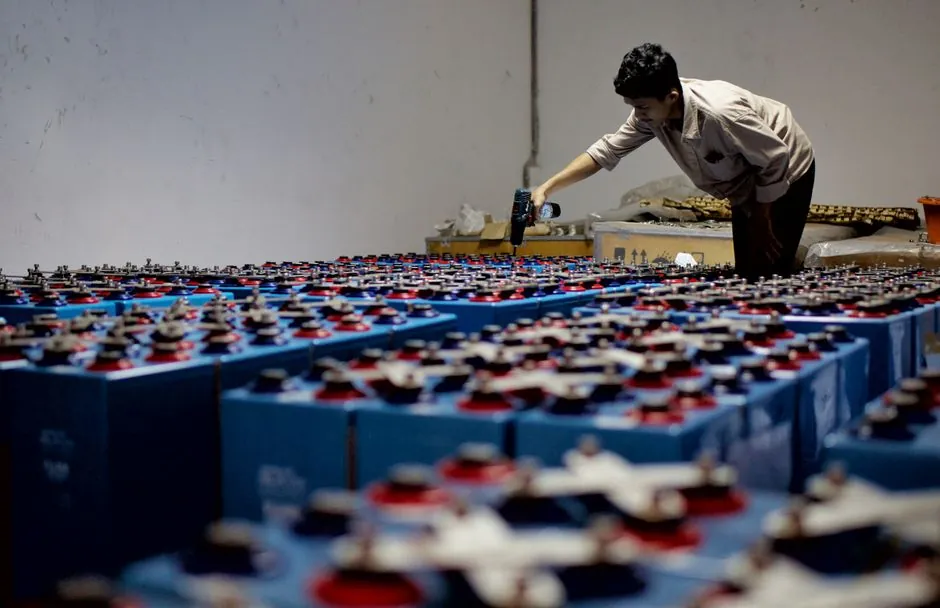
U.S. utility-scale battery storage installations hit 2.3 GW/6.8 GWh in Q1 2026 alone, pushing first-quarter deployments to a record 3.3 GW/8.4 GWh and beating the prior Q1 mark by 54% [S1]. Cumulative U.S. installed energy storage is now projected to reach 200 GW/655 GWh by 2031, with the utility segment making up roughly 85% of additions between 2026 and 2031 [S1].
Europe added 36 GWh in 2025 (48% year-on-year growth, the twelfth straight year of expansion), pushing total operational battery capacity past 100 GWh for the first time, and is on track to exceed 50 GWh in 2026 and 138 GWh by 2030 [S4]. The global grid-scale stationary storage market is forecast to climb from USD 300.24 billion in 2026 to USD 2648.92 billion by 2034, a 31.28% CAGR, while the broader BESS market is sized at USD 17.4 billion in 2026 toward USD 99.7 billion by 2033 [S3][S6].
Regional Deployment: Three Distinct Growth Curves
The Q1 2026 U.S. surge was largely a pull-forward: developers rushed 2025-pipeline projects to safe-harbor capacity before Foreign Entity of Concern (FEOC) restrictions tightened tax-credit eligibility, so most of the volume represents projects that were already in development [S1]. Texas, California, and Arizona led deployments, but Michigan and Georgia, both with vertically integrated utilities, emerged as the fastest-rising state-level markets in Q1 2026 [S1].
Europe's growth profile is structurally different. Utility-scale delivered more than half of 2025's new installations for the first time, driven by revenue stacking and hybrid solar-plus-storage projects, while residential demand stayed flat [S4]. Within the EU-27, total battery fleet capacity is projected to grow more than sixfold to roughly 470 GWh by 2030, still short of the 600 GWh SolarPower Europe models as needed for the EU's energy-security and decarbonisation targets [S4].
Japan sits further upstream in the adoption curve. The Renewable Energy Institute's June 11, 2026 report documents a wave of grid-connection applications from general transmission and distribution operators, but flagged long interconnection queues and frequent rule changes in capacity markets as binding constraints on project revenue [S2].
Cell Chemistry Stack: LFP Dominance, Sodium-Ion Climbing
Lithium-ion chemistries, particularly LFP, hold roughly a 90% share of the BESS market, with lithium-ion pack costs having fallen nearly 97% since 1991 and utility-scale BESS system costs now sitting below USD 150/kWh in many markets [S5]. That price floor has pushed battery storage into direct cost competition with conventional gas peakers in several U.S. ISO markets.
Flow batteries retain a niche in long-duration storage (8+ hours), where their lower energy density and higher capex per kW are offset by cycle life and decoupled power/energy sizing. Sodium-ion chemistries are entering commercial BESS deployments as a lower-cost alternative, particularly in stationary applications where energy density is a secondary concern. For a related manufacturer view, see the capacity snapshot of grid-scale battery suppliers in 2026.
Supply Chain Politics: FEOC, 45X, and the Cell Manufacturing Squeeze
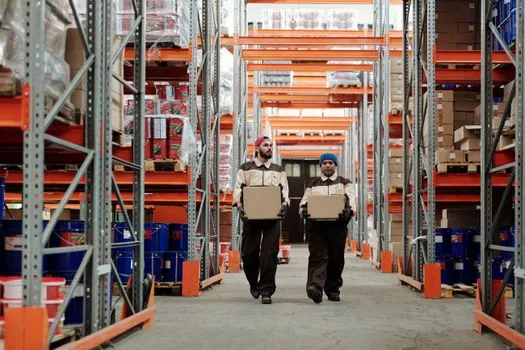
With FEOC restrictions now in force, securing FEOC-compliant cells and safe-harbored capacity is the most binding supply-chain constraint for U.S. developers over the next 2-4 years, per the ACP/Wood Mackenzie Q1 2026 outlook [S1]. Mature-pipeline developers with capital locked in long-term supply agreements with domestic cell makers; lower-tier developers face acquisition pressure or a forced pivot to low-cost Chinese OEMs [S1].
The 45X advanced manufacturing tax credit is now the central lever for U.S. cell makers trying to stay cost-competitive with Chinese imports, and the bottleneck is upstream: domestic cell producers are competing for limited FEOC-compliant cell components (anode, cathode, separator, electrolyte) to qualify their packs under 45X [S1]. Outside the U.S., the EU is leaning on its Battery Storage Action Plan, which SolarPower Europe outlined on June 23, 2026 around four pillars: permitting and grid-access reform, full market access for storage assets, bankable investment conditions, and targeted EU instruments for European battery value chains [S4].
System Integration: Inverters, BoS, and Containerised Skids
Grid-scale BESS plants are physically shipped as containerised skids (typically 1-2 MWh per 20- or 40-foot enclosure) paired with MV transformers, switchgear, and a plant-level EMS/SCADA stack. The balance-of-system (BoS) cost, including inverters, racks, HVAC, fire suppression, and DC wiring, is now the dominant share of installed cost per kWh as cell costs continue falling. Material handling at the cell, module, and pack stage is a parallel concern, with storage rack and storage cage standards governing how lithium-ion packs are staged, transported, and stored inside gigafactory assembly halls and at project sites. [S5]
On the AC side, the electronic scale platforms used for cell weight grading and module-level QA at gigafactory throughput have become a chokepoint, because the BESS volume ramp from 2026 onward demands sub-second takt times. Cell manufacturers are pushing for inline bench scale verification at formation and aging stations to catch defects before rack integration, since field failures on a 100 MW+ project carry warranty exposure in the tens of millions of dollars.
Revenue Stacking: Capacity, Ancillary Services, and Co-Location

Wood Mackenzie's Q1 2026 outlook explicitly named co-location and contracting with large loads (data centers, electrified industry) as a key multi-year revenue driver, alongside traditional capacity, energy arbitrage, and ancillary services [S1]. In the U.S., the Community, Commercial, and Industrial (CCI) segment installed 97.7 MW in Q1 2026 (up 27% quarter-over-quarter), led by California's 75 MW, with over 215 MW in the development pipeline across Illinois, Maryland, Massachusetts, and New York [S1].
Japan's report singled out grid-forming inverters and long-duration energy storage (LDES) as the two technology areas drawing the strongest developer interest, alongside NIMBY-related siting concerns [S2]. Europe's SolarPower Europe analysis pointed to revenue stacking and hybrid solar-plus-storage as the dominant 2025 value driver, with Ukraine emerging as one of the continent's top five battery markets on the back of grid-resilience needs [S4].
Selection Criteria for Project Developers and Off-Takers
[S4]
For a 2026 procurement decision matrix, the comparison on cell chemistry, duration, cycle life, and capex per kWh breaks down roughly as: LFP (2-4 hours, 6,000-10,000 cycles, USD 130-160/kWh system), NMC (1-2 hours, 3,000-5,000 cycles, USD 160-200/kWh, declining share), vanadium flow (6-12 hours, 15,000-20,000 cycles, USD 250-400/kWh), and sodium-ion (2-6 hours, 3,000-6,000 cycles, sub-USD 130/kWh projected, still early commercial). Developers building in markets with 4-hour or longer capacity-product requirements (CAISO, ERCOT's upcoming reforms, GB's CMP) increasingly default to LFP at 4-hour duration as the cost-optimised default, with flow and LDES reserved for niche long-duration applications.
Risk Map: Permitting, Trade, and Residential Contraction
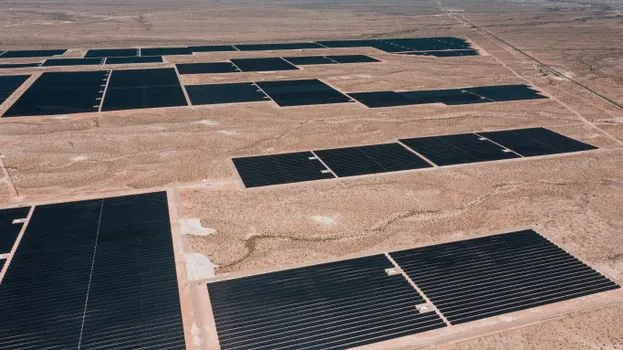
Residential BESS is set to contract 5% in 2026 in the U.S., per Wood Mackenzie, due to constraints in tax-equity availability and updated permitting rules, even as the segment set a record 1.3 GWh installed in Q1 2026 (up 86% year-on-year), buoyed by a late-2025 pull-forward to capture the expiring Section 25D tax credit [S1]. In Europe, the binding risk is the permitting and grid-connection queue, not project economics; SolarPower Europe's June 23, 2026 call for a dedicated Battery Storage Action Plan targets this exact bottleneck [S4].
Japan's June 11, 2026 report flagged grid-connection queues, frequent rule changes in capacity markets, and NIMBY siting opposition as the three structural risks that could slow the country's deployment curve, even with strong project-level profitability expectations [S2]. AI data-center electricity demand is now a common tailwind cited across U.S., European, and Asian BESS outlooks, with hyperscalers directly contracting renewable-plus-storage portfolios to firm up 24/7 carbon-free power commitments [S5].
For further reading on adjacent industrial spec decisions feeding the BESS build-out, see the battery cell manufacturing equipment spec map from R&D line to gigafactory. Watchable signals for the next quarter: (a) the U.S. Q2 2026 storage Monitor release from ACP/Wood Mackenzie for any pull-forward fade, (b) any European Commission movement on the Battery Storage Action Plan, and (c) 45X-qualifying domestic cell production volumes out of the U.S. [S1][S4].