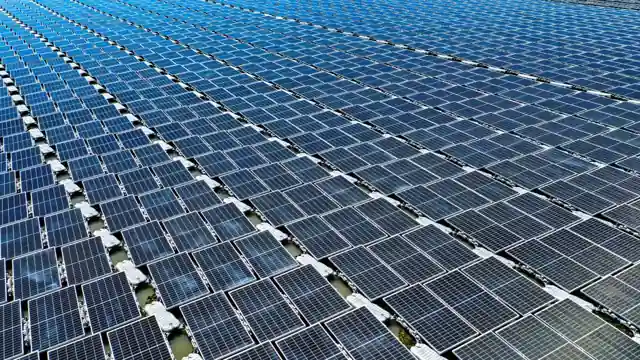
Chinese factories produce about 97% of the world's silicon wafers, and in 2025 N-type TOPCon modules grew 62.3% year over year to become the largest single PV export category, accounting for 44.7% of module export value [S2].
TOPCon, or Tunnel Oxide Passivated Contact, is the dominant successor to PERC, and most Tier-1 Chinese module makers now run TOPCon lines alongside legacy P-type mono [S2][S5].
TOPCon vs PERC vs Poly: Technology Comparison for Buyers
TOPCon modules use n-type silicon wafers with a tunnel-oxide passivation layer on the rear cell, delivering higher bifaciality and lower temperature coefficients than PERC; PERC is the older p-type architecture still shipping in large volumes, while polycrystalline modules sit at the low-cost end with lower efficiency [S2][S6]. In 2025 Chinese export mix by value, TOPCon was 44.7%, standard P-type mono 31.5%, polycrystalline 16.2%, and special flexible/balcony panels 7.6% [S2]. The practical takeaway: for utility-scale and commercial projects targeting higher energy yield, TOPCon is now the default, while poly still serves African off-grid buyers prioritising unit cost [S2][S3].
Certifications and Grade-A Verification: What Actually Clears Customs
Counterfeit TÜV and IEC documents drive a large share of container detentions at destination ports; figures cited by the industry put certificate-related problems at around 61% of solar shipment detentions [S2]. A real certificate has four data points: certificate holder (which company owns it), model number covered, standard referenced, and manufacturing site address; a supplier that will not produce all four should be treated as unverified [S3][S4]. Genuine Grade A cells come from named brands such as LONGi, JinkoSolar, Trina Solar, and Canadian Solar, and the factory's quotation should state the cell brand and grade explicitly rather than leaving it as "Tier 1 cells" [S2][S3]. Pre-shipment EL (electroluminescence) imaging is the standard check for microcracks invisible to the eye, and a sample run under a flash tester confirms the rated wattage rather than the marketing nameplate [S2][S3].
Supplier Channels and Markup: Factory vs Trading Company vs Agent
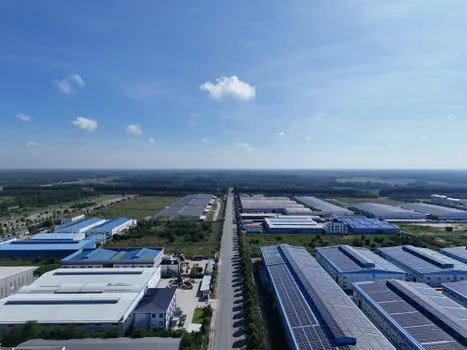
Direct-from-factory pricing carries a 0% channel markup, but the buyer owns supplier vetting, certificate verification, and logistics coordination; local sourcing agents add a typical 5-8% fee on order value or a flat project fee, and that cost is repeatedly recovered by catching quality issues before shipment and negotiating better Incoterms [S2][S4]. Trading companies in Guangzhou, Shenzhen, and Hefei resell panels with a wider markup, useful for small MOQ buyers but a poor fit for container-volume procurement. For a first-time buyer or any single order above $50,000, the third-party audit plus pre-shipment inspection (firms named in sourcing guides include Asiaction, V-Trust, and QIMA) is the highest-ROI step in the workflow [S4].
Which Buyer Profile Fits Which Chinese Factory
Tier-1 module makers (JinkoSolar, LONGi, Trina Solar, Canadian Solar) anchor global supply and are best matched to utility developers, EPC contractors, and project buyers ordering full containers with standardised packaging and brand-name panels [S2][S5]. Mid-size vertically integrated manufacturers such as Yangtze Solar, Anern, WHC Solar, SankoPower, and Tanfon serve B2B distributors, OEM/ODM resellers, and project developers in residential, commercial, and infrastructure segments, with confirmed export footprints across 200+ countries for several of them and warranty terms commonly set at 15-year product and 25-year power output for panels [S5]. Specialist factories (Shenzhen Shine Solar and similar makers of flexible, portable, folding, and small-format panels) are the right match for camping, RV, marine, and balcony-solar resellers who need short runs and custom packaging rather than container volumes [S3][S5]. A buyer who sells portable panels to end consumers should not start with a Tier-1 brand-name factory, because the order size, packaging, and after-sales model are built around project buyers, not retail SKUs [S3].
Cluster Map and Logistics: Where Production Sits and How It Ships

Four provinces hold the bulk of Chinese solar manufacturing capacity: Jiangsu, Zhejiang, Anhui, and Guangdong, and the named Tier-1 and mid-size makers cluster in Hefei (Anhui), Shanghai, Shenzhen, Guangzhou, Dongguan, and Foshan (all Guangdong) [S4][S5]. That concentration is what enables a buyer to audit a cell supplier, a glass supplier, a frame supplier, and a junction-box supplier within a single multi-province trip, which is the structural reason Chinese pricing beats regional competitors [S2]. For 2026 logistics, solar panels are not classified as dangerous goods for ocean freight, so the main shipping risk is documentation accuracy (commercial invoice, packing list, certificate of origin, and the IEC/TÜV test reports matching the exact model on the bill of lading) rather than hazmat permits [S2][S4]. A useful internal cross-reference for total landed-cost math is the sourcing-spec map covering solar cells, certificates, and suppliers, which complements this TOPCon-focused guide with the cell-level detail behind every module quoted above.
Pricing, MOQ, and Payment Terms: Real 2026 Numbers
Wholesale TOPCon module pricing moves with wafer, polysilicon, and silver-paste cost, and is not publicly listed by most Chinese factories; quotes are issued against an RFQ that specifies wattage, tolerance, cell type, and Incoterms [S2][S5]. Standard payment terms on bulk orders are T/T with a 30% deposit and balance before shipment, with L/C accepted on larger orders; sample orders are routinely accepted before bulk to allow independent EL and flash testing [S5]. MOQ varies sharply: Tier-1 factories push full-container orders, while mid-size makers accept smaller runs and offer OEM/ODM with custom branding and local-language labelling [S3][S5]. Landed-cost swing is dominated less by panel price than by buying channel (0% factory-direct vs agent 5-8% vs trading-company markup) and by whether the modules are genuinely new Grade A [S2][S4].
Contract and Pre-Shipment Checklist

The minimum contractual data set for a TOPCon procurement: rated wattage with tolerance band (commonly 0 to +5W), module efficiency, cell type and grade, exact model number matching the TÜV/IEC certificate, junction-box and connector model, linear power output warranty years, product warranty years, and the manufacturing site address on the certificate [S3][S4]. Third-party inspection scope should cover EL imaging on a random sample, flash-test verification against the nameplate, visual defect check, and packaging verification, all conducted after final packing but before container sealing [S2][S4]. A practical engineering reference for the instrument side of any PV plant built with these modules is the differential pressure transmitter sizing and selection guide, useful when the same buyer is also specifying balance-of-plant controls.
Trackable signals to watch through the rest of 2026: TOPCon's export-value share climbing past the 44.7% 2025 baseline, IEC 61215 and IEC 61730 test-report revision activity on Tier-1 certificates, and the spread between Tier-1 factory-direct quotes and mid-size OEM quotes for the same n-type TOPCon SKU.
Spec-level background on the components involved: linear guide, load cell, and crossed roller guide.