
Industrial cold-storage operators are running into a 2026 supply picture shaped by three overlapping pressure points: HFC refrigerant phase-downs, compressor and component lead-time inflation, and an aging installed base that fails more often as load profiles shift [S1][S3].
Refrigerant policy under the U.S. AIM Act, combined with the Kigali Amendment schedule, is pulling R-410A and other high-GWP HFCs out of the inventory pool while imported cylinder availability remains inconsistent, pushing service contractors toward domestic suppliers [S2][S4].
Refrigerant Phase-Down and the Retrofit Trap
High-GWP HFCs are being phased down under the U.S. AIM Act and the Kigali Amendment, and every facility still running R-410A is starting to feel the squeeze [S3]. The shift toward natural refrigerants, ammonia (R-717), CO2 (R-744), and hydrocarbons such as R-290, is not a fluid swap; each requires different plant design, aggressive leak detection, and operators trained on toxicity and flammability envelopes [S3].
Newer low-GWP replacements entering the field include R-32, R-454B, and R-1234yf, all of which are more sensitive to contamination than legacy blends, so purity and traceability now move from quality footnote to procurement gate [S4]. A facility that ignores this is signing up for compressor warranty disputes, capacity loss, and a possible EPA Section 608 violation when a recovery cylinder is found off-spec [S3].
Compressor and Component Lead Times in 2026
Replacement compressors for industrial refrigeration racks are running 8 to 16 weeks in 2026, with longer tails on screw and semi-hermetic units above 40 HP because the same foundries that cast compressor housings also feed HVAC coil and heat-exchanger production [S1]. Aluminum, copper, and steel remain the binding raw-material constraints, and when those are tight, manufacturers throttle compressor output first because refrigeration compressors carry lower volume priority than residential split-system production [S1].
Buyers building a cold-storage retrofit should also expect board-level controls, defrost timers, and electronic expansion valves to share the same electronics supply chain that drives industrial power supply and DC power supply components, so a single allocation cycle can stall a whole skid [S1]. That linkage is the real procurement risk: a refrigeration retrofit is no longer a mechanical project, it is a multi-commodity bill of materials routed through a constrained electronics channel. The mitigation pattern is order transformers and contactors at the same time as the compressor, not six weeks later when the rest of the skid is ready.
Imported vs Domestic Refrigerant: A Spec Comparison

Contractors in 2026 are sorting refrigerant suppliers on seven axes: port delay exposure, purity certification, cylinder traceability, supply stability, counterfeit risk, regulatory documentation, and post-sale support [S4]. Imported product historically wins on per-pound price, but loses on four of the seven axes during peak summer season when freight and customs queue times spike [S4].
Domestic supply wins on three concrete operational metrics: faster shipping, consistent cylinder traceability, and reduced seasonal shortages, and it loses on raw per-pound cost in normal years [S4]. For a service fleet running 50+ service calls per week, the break-even is roughly one avoided stockout per quarter, because each stockout day on a refrigerant SKU bleeds into callback cost, overtime, and lost commercial accounts [S4]. For a one-off residential call, imported still pencils out. Run the math per route density, not per pound.
Aging Plant Assets and the Reliability Curve
Many cold-storage facilities run refrigeration systems installed in the 1990s or earlier, units sized for SKU counts and throughput profiles that no longer match current demand [S3]. As those assets cross 25 years of service, the failure modes cluster into three patterns: compressors tripping under peak load, defrost cycles drifting out of tune, and insulation degradation that raises heat infiltration and forces longer compressor run hours [S3].
The mitigation toolkit is well known: vibration sensing on compressor bearings, thermal imaging of evaporator and condenser coils, and continuous control monitoring with cloud dashboards, but adoption remains patchy and budget-dependent, and even tiny failures cascade into spoiled load, insurance claims, and broken retail trust [S3]. The economic threshold for predictive maintenance on a single screw compressor rack is in the low five figures per year, well below a single truckload of prime beef or a pallet of biologics written off after a 4°C excursion [S3].
Grid Volatility and Demand-Response Exposure

Cold storage operators are now exposed to utility demand-response events, often called at 4 PM on the hottest day of the year, exactly when a freezer facility cannot afford to shed load [S3]. Grid stress, not refrigerant cost, is the fastest-growing operational variable for industrial refrigeration in 2026, and the operators running on fixed-speed compressor racks with no thermal storage buffer take the first curtailment hit [S3].
The engineering response is to decouple the electrical load from the refrigeration load by adding thermal mass, typically a flooded ammonia or glycol reservoir, sized to ride through a 2 to 4 hour demand event without letting product temperature drift past the alarm threshold [S3]. Facilities that added industrial UPS capacity for controls and lighting equipment backup during a 2024 brownout cycle found the same UPS architecture doubles as ride-through for the control panel during a demand event, which keeps the safety chain alive even when the compressor contactor is open. The procurement signal here is straightforward: a facility that treats grid exposure as a design input, not an emergency, buys thermal storage and UPS at the same time as the next compressor.
Tariffs, Trade Policy, and Sourcing Strategy
Tariffs, trade policy, and evolving environmental regulations are reshaping HVAC and refrigeration supply chains, with new duties on imported components showing up as material cost on every invoice [S1]. When duties shift on Chinese, Mexican, or Southeast Asian inputs, the cost increase flows directly into coils, compressors, and finished condensing units, with the steepest moves on copper-bearing components because copper is the most tariff-sensitive metal in the bill of materials [S1].
Two sourcing patterns are gaining ground in 2026: dual-source qualification of at least one domestic and one overseas vendor per critical SKU, and longer contract horizons (12 to 24 months) to lock price before the next duty window opens [S1][S4]. Buyers running industrial lamps and light fittings or construction machinery and equipment on the same procurement desk have already absorbed this pattern; refrigeration buyers who have not are about to.
Procurement Signals Worth Tracking
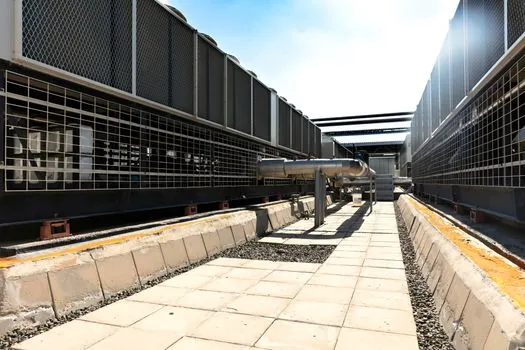
Track three data points through the rest of 2026: EPA Section 608 enforcement actions and AIM Act allowance auction pricing, weekly EIA propane and ammonia spot prices, and compressor OEM order-book lead-time disclosures on quarterly earnings calls. A sudden widening of the R-410A to R-454B price spread, or a new OSHA ammonia citation cluster in Q4, will move retrofit budgeting faster than any trade-press headline. A related read on upstream commodity risk sits in our fluoropolymer supply crunch brief, since PTFE and FEP seal demand moves on the same ethylene and fluorspar cycle that backs refrigerant feedstocks. [S2]