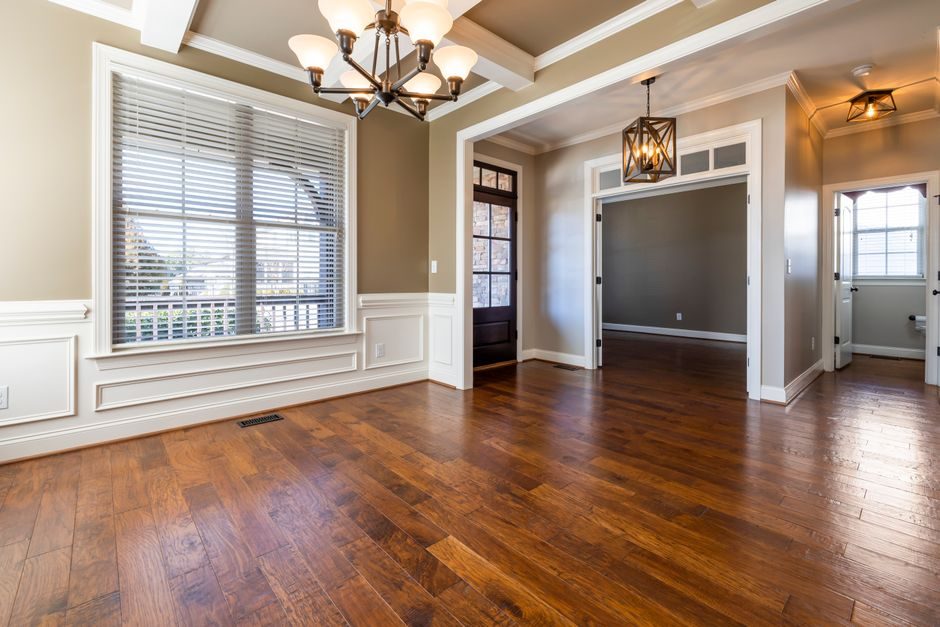
SPC (Stone Plastic Composite) flooring is a rigid, click-lock vinyl plank with a core typically formulated around 60-70% calcium carbonate (limestone powder) bound with PVC resin, total plank thickness usually 3.5-8 mm, with a wear layer of 0.2-0.7 mm [S1][S2][S5].
Industrial flooring is an umbrella term covering resinous systems (epoxy, polyurethane, methyl methacrylate), concrete hardeners/densifiers, and heavy-duty vinyl or rubber sheet rated for forklift, chemical and impact service. SPC is a consumer/light-commercial product, not an industrial one, and the two should not be cross-specified [S3][S6].
Core Construction and Material Composition
SPC rigid core formulation sits at roughly 60-70% natural limestone (CaCO3) powder compounded with PVC resin and stabilisers, giving a plank density around 1.9-2.1 g/cm3 versus 1.3-1.5 g/cm3 for traditional flexible LVT [S5]. The UV-coated wear layer on top is rated in mils (0.2 mm = 8 mil commercial-light, 0.3 mm = 12 mil light commercial, 0.5 mm = 20 mil commercial, 0.7 mm = 28 mil heavy commercial) and is the spec that actually governs traffic class, not total thickness [S2][S6].
Industrial resinous floors use two-component epoxy or PU binders at 2-6 mm broadcast with quartz or aluminium oxide aggregate, yielding compressive strength typically above 50 MPa and Shore D hardness above 75 once cured. The binders carry the chemical and load rating; the aggregate carries the wear [S4][S6].
Load, Impact and Traffic Ratings Compared
SPC planks are rated for residential and light commercial foot traffic; a 5 mm SPC plank with a 0.5 mm wear layer is commonly specified for offices, retail and hotel guest rooms with static loads below roughly 200 kg/point and no steel-wheeled traffic [S1][S2]. Static point loads above that range (pallet jacks, heavy racks, safes, vending machines dropped into place) will crush the calcium-carbonate core or fracture the click profile, even when total thickness looks generous.
Industrial resinous systems are rated for dynamic wheel loads from 1-5 ton forklifts, steel-wheeled trolley traffic, and point loads from racking posts. Epoxy mortar systems broadcast with quartz at 6-9 mm thickness handle dropped-tool impact that would split an SPC plank, and concrete densifiers (sodium or lithium silicate) harden the substrate to roughly 6-8 on the Mohs scale [S4][S6].
Who SPC Flooring Is For, and Who It Is Not For
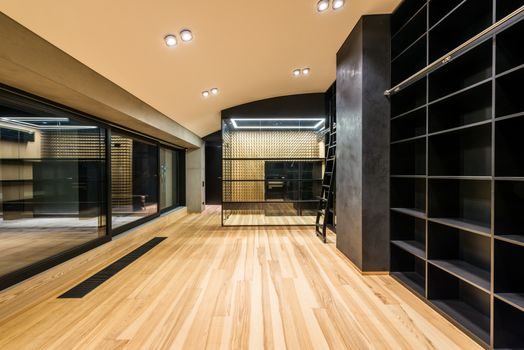
SPC is engineered for residential renovations, apartments, retail fit-outs, offices, clinics, and hotel guest rooms where the floor sees shoe traffic, light rolling loads (office chairs, cleaning trolleys), and needs fast, glue-free install over imperfect subfloors [S1][S2][S4]. The click profile floats over underlay, tolerates 3-5 mm of subfloor deviation across a 2 m straightedge, and can be walked on within hours of install. The product is widely sold in 3.5 mm, 4 mm, 5 mm, 6 mm and 8 mm total thicknesses with attached IXPE or EVA underlayment of 1-1.5 mm [S3][S6].
SPC is NOT for warehouses with forklift traffic, chemical processing, commercial kitchens, automotive workshops, production lines, or any wet-process area. The 0.2-0.7 mm wear layer will be cut through by dragged pallets, the calcium core will shatter under a dropped 50 kg tool, and standing water at joints will wick into the click profile and swell the core [S5][S6]. For the engineering reality of forklift-compatible industrial flooring, industrial flooring options are the only correct spec.
Chemical, Moisture and Temperature Limits
SPC planks are waterproof at the surface because the CaCO3/PVC core does not absorb water, but the click profile and the exposed edges at perimeters and door thresholds will allow moisture to wick underneath. Subfloor moisture above roughly 75% RH (or 3 lb/1000 ft2/24 h calcium chloride) requires a 6-mil polyethylene vapour barrier, and standing water trapped under the floating floor will grow mould and odour even when the planks themselves look fine [S2][S5].
Industrial PU systems (not epoxy) tolerate thermal shock from hot-water washdowns and steam cleaning, with operating ranges typically -40 C to +120 C for heavy-duty PU screeds; epoxy is more limited, usually 0-60 C in continuous service, and yellows under UV. Epoxy dominates chemical resistance in battery rooms, plating lines and fuel handling, with specific resin formulations (novolac, vinyl ester) handling concentrated acids and solvents [S4][S6].
Installation Time, Substrate Prep and Lifecycle Cost
SPC install on a flat, dry subfloor runs at roughly 25-40 m2 per man-day for an experienced crew using the click system, with immediate foot traffic and light commercial use the same day. Acclimation is minimal (2-4 h in the install environment), no adhesive is required for click-lock floating install, and individual planks can be replaced if damaged [S1][S3].
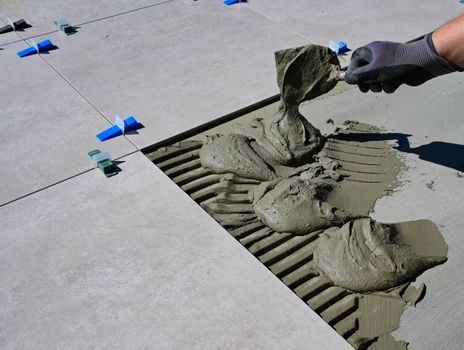
Industrial resinous install requires shot-blasting or diamond grinding to a CSP 3-5 profile, moisture-tolerant primer on damp slabs, multi-coat build with broadcast aggregate, and a 24-72 h full-cure window before forklift traffic. Downtime cost in a working plant often exceeds the material cost by 5-10x, which is why weekend and phased installs dominate this segment. A correctly specified and installed industrial flooring system typically runs 8-15 year service life before re-coat in heavy traffic lanes, while SPC in a light-commercial setting is rated 10-25 years residential and 5-10 years commercial [S2][S4][S6].
Selection Gates: A Decision Checklist
Pick SPC when the floor is interior, dry or wet-mop only, sees foot traffic and light castors, needs fast install with no cure time, and the budget per square metre is roughly USD 8-25 supply for click plank. Pick industrial resinous when the floor takes forklift or pallet-jack traffic, chemical exposure, thermal cycling, or point loads above 200 kg, and the budget per square metre is USD 25-80 supply-and-install depending on build-up thickness and aggregate [S1][S2][S4][S6].
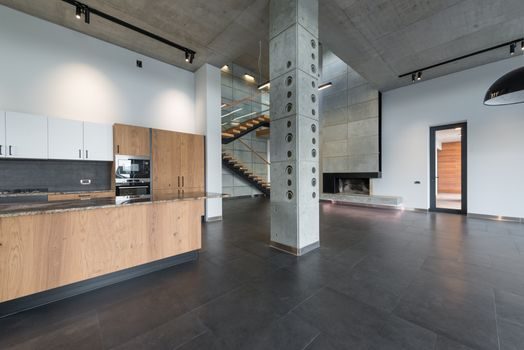
Use a spc flooring product only as the spec for a sub-region inside a building (office mezzanine inside a warehouse, retail showroom attached to a factory) and never as the main floor of a working production, storage or distribution area. For material-handling zones, chain conveyor aisles, dock doors and battery charging rooms, specify resinous or hardened concrete to match the load class.
Common Mis-specifications and Failure Modes
Three failure modes dominate SPC installed in industrial settings: (1) click-profile fracture under pallet jacks with steel or polyamide wheels, visible as gapping along the long edge within weeks; (2) core crush under racking posts or vending machines, appearing as a permanent dimple that telegraphs through the wear layer; (3) joint swelling from moisture wicking at door thresholds, especially at dock doors and wash-down zones [S5][S6]. None of these are covered by manufacturer warranties when the product is installed outside its rated traffic class.
Two failure modes dominate resinous industrial floors that are mis-specified: (1) standard epoxy used in wet or thermal-cycling areas, leading to delamination within 12-18 months; (2) insufficient broadcast aggregate thickness, where a 2 mm coating is asked to carry forklift traffic designed for a 6 mm mortar system, wearing through in 6-12 months in the wheel paths. Both are install-cost-driven failures, not material failures, and both are preventable with the spec written against the actual wheel load and chemical exposure rather than against budget [S4][S6].
The first trackable signal for a correct spec is the substrate moisture test (calcium chloride or RH probe) at specification time, not at install time. The second is the wheel-type and static load drawing for any racking or equipment placed on the floor, used to pick the broadcast thickness or the SPC wear-layer grade. These two documents decide whether the floor survives year one or fails the warranty audit.
For component-level specifications, see industrial adhesive.