
A spectrum analyzer's usable frequency range spans below 1 Hz to 300 GHz on modern instruments, and resolution bandwidth at high frequency is typically 10–100 Hz, making those two numbers the first gates on any selection checklist [S2].
The instrument family is split between swept super-heterodyne analyzers and real-time FFT analyzers; the right pick depends on whether the signal under test is continuous/periodic or transient/hopping, and on the dynamic range, RBW, and analysis bandwidth the measurement actually requires [S2]. Selection also has to account for the form factor: benchtop, handheld, USB PC-driven, and software-defined (e.g. the MathWorks spectrumAnalyzer System object introduced in MATLAB R2022a) all coexist and target different duty cycles [S1].
Two Architectures, Two Selection Tracks
Modern spectrum analyzers fall into two main classes: the swept super-heterodyne analyzer, which is functionally a swept superheterodyne receiver with a CRT/LCD display, and the real-time analyzer (RTA), which acquires the signal within its finite duration and extracts the full spectrum, including amplitude and phase [S2].
A swept analyzer works by mixing the input against a sweeping local oscillator; each frequency component is down-converted to the IF, passed through a narrowband filter, and the detector drives the vertical axis while the sawtooth drives the horizontal axis, so the screen reads amplitude vs. frequency in real time [S2]. A real-time analyzer A/D-converts the input and runs it through a digital filter bank or an FFT; with a quadrature digital local oscillator it can deliver complex results that resolve to both magnitude and phase, which is why Fourier analyzers are a sub-class of the real-time family [S2]. For software-only work, the spectrumAnalyzer System object shipped in MATLAB R2022a supports both filter-bank and Welch's averaged-modified-periodogram methods, with power, power-density, and RMS spectrum types in W, dBm, or dBW units, and a default sample rate of 10,000 samples/s with a default RBW of 9.76 [S1]. The decision is therefore not "which is best" but "which architecture matches the signal class you have to characterize."
Key Specs That Actually Drive the Shortlist
Eight technical parameters dominate any spectrum analyzer datasheet: frequency range, resolution, analysis span (frequency span), analysis time, sweep speed, sensitivity, display mode, and spurious response, and they trade against each other in well-defined ways [S2].
Resolution is the most important spec because it is the minimum frequency spacing the analyzer can visually separate between two adjacent spectral lines; it depends on filter type, shape factor, IF bandwidth, local-oscillator stability, residual FM, and sideband noise, and on a swept analyzer it also degrades with sweep speed [S2]. For a real-time analyzer, the analysis time cannot be shorter than the reciprocal of the narrowest RBW, which means a 1 Hz RBW demands at least 1 s of capture, a hard floor that the spec sheet should make explicit [S2]. Sensitivity is bounded by the instrument's internal noise floor: lower noise = weaker signals measurable, and the modern dynamic range floor sits at roughly 80 dB between the strongest and weakest simultaneously displayed signals [S2]. Spurious (false) response is an unavoidable artifact of any superheterodyne chain, and modern designs push it below −90 dBm, a number worth comparing across bidders [S2]. Display mode is also a selection gate: linear, square-law, and logarithmic amplitude scaling each suit different measurement types, and the choice is usually fixed by the modulation parameter being quantified [S2].
When a Real-Time Analyzer Beats a Swept Analyzer (and When It Does Not)

Real-time FFT spectrum analyzers are the right pick for non-repetitive transient events and stationary random processes, because they must extract the complete spectrum within the finite duration of the signal; they also work down to 40 MHz and into the very-low / extremely-low-frequency band for continuous signals and additionally display phase, not just amplitude [S2].
A swept super-heterodyne analyzer is the right pick for continuous and periodic signals across the audio through sub-millimeter-wave bands, and the dominant choice on RF production lines and EMC pre-compliance benches where the signal is stable and the user wants the deepest dynamic range per dollar [S2]. Engineers specifying an analyzer for frequency-hopping or pulsed-RF work should reject the swept architecture outright, because a swept LO cannot dwell long enough on each hop to resolve the spectrum, and a real-time unit with sufficient analysis bandwidth is the only honest answer [S2]. The reverse is also true: a real-time analyzer with insufficient analysis bandwidth will alias or miss energy, so for wide-span narrow-RBW scans, a swept instrument often wins on measurement integrity. Picking the wrong architecture is the single most expensive spec mistake, because no amount of post-processing recovers information the front end never captured.
Resolution Bandwidth, Sweep Time, and the IF Design Trade-Off
The classical sweep-time-versus-bandwidth relationship and the IF-bandwidth design are two of the most studied topics in spectrum-analyzer engineering, and they are where swept and FFT architectures visibly diverge [S2].
On a swept analyzer, narrowing the RBW improves resolution and lowers the noise floor but lengthens sweep time proportionally, and a slow sweep can itself distort the displayed spectrum of a fast-changing signal [S2]. The digital-IF section, commonly implemented on an FPGA in modern designs, sets the actual RBW, the filter shape factor, and the video bandwidth, and these three together define how clean a narrow peak will look next to a strong neighbour [S2]. On a software-defined analyzer, the same trade-off is exposed differently: the spectrumAnalyzer System object defaults to a 1,024-point FFT with a 1,024-sample window and 0.3 filter sharpness, with the FFT length, window length, and RBW all settable as properties; setting RBWSource to "property" lets the user pin RBW directly, while FFTLengthSource set to "auto" lets the engine choose FFT length to match [S1]. For swept super-heterodyne hardware, the Chinese-language reference [S2] notes the related national standards are GB/T 11461-1989 for general specifications and GB/T 11462-1989 for test methods, both of which remain the conventional reference documents for procurement specifications in that market.
Who Should NOT Buy the Mainstream Swept Analyzer
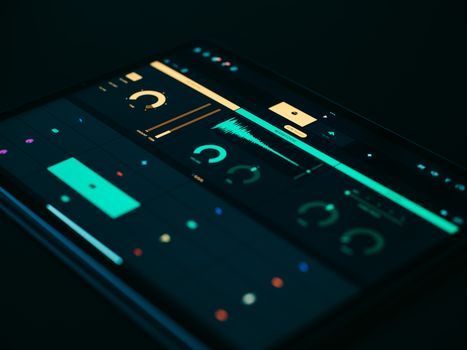
A swept super-heterodyne analyzer is the wrong tool when the signal of interest is non-repetitive, when phase information matters as much as amplitude, or when the analysis must complete inside a short transient window that is shorter than the analyzer's narrowest-RBW reciprocal, all situations the data sheet makes easy to test before purchase [S2].
Engineers working exclusively on audio-band signals below 40 MHz with emphasis on phase should also look at an FFT/RTA-class unit, including a high-resolution low-frequency spectrum analyzer or a double-channel digital low-frequency analyzer, because phase display and very-narrow RBW are native to that class [S2]. For embedded DSP work, the spectrumAnalyzer System object is worth evaluating as a no-hardware alternative, but only when the sample rate (default 10 kS/s, settable) and the Welch/filter-bank method choice are appropriate for the signal class [S1]. Buyers who specify a swept unit "because it is what we have always bought" without checking signal type routinely pay for an instrument that under-resolves the very phenomenon they are trying to debug, and a quick architecture-vs-signal check before the PO saves that mis-spec.
Form Factor and Procurement Realities
Selection does not stop at electrical specs. Benchtop lab units (e.g. swept IF, microwave pulse, real-time all-digital) target R&D and compliance; handheld and USB PC-driven units target field service and installation; and software-only analyzers (MATLAB spectrumAnalyzer, mobile-app audio visualizers) target embedded development and education [S1][S2][S3].
For example, the Microsoft Store audio "Spectrum Analyzer" app is a microphone-driven visualizer that animates peaks and exposes window-function, microphone-sensitivity, and dB-calibration settings in its paid professional tier, which makes it useful for demo/education rather than for compliance-grade measurement [S3]. For field work where size, weight, and battery matter, a handheld RF analyzer is the only realistic answer; for production-line EMI pre-compliance, a benchtop unit with the lowest specified spurious response (target ≤ −90 dBm) and the widest dynamic range (target ≥ 80 dB) is the shortlist baseline [S2]. Procurement specs should also list the test methods standard (GB/T 11462-1989 in the Chinese market, or the equivalent IEC publication where applicable), the required RBW at the band of interest, and the analysis bandwidth the user actually needs, because those three lines prevent most field complaints.
Shortlist Logic and Trackable Signals
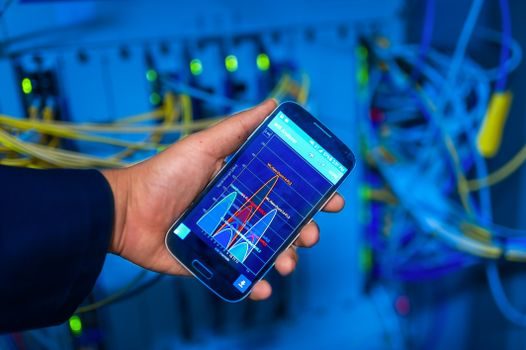
Build the shortlist with a single rule: match the architecture to the signal class, then filter by the four numeric gates: frequency range must cover the band, RBW must be at least 10× narrower than the closest spacing you need to resolve, sweep speed or real-time bandwidth must exceed the fastest signal change, and the spurious-response floor must sit below the weakest signal you must see [S2].
Two trackable signals to watch before purchase: (1) the appearance of a new revision to GB/T 11461/11462 or its IEC counterpart, which would force a re-test of any incumbent vendor's general-specifications claim; (2) the release notes of MathWorks DSP System Toolbox, which document spectrumAnalyzer property additions and the default RBW (currently 9.76) and FFT length (1,024), and which directly affect how a software-defined analyzer chain behaves on the bench [S1][S2]. Engineers pairing an analyzer with a signal calibrator or a function generator on the same bench should also verify that the calibrator's amplitude accuracy and the generator's phase-noise floor are both below the analyzer's own noise floor, or the analyzer will read its own accessories rather than the DUT.
The underlying component specifications are covered under spectrum analyzer, gas analyzer, and moisture analyzer.