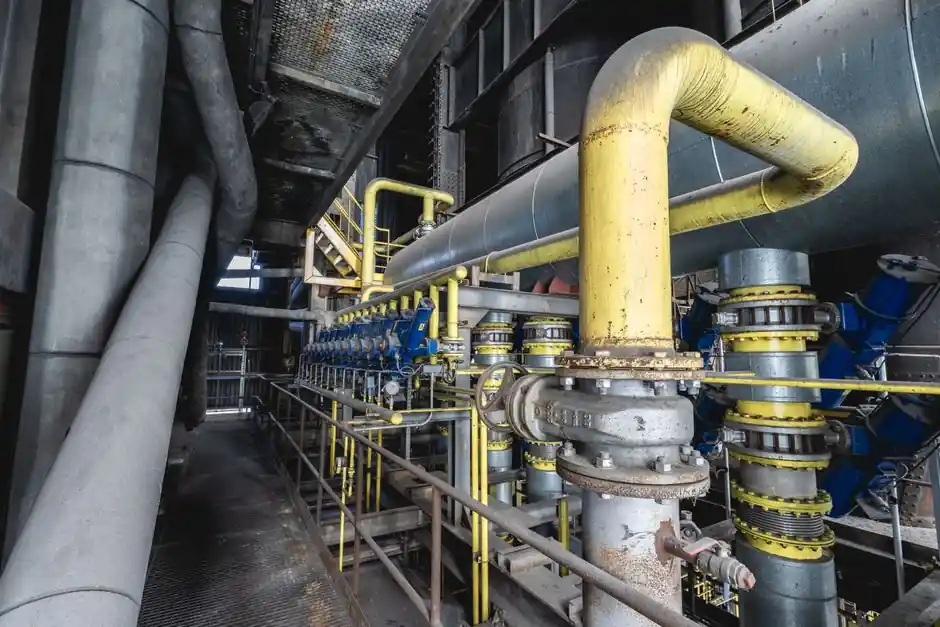
Cement plant duty cycles punish bearings with abrasive clinker dust, sustained 150-220°C ambient heat on kiln support rollers, and shaft deflection from large rotating mill bodies. Spherical plain bearings handle the misalignment, while spherical roller bearings carry the heavy combined loads on the same trunnion positions: both belong on the spec sheet for any new cement-plant build or refurbishment as of mid-2026 [S1][S5].
Selection in 2026 hinges on four signals: load direction (radial vs combined), static misalignment budget (typically 0.5-2.5° on standard series, up to 3° on heavy series), operating temperature window, and contamination exposure to raw-meal and clinker dust [S3][S4]. Process engineers who map each of these to a bearing code before issuing a purchase order consistently avoid the three classic cement-plant failure modes: outer-race spalling, cage fracture, and seal channel contamination.
Cement-plant duty profiles and where spherical plain bearings win
Raw-mill and cement-mill trunnions, kiln support rollers, and clinker cooler discharge shafts all see combined radial plus axial loading, with the shaft bending several millimetres under dead-weight of the rotating mass. Spherical plain bearings tolerate the resulting angular misalignment through their inner-ring spherical sliding contact, which decouples shaft position from housing position; misalignment capacity typically lands in the 1-3° band depending on series and bore size, per manufacturer guidance published in mid-2026 [S4][S6]. The sliding contact also handles shock loads better than rolling-element designs, which matters for hammer-mill and crusher positions upstream of the kiln.
For the trunnion of a large raw mill, where bore diameters routinely run 300-600 mm and combined loads reach several MN, a steel-on-steel spherical plain bearing with PTFE fabric liner or a hard-chrome/PTFE composite sliding pair is common. A rolling-element alternative on the same trunnion typically uses a spherical plain bearing at the slow-rotating end and a sealed spherical roller bearing at the high-speed drive-end, the configuration called out in the Aarya Sales 2026 cement selection guide [S5]. Clinker cooler shafts at 180-220°C ambient require heat-stabilised rings (typically dimension-stabilised to 200°C or 250°C) and C3/C4 internal clearance to absorb thermal expansion of the shaft relative to the housing [S5].
Selection criteria: load, speed, temperature, contamination, lubrication
The five engineering criteria that decide between a spherical plain bearing, a spherical roller bearing, and a cylindrical or tapered roller bearing on a cement-plant position are load magnitude, rotational speed, ambient temperature, contamination exposure, and re-lubrication access. Cement-plant bearings also see shock loading from crushers and hammer mills, which pushes engineers toward spherical geometries with thicker cross-sections and through-hardened rings rather than case-hardened alternatives [S1][S4].
On load, a rule of thumb published in the 2026 cement bearing selection guide is that combined radial-plus-axial loads above roughly 30% of the radial rating are the trigger for specifying spherical plain or spherical roller types over cylindrical or tapered alternatives [S5]. On speed, spherical plain bearings are sliding-contact and stay below about 0.2 m/s sliding velocity in continuous service; spherical roller bearings can run at 5-15 m/s peripheral speed, so the mill trunnion (slow) suits plain, the separator rotor (fast) suits roller. On temperature, the 150-220°C band on kiln supports requires either high-temperature grease rated to 220°C (Lithium-complex or polyurea) or, for plain bearings, PTFE-based self-lubricating liners that operate dry up to 250°C [S5][S6]. On contamination, sealed 2RS variants with NBR or FKM lips are standard; for severe dust exposure, re-greasable sealed pillow-block units allow scheduled grease flushing to push dust out of the bearing cavity rather than letting it migrate in [S5].
Spherical plain bearing codes, sliding-surface pairs, and maintenance signals
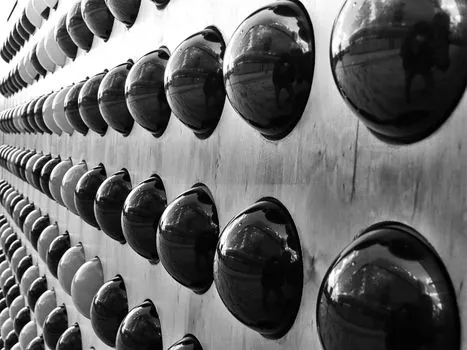
Manufacturer codes carry real spec information. A GE-series spherical plain bearing (ISO 6126 / DIN 648) is a single-piece outer ring with spherical inner sliding surface and a circumferential groove for grease; a GEH series is a heavy-section variant for larger bore and higher load. Sliding surface pairing, identified by a code suffix, drives performance: steel/PTFE fabric (maintenance-free, dry-running, -50 to +250°C), steel/PTFE bronze (low friction, moderate load), steel/steel (high load, requires lubrication, harder to relubricate in service), and PTFE/PTFE composite for low-speed lightly loaded positions [S6].
Maintenance signals in mid-2026 supplier guidance converge on three measurable triggers: re-lubrication interval on grease-lubricated plain bearings is set by relubrication-tester readings rather than calendar time, typically every 2000-4000 operating hours in cement dust; sliding-surface temperature should stay below the PTFE limit of 250°C continuous; and the outer ring axial expansion should not exceed the housing-bore clearance, otherwise the ball bearing reference at the drive-end picks up load and fails first. SKF and NSK guidance cited in the 2026 SRB blog series notes that spherical roller bearing bore diameters from 20 mm up to 1,400 mm are now catalogued, so the rolling-element alternative is available for almost any cement-plant position short of the slowest trunnions [S3].
Who spherical plain bearings are for, and who should stay with rolling-element alternatives
Spherical plain bearings are the right answer for low-speed, high-load, oscillating or shock-loaded positions on cement plants: kiln support roller thrust blocks, slow-speed mill trunnions, clinker cooler discharge trunnions, hammer-mill pillow blocks, and crusher toggle-link pivots. They are also the right answer where re-lubrication is impossible (sealed-for-life) or where the position runs dry due to dust contamination risk, because a PTFE-liner GE/GEH unit tolerates grease washout better than any rolling-element bearing [S6].
They are the wrong answer on high-speed positions (separator rotors at 1500-3000 rpm, process fans, gearbox input shafts) and on heavily contaminated positions where the sliding surface is exposed to fine cement dust without a seal; the dust accelerates wear of the PTFE or bronze liner and shifts the rating curve down. For high-speed separator rotors and gearboxes, spherical roller bearings, cylindrical roller bearings, and tapered roller bearings remain the spec-first answer in the 2026 cement selection guide [S2][S5]. Process engineers who split the train by speed band rather than by machine name typically get the lowest lifecycle cost. Related spec-first logic applies to housing selection, where pillow block bearing selection for automotive production lines uses a similar dust-versus-speed trade-off, and to material selection for high-temperature slider bushings on the cement manufacturing line, where chemistry of the liner is at least as important as the bearing geometry.
Standards, sourcing, and 2026 market signals
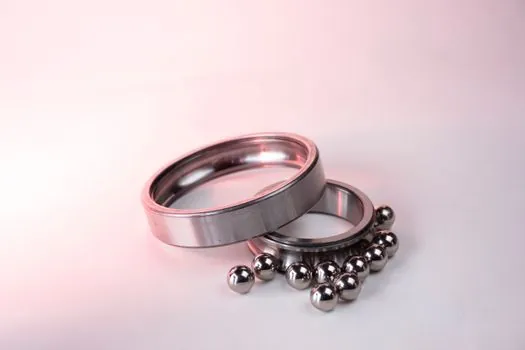
The key standards governing spherical plain bearing supply to cement plants in 2026 are ISO 6126 (dimension series for spherical plain bearings), ISO 12240-1 and 12240-2 (sliding-contact radial plain bearings, metric series), and DIN 648 for the legacy GE/GEH series; cage and sliding-surface qualification typically references ASTM B438 (bronze) and ASTM D4894 (PTFE raw stock). On the rolling-element side, ISO 15 and ISO 492 define boundary dimensions and tolerance classes for the spherical roller alternative. Cement-plant procurement teams in 2026 are also seeing a push toward ISO 14001 and ISO 50001 certified suppliers as plant-level ESG targets tighten. [S5]
Market signal from the July 2026 Future Market Insights roller-press bearings report: spherical roller bearings are projected at 39.0% of bearing-type demand in 2026, with 300-600 mm bore at 49.0% and open bearings at 21.0% of the mix, an indicator that the size and configuration bands most relevant to cement-plant mill positions are still dominated by spherical roller designs and unlikely to shift to plain-bearing alternatives [S7]. Adjacent growth in the special cement segment is pulling demand for kiln-support bearings that handle higher process temperatures, which in turn pushes plain-bearing liner chemistry up the spec list. The verifiable next node for spec engineers: track Q4 2026 supplier releases of 250°C-rated PTFE-liner spherical plain bearings with NSF/ISO 21469 food-grade incidental-contact certification, which is the emerging requirement for cement plants handling supplementary cementitious materials.