Spherical plain bearings (SPBs) for mining duty must be picked first by load direction and sliding-surface family, then by bore and seal; misalignment acceptance of 1.0 to 2.5 degrees and bore coverage from 20 mm to 1,400 mm define the usable envelope [S1][S2][S4].
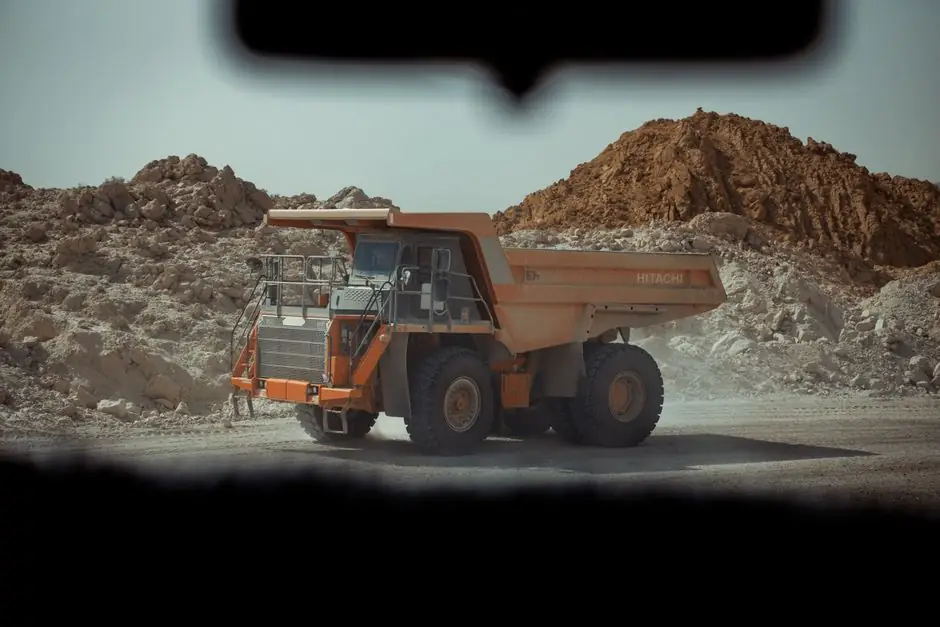
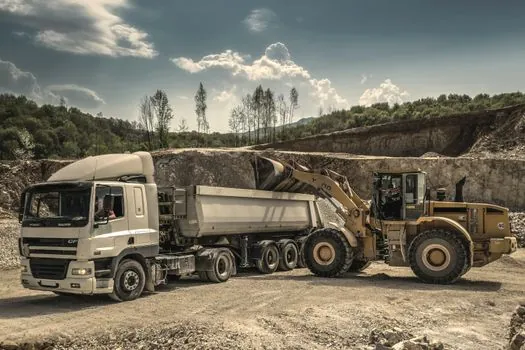
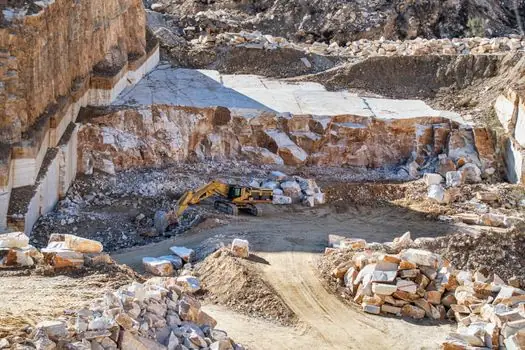
Open-pit haul trucks, gyratory crushers, vibrating screens, apron feeders, and hydraulic roof supports are the dominant mining applications, and all of them combine heavy static load with shock, dust ingress, and slow oscillation, which is exactly the regime a spherical plain bearing is built for [S1][S3][S4].
Plain vs. roller spherical bearings: where each one wins in mining
A spherical plain bearing carries load through sliding contact between a convex inner ring and a matching concave outer ring, with no rolling elements; a spherical plain bearing is therefore the right pick for oscillating or articulating joints, while a spherical roller bearing is the right pick for continuously rotating shafts [S2][S3].
Spherical plain bearings typically handle high radial loads with a limited axial component, run at lower speeds than rolling-element bearings, and accommodate misalignment through ring geometry rather than through barrel-shaped rollers; spherical roller bearings instead use two rows of barrel rollers on a common spherical raceway, tolerate roughly 1.0 to 2.5 degrees of shaft-to-housing misalignment, and cover bore diameters from 20 mm up to 1,400 mm [S1][S2].
For a haul-truck dump-body pivot, a hydraulic-cylinder rod eye, or a crusher toggle, the sliding-contact plain type is the engineering default; for a conveyor head pulley, a SAG mill trunnion, or a vibrating-screen excitershaft, the rolling type is the default. Mixing the two is a common sourcing error and leads to premature brinelling or raceway wear [S1][S2][S4].
Load direction drives the basic type: radial, angular contact, thrust, rod end
Spherical plain bearings are split into four load-direction families, and the same bore can exist in all four with different ring widths, contact angles, and permissible loads, so the type code must be specified, not just the bore [S4].
The four families, with their mining-relevant use cases, are: radial type, mainly radial load with permitted combined load, common in dump-body pivots and conveyor idler frames; angular contact type, combined load with a defined axial direction, often mounted in pairs where axial force can reverse, common in hydraulic-cylinder eyes; thrust type, mainly axial load with a limited radial component, common in crusher thrust blocks and hoist equalising pins; rod end, integrated with a threaded shank, common in steering and suspension links on mobile mining equipment [S2][S4].
An extended-inner-ring radial spherical plain bearing is often specified where adjacent components need extra spacing, for example to clear a dust seal or a grease nipple, and the suffix that identifies the extension must be carried into the purchase order, not dropped at quote stage [S4].
Sliding surfaces: steel/steel vs PTFE composite and what changes in maintenance
Steel-on-steel sliding pairs require regular grease relubrication, carry the highest static and dynamic loads, and tolerate the highest impact energies seen in primary crushers and shovels; PTFE-based fabric, composite, or fibre-reinforced polymer liners are self-lubricating, maintenance-free, and used where relubrication is impossible, such as in sealed-for-life articulation points or submerged slurry pivots [S2][S4].
Timken's metal-on-metal spherical plain bearings are described as spherically ground inner rings housed in a mating outer ring with no rolling elements, aimed at heavy static and dynamic load cases with misalignment, and this matches the steel/steel family that dominates large mining equipment [S3].
Sealed SPBs retain lubricant and exclude dust and water, but the seal elastomer, lip position, and temperature rating must suit the oscillation angle and the ambient temperature, which in a desert open-pit mine can swing from -20 degrees C overnight to +45 degrees C in direct sun; a buyer who omits the seal suffix from the code usually ends up with an open bearing that fails within months [S4].
Bore, mounting, and the tapered-bore decision
Cylindrical bores are the mining default for pressed-in or shrink-fit mounting on prepared shafts; tapered bores with 1:12 or 1:30 taper ratios are specified where the bearing must be mounted on an adapter sleeve or a withdrawal sleeve, which simplifies field replacement on confined machines such as underground crusher stations and conveyor drives [S1].
Adapter-sleeve mounting is the right call when the mine wants to change a bearing without a hydraulic press underground, when shaft journals are soft (e.g. 4140 induction-hardened only), or when the same housing must accept different shaft diameters over the equipment life. Direct cylindrical mounting is the right call when the shaft is hard, the loads are purely radial, and a shrink fit gives the most concentric result [S1][S4].
Misalignment, speed, and how to read a code
Permissible misalignment on a spherical plain bearing is set by the ring geometry, the shaft shoulder, the housing clearance, and the seal, and the surrounding parts must not restrict the intended movement; surrounding parts that clamp the outer ring will eat the misalignment budget and crack the bearing [S4].
Spherical plain bearings normally run slower than rolling-element bearings, so for high-speed continuous rotation (for example, a conveyor drive shaft above roughly 600 rpm) the rolling-element spherical type is normally the right pick; for the slow oscillation seen in a haul-truck dump body, a crusher toggle, or a hydraulic cylinder, the plain type is correct [S2][S4].
The full code carries the type, bore, sliding-surface family, seal, and any extended-inner-ring or special-tolerance suffix; relying on bore and outside diameter alone is a common purchasing trap because the same bore can exist in radial, angular-contact, thrust, and rod-end families with very different load ratings [S4].
Failure modes a mining buyer should price in
Three failure modes account for most spherical plain bearing losses in mining: (1) lubrication starvation on steel/steel units when grease nipples are blocked or the relubrication interval is longer than the actual duty cycle, leading to adhesive wear and surface scoring; (2) edge stress and brinelling from shock loads on crusher toggles and haul-truck suspensions when the bearing is undersized for the peak load; (3) seal failure followed by dust and water ingress, which then accelerates modes 1 and 2 [S2][S4].
A spare-parts schedule that pairs the SPB code, the seal kit, the grease grade, and the relubrication interval is a higher-reliability choice than buying on bore alone, and the same code logic applies across families, which is why a single procurement spec sheet per equipment class is worth more than three different vendor codes for the same joint [S4].
Adjacent heavy-duty bearing choices the spec should not skip
Where the joint is a rotating shaft rather than an oscillating pivot, the spec usually steps over to a roller bearing or ball bearing family, and spherical roller bearings are commonly used in mining and other heavy industries to handle misalignment, heavy loads, and harsh environments [S1].
For a haul-truck body hoist or a stacker-reclaimer slewing ring, the spec will also touch a large-diameter spherical roller bearing or a slewing-ring derivative, where bore sizes in the 500 mm to 1,400 mm range and 1.0 to 2.5 degrees of misalignment acceptance set the envelope, and the same envelope carries over to mining dump truck powertrain and wheel-end bearing choices [S1][S2].
Trackable signals to watch in the next procurement cycle: (1) sealed-for-life PTFE-liner SPBs displacing steel/steel units on articulated dump-truck pivots, where relubrication access is poor; (2) tapered-bore SPB adoption on adapter-sleeve mounts for faster underground crusher change-outs; (3) tighter seal-elastomer specs as mines move into higher-altitude or higher-temperature pits. Reference also the pillow block bearing selection for pulp and paper machines spec logic, which shares the bore-seal-housing decision path with mining conveyors.