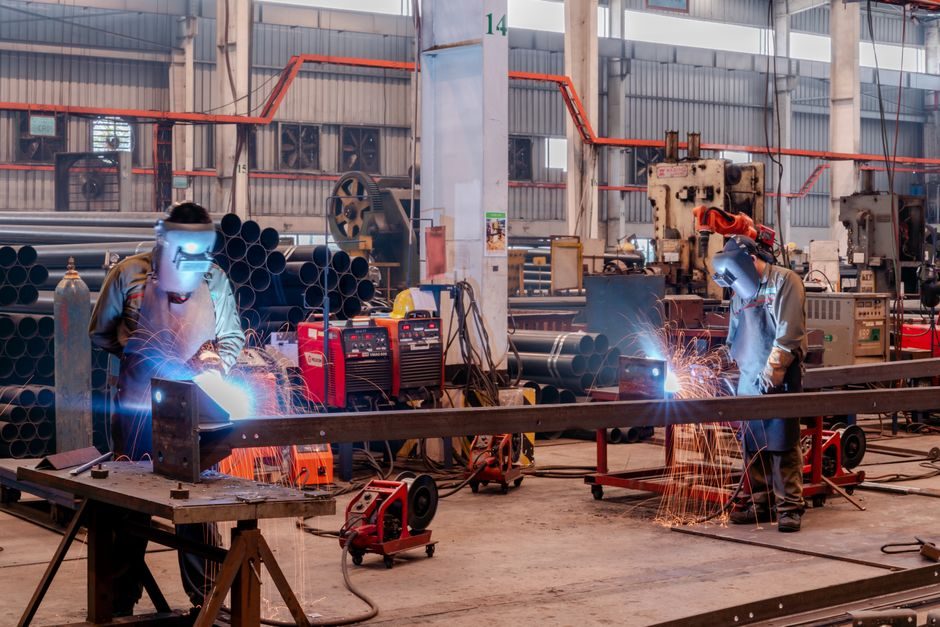
Spot welding covers a power envelope from 48 kVA suspended guns for sheet-metal shops to 1,500 kW automatic mesh-cage lines, with 2026 OEM catalogs splitting the family into manual, semi-automatic, and fully automatic/online configurations on the DirectIndustry listings [S1][S2][S3][S4].
Five distinct archetypes dominate current sourcing: lightweight manual rotary guns, pneumatic bench and rocker-arm welders, inverter table units for large workpieces, servo-shifted multi-spot automatic machines, and integrated production-line welders for mesh, cage, and condenser work [S1][S2][S3][S4][S7].
Manual Suspended and Rotary-Gun Spot Welders
Manual suspended guns are still the workhorse for low-volume body, cabinet, HVAC, and furniture assembly, where the WPI Taiwan CH-AU series delivers 48,000 W rated power with 360° rotating heads, water-cooled electrode, and a single-phase pneumatic transformer sized for distributed shop-floor taps [S2].
WPI offers the same architecture in KVA tiers of 14, 27, 31, 48, and 72 KVA, allowing the buyer to scale electrode force and weld current to steel sheet thickness without retooling the suspension arm [S2]. These units are explicitly positioned for car body parts, enclosure assembly, and steel furniture, where a hand-held gun is faster than a fixture [S2]. The double-sided rotary geometry also lets the operator clamp vertically oriented seams on tubular furniture, a layout that fixed bench welders cannot reach [S2].
For shop-floor economics, manual units trade the precision of servo-actuated heads for low capital cost and zero fixture changeover; the tradeoff is weld consistency, which depends on operator dwell time and electrode dressing cadence [S2].
Semi-Automatic Bench and Inverter Spot Welders
Semi-automatic table welders close the gap between manual guns and full lines, and the Koyo Giken MYSPOT NK-03 series anchors that tier with a 1000 mm × 1500 mm table, an inverter or DC option, and a high-pressure pneumatic ram for repeatable electrode force [S3].
Inverter (medium-frequency DC, MFDC) topology is now common in this class because it lets the welder regulate current independently of line voltage sag, which matters on 50/60 Hz Asian factory mains where three-phase AC welders would otherwise drift during long weld schedules [S3][S4]. Semi-automatic stations are typically paired with operator-loaded jigs, foot switches, or two-hand safety controls, which keeps throughput well above hand guns while avoiding the cost of a full pick-and-place cell [S3].
For R&D and low-volume batch work, Koyo Giken also lists the NK-21, NK-71, and NK-08 semi-automatic table series as part of the same platform, signalling that the semi-automatic segment is a catalogue family, not a single SKU [S3].
Automatic Multi-Spot and Servo-Shifted Stations
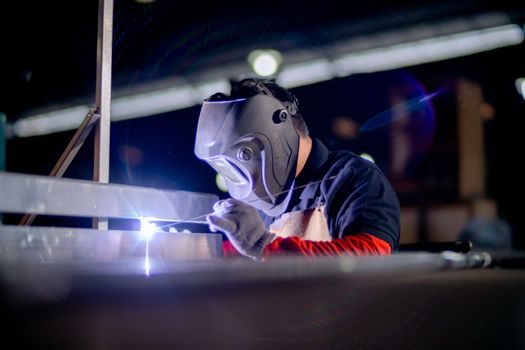
Automatic spot welding is now defined by servo-driven shifting tables and multi-axis heads, as in the WPI Taiwan SPM-Multi Spot, which welds steel sheet from 0.5 mm up to 1.4 mm with a 50/60 Hz output, sliding-table motion, and touch-screen recipe storage [S4].
The SPM-Multi Spot is explicitly a customized servo-shifting type: the servo moves the part under a fixed multi-spot head (or moves the head over a fixed nest), and a touch-screen HMI stores per-recipe weld current, squeeze, weld, hold, and offset values [S4]. This is the architecture that has displaced cam-and-indexing automatic welders in mid-volume HVAC, appliance, and automotive sub-assembly cells, because the recipe control removes the mechanical changeover for product variants [S4].
WPI Taiwan describes the broader installed base as covering automotive body part assembly, air conditioning systems, steel pallets, and tool carts, with engineering focus on automated and customized equipment that lifts the customer's production capacity [S5]. The shift from mechanical indexers to servo + HMI is the single most visible transition in this class over the past several years [S4][S5].
Heavy-Duty Mesh, Cage, and Production-Line Spot Welders
At the top of the power range, fully automatic panel-fence and mesh-cage welders push both energy and throughput into a different regime, exemplified by the Galata Makina Automesh with 600 kW–1.5 MW power, 380 V three-phase supply, water-cooled multi-head transformer, and a 50 pieces/min welding speed for fence panels [S1].
Automesh welds combined steel thickness from 3 mm to 6 mm in a single projection, which puts it firmly in the rebar, wire-mesh, and reinforcement-cage segment where projection-welded intersections replace manual tying [S1]. The configuration is offered as standalone, online, or for integration, meaning the same base machine can be a cell or a node on a larger mesh production line [S1].
Adjacent heavy-duty formats include Shanghai Trintfar's heavy-duty gantry welder, rocker-arm welder, and press welder product lines, plus Maple Welding Machine's multi-head spot welders and dedicated condenser spot welding machines used in HVAC heat-exchanger assembly [S6][S7][S8]. This is also where a cutting machine or shakeout machine is typically co-specified upstream or downstream to trim flash and to demold cast cages before welding, an integration pattern that has become standard in 2026 catalog descriptions of foundries supplying the auto and white-goods tier [S6][S7].
Selection Criteria: Power, Thickness, Material, and Automation
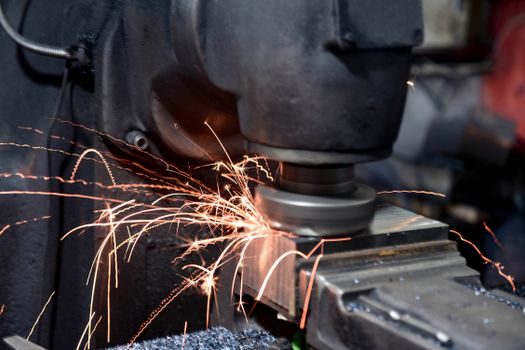
Selection of a spot welding machine should start with four parameters: combined sheet thickness (0.5–6 mm across current catalogs), material stack-up (low-carbon steel, aluminum, or coated sheet), required weld count per shift, and electrode force / current stability [S1][S2][S4].
A simple side-by-side from the 2026 listings: the WPI CH-AU manual gun sits at 48 kW and 14–72 kVA tiers for steel/aluminum sheet under ~2 mm [S2]; the WPI SPM-Multi Spot automatic station is rated 50/60 Hz with 0.5–1.4 mm single-sheet steel in a servo-shifted cell [S4]; the Koyo NK-03 semi-automatic inverter table handles larger workpieces up to 1000 × 1500 mm on the table [S3]; the Galata Automesh reaches 1.5 MW and 6 mm combined thickness for mesh and cage [S1].
Process engineers should also match the control layer to the application: MFDC / inverter units for coated and dissimilar stacks, AC pedestal units for low-carbon steel mesh, and servo+HMI stations when recipe changeover is dominant [S3][S4]. For heavier-gauge stack-ups the same engineering logic used in labeling machine and coding machine selection applies — the spec that controls downtime is rarely the headline power rating, it is the changeover time between SKUs [S4][S5].
Application Map by Industry
Automotive body-in-white and sub-assembly work is dominated by manual suspended guns (CH-AU class) for prototype and low-volume lines and by servo-shifted multi-spot stations (SPM-Multi Spot class) for Tier-1 part production [S2][S4][S5]. White-goods, HVAC, and steel furniture converge on the same 14–72 kVA suspended guns plus dedicated condenser spot welders for heat-exchanger headers [S2][S5][S7].
Construction and infrastructure — rebar cages, fence panels, building mesh — sit on the 600 kW–1.5 MW automatic mesh welders, where 3–6 mm combined thickness and 50 pcs/min throughput are the published spec gates [S1]. Industrial OEM sub-assembly lines for pallets, tool carts, and shelving are typically built around semi-automatic inverter tables (NK-03 platform) feeding into the same downstream core machine and filling machine cells that complete the SKU before final pack-out [S3][S5][S6].
Limitations, Failure Modes, and Standards Anchors
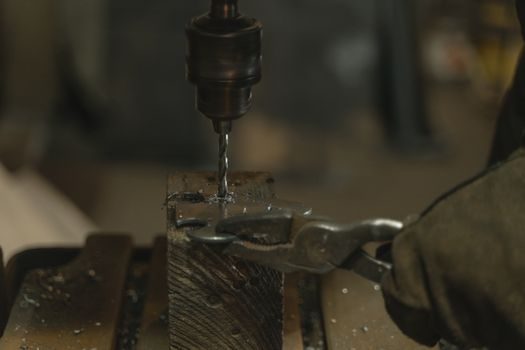
Spot welders are constrained by electrode wear, water-cooling integrity, and the weldability window of the material; coated steels (galvanneal, hot-dip galvanized) demand higher electrode force and tighter current control, and aluminum needs inverter / MFDC current to break the oxide layer before the nugget forms [S2][S3][S4].
For OEM sizing, the most common failure modes in the field are undersized KVA (the welder trips on the line-side breaker before reaching weld current), worn electrodes that flare the nugget into porosity, and inadequate cooling-water flow that lets the secondary loop fail under 50 pcs/min duty [S1][S2]. Buyers should anchor any quote to the published power range, weld-thickness window, and cooling class rather than to a generic "kVA" number, because the same kVA figure from a hand gun and a pedestal welder does not produce the same weld [S1][S2][S3][S4].
The 2026 supply landscape is also tightening on the upstream side, with the same Chinese OEM platforms (Trintfar, Maple, Xinwei) offering parallel ranges of handheld portable precision welders, energy-storage welders, and MFDC slim-line welders to cover both bench and field-deployed welding [S6][S8][S9]. This is the same supply pattern seen in adjacent automation categories, and it is reshaping lead times and minimum-order quantities for European and North-American buyers sourcing through 2026 [S6][S9].
Trackable signals for the rest of 2026 include further MFDC / inverter penetration into the manual-suspended gun class, more servo+HMI recipe stations replacing cam-indexed automatics, and continued consolidation among Chinese OEM platforms that now quote parallel ranges from handheld precision guns to heavy-duty gantry welders [S4][S5][S6][S9].
This topic is covered further in Electrical Fire Monitoring System Cost Breakdown and 2026 Price Drivers.