
Bulk spring-washer FOB pricing for the common stainless-steel flat/gasket style landed in a US$0.03–0.30 per piece band at 1,000-piece minimum order on Chinese B2B platforms as of February 2026 [S3]. The spread is roughly an order of magnitude within one product family, which tells you the unit price is driven less by the part itself than by the variables stacked on top of it: material grade, type, finish, and lot size.
For buyers building a cost model, the practical reference points are HELICAL's helical-round stainless-steel and brass range [S1] and BORRELLY's Belleville DIN 2093 disc-spring washer line, which explicitly advertises "low cost if standard range is used" alongside heavy elastic force and stackable combinations for tuned elasticity curves [S2]. A 2026 retail of "Spring Washer Machinery Price" listings on Made-in-China.com also surfaces counting-and-packaging machines such as the Jp-320-3 auto-counter used to bag mixed hardware packs (spring washers, nuts, O-rings, furniture bolts), indicating that packaging-style SKUs trade at a different cost structure than bare catalogue parts [S6].
What "spring washer" actually covers in 2026 catalogues
The trade treats at least three distinct geometries as "spring washers" and they do not interchange on cost. A helical split washer (the traditional lock washer) is the cheapest to produce and is what most generic "spring washer" listings refer to [S1]. A Belleville disc spring, governed by DIN 2093, is a stamped conical disc that can be stacked in series or parallel to multiply force or travel; these are typically specified where a defined elastic curve and high force in a short deflection matter, and Borrelly's PVD series is a representative carbon-steel catalogue line [S2]. A curved/wave spring washer is the third family, used where low-height preload with a small deflection is needed.
Each geometry ships against different standards. Helical split lock washers typically follow DIN 127, ASME B18.21.1 or similar light- and heavy-series specs. Belleville disc springs fall under DIN 2093 (the metric reference) with inch-series equivalents under DIN 6796 for bolted-joint disc springs. Material and finish then sit on top: stainless steel A2/A4 (AISI 304/316) for general corrosion, brass for electrical/galvanic-compatibility applications as HELICAL offers [S1], and carbon steel with optional zinc, black-oxide or mechanical coatings for the high-volume DIN 2093 range [S2].
FOB price bands observed in mid-2026
The cleanest public data point is the Made-in-China video-channel listing updated 2026-02-19, which quotes a flat-gasket stainless-steel spring washer at US$0.03–0.30 per piece FOB at 1,000-piece MOQ [S3]. That single band is the reference for budgeting a generic helical split or flat-spring washer in 304/316 stainless.
For higher-specification geometries, list pricing is typically expressed as "request quote" or per-thousand rather than per-piece on the public page. Borrelly's DIN 2093 disc-spring line, for example, is positioned on direct-industry catalogues with a "low cost if standard range is used" message and ships pre-tax excluding delivery and duties [S2] — meaning the published number is the part, not the landed cost. A useful rule of thumb: a DIN 2093 disc spring in carbon steel at small-MOQ catalogue specs will sit several multiples above a flat helical split washer, and a stainless DIN 2093 part will sit several multiples above that again, putting a realistic per-piece range for engineered disc springs in the low single-digit US dollars at small quantities.
Cost levers that move the unit price
Material grade is the dominant lever. Spring washers are available in stainless steel grades including SS304 and SS316, as listed in supplier specifications. Brass (as offered by HELICAL alongside stainless [S1]) is priced off copper-alloy markets and trades at a different absolute level than steel entirely, so direct comparison is meaningless without normalising the application (electrical grounding, decorative, non-sparking).
Type and tolerance stack on top. A Belleville disc spring to DIN 2093 carries tight thickness and flatness tolerances plus a defined load-vs-deflection curve, and that engineering content is what lifts the price above a generic split washer [S2]. Finish adds another band: zinc plating, hot-dip galvanising, black phosphate, PTFE or Xylan coatings each add process steps and inspection, with stainless parts typically commanding a premium over zinc-plated carbon steel at the same geometry. Order volume remains the largest single discount lever — moving from 1,000-piece MOQ to 10,000 or 100,000 pieces commonly halves the per-piece price on commodity helical split washers, with diminishing returns above the 100,000-piece threshold.
Selection criteria by use case
For general bolted-joint locking against vibration on non-critical assemblies (consumer goods, light enclosures), a zinc-plated carbon-steel DIN 127 helical split washer is the cost-minimising default and aligns with the lower end of the US$0.03–0.30 FOB band [S3]. For outdoor, marine, or chemical-exposure service, specify A2 or A4 stainless — the spring washer reference geometry typically follows DIN 127 or DIN 6796 depending on whether a disc or split profile is required, and material selection does most of the corrosion work.
For defined preload in a controlled deflection envelope — typical of valve assemblies, bolted-joint torque management, and certain die-set applications — a DIN 2093 disc spring, stackable in series for added travel or in parallel for multiplied force [S2], is the right part. For a comparison of disc-spring washers against other locking hardware such as keyed locking assemblies, the side-by-side cut in Spring Washer vs Locking Assembly: 2026 Spec Cut for Bolted Joint Buyers is a useful decision aid. Buyers working through the broader spec and sourcing checklist should also walk the Spring Washer Buying Guide 2026 before locking a supplier.
Who spring washers are for, and where they are the wrong part
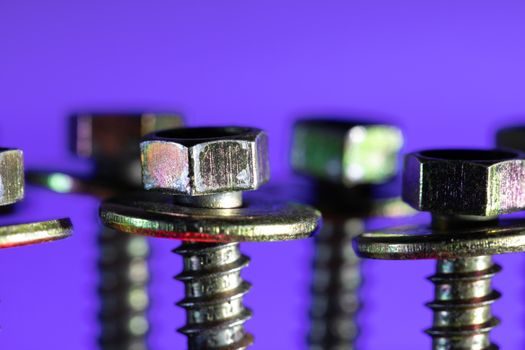
Spring washers are a fit where a small, repeatable preload is acceptable, where joint movement is mainly vibratory rather than thermal, and where the cost of the fastener stack matters. They are the wrong part where the joint sees large thermal expansion, where a known bolt preload must be maintained within a tight tolerance window, where the application is safety-critical (lifting, pressure-retaining, rotating machinery at high speed), or where the standard itself disqualifies them — many pressure-vessel, structural and automotive specs have moved to DIN 6796 disc washers, Nord-Lock-style wedge-lock pairs, or direct-tension-indicator bolts in place of helical split washers because split washers do not provide a measured preload, only a friction effect. [S1]
They are also the wrong part where a sealing washer is actually required — a spring washer's job is mechanical preload and anti-loosening, not fluid or gas sealing. Mis-substitution is a common procurement error that costs nothing at PO time and a great deal at commissioning.
Limitations, failure modes and quality risks
Helical split washers are widely criticised in fastener-engineering literature for not actually preventing self-loosening under transverse vibration; DIN 6796 disc washers and wedge-lock pairs are the spec-of-record where preload retention is provable. Material risk shows up as galvanic corrosion when a carbon-steel spring washer is paired with stainless fasteners in a wet environment — the washer becomes the sacrificial anode and can disappear, leaving the joint with no anti-loosening feature at all. On the cost side, the failure mode is paying catalogue price for an off-standard part: SKUs advertised as "DIN" without a material certificate, parts sold as A4 stainless that are actually A2 with a passivation wash, and disc springs that meet dimensional tolerance but not the load-vs-deflection curve. Specify a mill test certificate (EN 10204 3.1) for any safety-relevant or stainless order, and require a load-deflection test report for DIN 2093 disc springs. [S2]
Sourcing channels and landed-cost stack
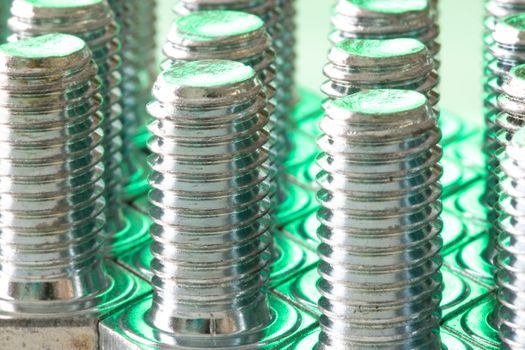
Three channels carry the bulk of mid-2026 spring-washer trade. Direct from Chinese B2B platforms such as Made-in-China, where flat-gasket stainless parts quoted at US$0.03–0.30 per piece FOB at 1,000-piece MOQ [S3] set the floor for commodity SKUs and where packaging-machinery listings (Jp-320-3 auto counter) signal the broader hardware-pack ecosystem [S6]. European and US industrial catalogues such as Direct Industry list the engineered end of the market — HELICAL's helical-round stainless and brass range [S1] and Borrelly's DIN 2093 disc-spring PVD series [S2] — where published prices are typically "request quote" or per-thousand, with delivery and customs duties billed separately [S2]. For very large OEM volumes, direct mill sourcing in Asia is the next step down, generally with custom tooling amortised across a 12–24-month forecast.
The landed-cost stack to apply to any FOB quote is freight (sea LCL vs air vs courier), duty under the destination HS code (typically 7318 or 7415 for steel/brass washers), customs broker fees, inspection costs if specified, and the cost of any non-conformance on receipt. For a 1,000-piece stainless order at the US$0.30 ceiling, freight and duty can easily double the FOB line. Comparing supplier offers on FOB only is a common and expensive mistake; a true cost model normalises on delivered, duty-paid, with a quality-reject provision.
Standards and traceability to anchor the spec
For helical split lock washers, the governing references are DIN 127 (the metric standard still widely used), ASME B18.21.1 (the US light- and heavy-series equivalent) and ISO 4759-3 for tolerances. For Belleville disc springs, DIN 2093 is the metric standard for the geometry, load rating and dimensional series, with DIN 6796 covering disc washers specifically intended for bolted joints — buyers should know which they need, because the two overlap in shape but not in test regime. Material references include EN 10088 for stainless grades, ISO 3506 for corrosion-resistant fastener-class stainless (A2/A4), and EN 10204 for mill-test-certificate types. Coatings fall under ISO 4042 for electroplated finishes and ISO 10683 for non-electrolytically applied zinc-flake coatings. Pulling these numbers into the purchase specification is what separates a defensible spring-washer order from a price-only transaction. [S3]
For cost tracking, the practical signals to watch over the second half of 2026 are stainless-steel base-price movements (LME nickel and chrome indices), freight rates on the Asia–Europe and Asia–US lanes, and the published response times of major Chinese wholesalers — these are the variables that move the US$0.03–0.30 band more than the washer itself does. Cross-reference the spec side in the Spring Washer Buying Guide 2026 before issuing the next RFQ.
For component-level specifications, see linear guide.