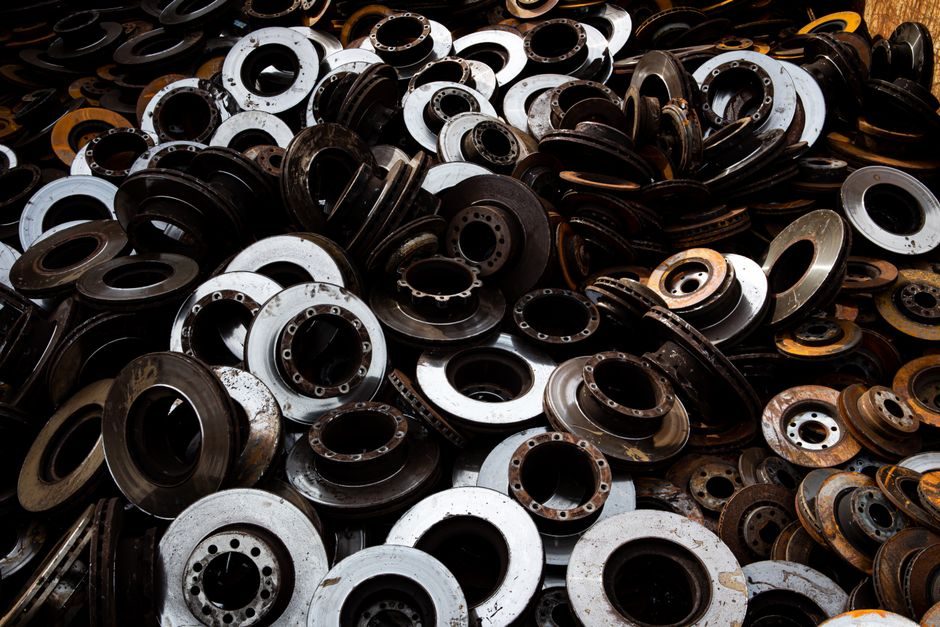
Spring washers to DIN 127 and JIS B1251 cover metric M3 through M36 (imperial No.6 to 1-1/2") in 70C spring carbon steel and SUS304/SUS316 stainless, and that 34-size envelope is the practical stock range every buyer benchmarks against in 2026 [S1].
On the supply side, the same M3-M36 envelope is now produced on automated counting-and-packaging machinery such as the JP-320-3, which assembles mixed SKUs of spring washers, O-rings, nuts and furniture bolts in a single pass, and that integration is what keeps contract OEM unit cost near the sub-cent mark for 70C plain-finish split lock washers [S3].
Geometry and what DIN 127 / JIS B1251 actually control
DIN 127 is the European split-lock washer: a single-coil helical square-section spring cut so the two ends lift axially under bolt preload, with the gap, free height, and square-section thickness tied to the nominal bolt diameter (M3 to M36 in this stock set) [S1].
JIS B1251 covers the equivalent Japanese split spring washer ("IFIL-9" appears alongside it on the same factory data sheet, indicating a parallel industrial-fastener designation for the same geometry), so a buyer specifying to either standard on the same M3-M36 drawing receives interchangeable parts [S1].
For a spring washer used purely as a single-use anti-loosening device, the standards govern only the as-formed spring rate, hardness range, and edge break — not fatigue life in a given joint, which is why bolted-joint calculations should be done to VDI 2230 or equivalent, not the washer standard.
Material selection: 70C carbon steel vs SUS304 vs SUS316
70C is a Japanese-designation high-carbon spring steel (≈0.70% C, Mn-Cr additions) supplied to a spring-temper hardness band; it is the default for indoor, dry, painted or zinc-plated assemblies where the washer cost is the dominant lever [S1].
SUS304 (AISI 304) gives roughly 18% Cr / 8% Ni austenitic stainless performance — adequate corrosion resistance for most outdoor and washdown environments, and the default "stainless" SKU carried by Chinese wholesalers on the same DIN 127 / JIS B1251 tooling [S1].
SUS316 adds 2-3% Mo for chloride resistance and is the specified upgrade for marine, de-icing salt, and chemical-exposure joints, again in the same M3-M36 envelope with no tooling change — only the wire feedstock changes [S1].
Sizing matrix and metric/imperial crossover
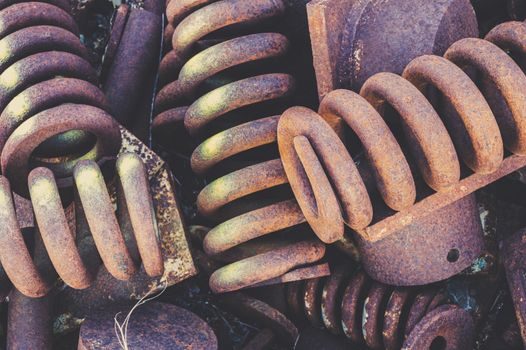
Stock range from one Chinese supplier spans M3 to M36 metric and No.6 to 1-1/2" imperial on the same DIN 127 / JIS B1251 geometry, which covers roughly 95% of general machinery bolted joints a maintenance buyer will see in 2026 [S1].
Practical crossover: M3 ≈ No.6 / M5 ≈ No.10 / M6 ≈ 1/4" / M8 ≈ 5/16" / M10 ≈ 3/8" / M12 ≈ 1/2" / M16 ≈ 5/8" / M20 ≈ 3/4" / M24 ≈ 1" — for a buyer standardising inventory, the safe SKU cut is M3, M4, M5, M6, M8, M10, M12, M16, M20, M24, M30, M36 in 70C and the four most common (M6, M8, M10, M12) in SUS304/SUS316 [S1].
Outside that envelope — sub-M3 instrument screws, above-M36 structural anchors — split-lock geometry gives way to other sealing washer or specialty locking devices, and a buyer should not try to scale a DIN 127 design upward.
Plating, finish and what changes the corrosion math
For 70C, the typical finish ladder is plain-oil (short indoor life), zinc plated (ISO 4042 Fe/Zn 5-8 µm, indoor + sheltered outdoor), zinc-flake (8-12 µm, automotive-grade, no hydrogen-embrittlement risk on 70C class), and hot-dip galvanised (ISO 1461, ~50-80 µm, structural outdoor). [S1]
For stainless split-lock washers in SUS304 / SUS316, no plating is required; passivation per ASTM A967 is optional on the cut edges, where the slit face can show light heat-tint scale on as-formed parts [S1].
Hydrogen embrittlement is a real risk on 70C spring-temper parts with acid-pickled zinc — specify zinc-flake or mechanical zinc (ISO 4042 mechanical plating) for any 70C washer above M12 going into a high-stress or safety-critical bolt.
Washer-only vs joint-engineered locking: who it is for

For a buyer specifying on a bolted-joint drawing, the spring washer alone is the right answer for low-cycle vibration (pump skids, motor feet, general machinery guards), reassembly-required service joints, and cost-sensitive OEM volume where each bolt pair needs a locking element cheaper than a prevailing-torque nut. [S2]
It is the wrong answer for high-cycle dynamic loading (engine fasteners, suspension, structural steel slip-critical joints), for joints that have been re-tightened past yield, and for any application where a controlled preload path is required — in those cases a DIN 6796 conical spring washer, a Nord-Lock pair, or a sealing washer with elastomer is the correct part.
The standards (DIN 127, JIS B1251) deliberately do not promise vibration-locking performance: they are dimensional and hardness standards, not joint-engineering standards.
Sourcing levers: machine choice, MOQ, lead time
Unit price on a 70C M8 split lock washer, zinc plated, FOB China, is anchored by the forming-and-counting machinery — the JP-320-3 type automated counter packs mixed lots of spring washers, nuts, O-rings, and furniture bolts at very high throughput, which is why standard SKUs sit in the sub-cent to low single-cent OEM band in 2026 [S3].
MOQ on a stock-size M6-M16 70C split-lock washer is typically one 25 kg carton per SKU per finish (≈40,000-80,000 pieces depending on size); custom non-stock sizes, imperial-only SKUs, or SUS316 above M24 carry 1-3 tonne MOQs and 30-60 day lead times [S1].
For buyers who also need companion linear-motion hardware, the same sourcing channel covers linear guide rails, crossed-roller guide tables, and shaft collars — combining shipments on one pallet amortises the freight, and a practical maintenance buy list pairs DIN 127 spring washers with DIN 705 shaft collars for any rotating-element repair kit [S1].
Comparison: which split-lock washer for which bolt
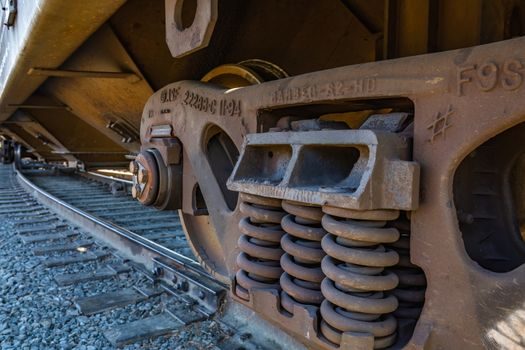
Decision criteria for a 2026 maintenance buyer: corrosion environment, bolt size, reusability, and cost per joint. Lining the three stocked materials (70C zinc, SUS304, SUS316) against those four criteria gives a defensible default SKU matrix. [S3]
Outside this matrix, the buyer should re-evaluate the locking device rather than the material: a DIN 6796 conical spring washer for through-bolted joints under thermal cycling, and a sealing washer with FKM or EPDM elastomer wherever fluid tightness is part of the joint requirement.
Failure modes and inspection at goods-in
The three failure modes a goods-in inspector should catch on DIN 127 / JIS B1251 parts are: (1) over-quenched 70C parts that snap on first compression rather than spring — the washer should flex and recover, not break; (2) cut-edge burrs on the slit that prevent flat seating against the bolt head or nut; (3) zinc build-up inside the gap that fills the spring travel and kills the locking action. [S1]
Hardness spot-check on 70C should land in the HRC 38-46 spring-temper band; SUS304 / SUS316 parts should be non-magnetic in the annealed-and-formed condition and passivated if specified.
For non-stock specials, request a PPAP-3 / ISIR package with hardness, salt-spray (ASTM B117 hours), and a sample joint-assembly test under simulated vibration before signing off the first production lot.
Standards reference and traceability
For 2026 procurement, the named standards that govern a stock split-lock washer purchase are DIN 127 (geometry, tolerances, hardness band for the European/M-export market) and JIS B1251 (the equivalent Japanese industrial-fastener standard) — the IFIL-9 designation listed on the same data sheet is a parallel industrial-fastener number covering the same geometry [S1].
Material reference standards for the wire feedstock are EN 10132-4 (cold-rolled narrow strip for springs, 70C class) and JIS G4313 (SUS304/SUS316 cold-rolled spring-grade strip); plating and finish should be called out to ISO 4042 (electroplated coatings on fasteners) and ISO 1461 (hot-dip galvanising) when relevant.
A complete PO should state: standard (DIN 127 or JIS B1251), nominal size (M…), material (70C / SUS304 / SUS316), finish (plain / zinc / zinc-flake / hot-dip / passivated), hardness band, packaging (kg/carton or pieces/bag), and inspection document type (COC 2.1 / 3.1 per EN 10204).
The next trackable node for any spring-washer buyer is the Q4 2026 review of MOQ and lead time against the JP-320-3-class automated line throughputs from Chinese contract packagers [S3], and a parallel check on SUS316 spot pricing, which has moved more than 70C zinc in the past 12 months on the M8-M16 size band [S1].
For related coverage, see Laser Distance Meter 2026 Price & Cost Guide: Specs, Bands and Sourcing Levers.