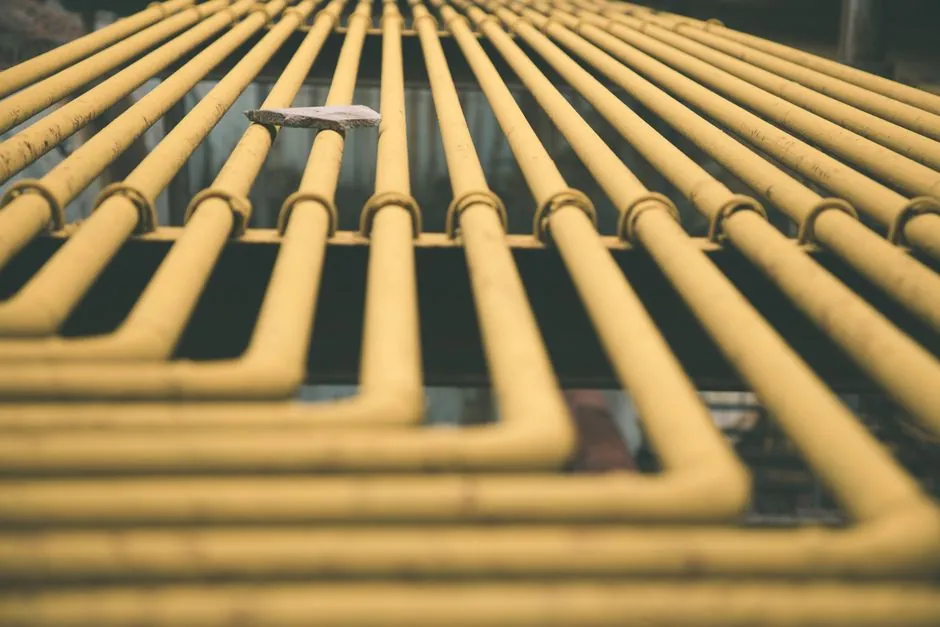
On active construction and renovation sites, the sprinkler decision is driven by five anchors: occupancy hazard, ambient temperature, ceiling height, water supply, and commodity class, with NFPA 13 governing hazard classification and spacing rules in most U.S. jurisdictions [S1].
Misalignment on any one of those five anchors translates directly into failed acceptance tests, denied occupancy permits, or hidden liability once the building is turned over, which is why a construction-phase sprinkler specification is treated as a permit artifact, not a finish-trade detail [S2].
Wet Pipe vs. Dry Pipe vs. Pre-Action vs. Deluge: When Each Applies
Wet pipe systems are the most commonly installed commercial sprinkler type, holding water in the piping at all times so that the activated head discharges immediately, making them the lowest-cost, lowest-maintenance option for heated occupancies such as offices, schools, healthcare facilities, hotels, and retail centers where interior temperatures stay above freezing year-round [S1]. Dry pipe systems carry pressurized air or nitrogen in lieu of water until a head opens, which adds a small discharge delay but prevents freeze damage in unheated warehouses, parking garages, loading docks, exterior canopies, cold storage, and freezer buildings [S1]. Pre-action systems hold water out of the piping until a separate detection device confirms a fire event, which is why they are specified for data centers, server rooms, telecommunications facilities, museums, libraries, archives, clean rooms, and other spaces where accidental water discharge would cause disproportionate asset loss [S1]. Deluge systems keep all heads open and admit water simultaneously on detection signal, matching facilities with rapidly developing high-hazard fires such as certain chemical or fuel-handling areas [S1].
A practical construction-phase decision rule: if the space will be conditioned before system turnover, default to wet pipe; if the space will sit unheated through at least one winter, default to dry pipe; if the loss-of-asset risk from an accidental discharge exceeds the cost of detection hardware, default to pre-action; if the hazard class under NFPA 13 is high and fire growth rate is fast, deluge is the only compliant option [S1][S2].
Construction-Site Hazards That Override Default Selection
Dust containment installed during construction, reroofing, or renovation can act as a thermal barrier between the fire plume and the sprinkler element, and even partial obstruction of the heat path delays activation beyond the head's rated response, which is a recognized life-safety concern on active jobsites [S3]. Standard glass-bulb or fusible-link sprinkler elements are rated to release between 135 and 170 degrees Fahrenheit, so any material that absorbs, deflects, or traps heat below the head can shift that temperature-time curve past the intended window [S3]. Temporary containment products that are not code-compliant or that have not been tested for heat-flow transparency should therefore be treated as a sprinkler performance risk and either relocated, reconfigured, or replaced before commissioning [S3].
Hot-work permits, open-flame roofing, welding, and torch operations further raise the commodity class on a jobsite, and a space classified as light hazard during design can shift to ordinary hazard Group 1 or 2 once construction dust, packaging, and temporary combustibles are accounted for, which in turn raises the required design density and spacing under NFPA 13 [S1][S2].
Comparison: System Types Against Four Decision Criteria
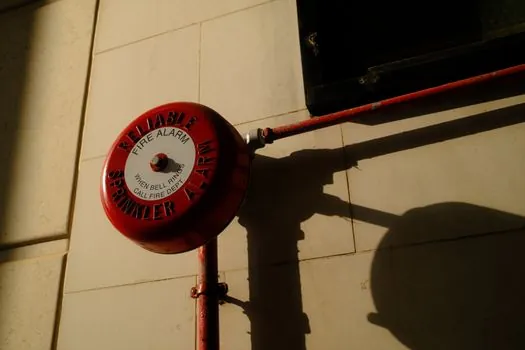
Lining the four system types up against installation cost, freeze tolerance, discharge speed, and water-damage risk makes the trade-off visible in a single view: wet pipe scores best on cost and discharge speed but only where freezing is not a concern; dry pipe adds freeze tolerance at the price of a small air-to-water transit delay and slightly higher maintenance; pre-action ties detection to water admission, which cuts accidental-discharge risk to near zero at the cost of a more complex approval path and dual-component maintenance; deluge is the only option that gives simultaneous multi-head discharge, but it requires a dedicated detection system and a hydraulically sized supply that few commercial sites can justify [S1]. The cost ranking, in ascending order, is wet, dry, pre-action, deluge, and that ordering maps almost directly onto the complexity of the approval and commissioning workflow each system demands on a new build [S1][S2].
Where Each System Is Right, and Where It Is Wrong
Wet pipe is right for any heated, occupied space with a light or ordinary hazard classification, and is wrong for any unheated, freezer, or exterior canopy application, where the water-in-piping assumption breaks under sub-freezing conditions [S1]. Dry pipe is right for unheated warehouses, parking garages, and cold storage, and is wrong for spaces with high-value electronics or assets, where the air-to-water transit delay of roughly one pipe-volume cycle is unacceptable and where accidental trip during the air-pressurized state is hard to detect [S1]. Pre-action is right for data centers, museums, libraries, archives, and clean rooms, and is wrong for high-ceiling warehouses or any space where the detection-to-spray coordination time window is shorter than the hazard growth rate, because the two-stage arming logic adds latency that deluge systems are designed to eliminate [S1]. Deluge is right for rapidly developing high-hazard fires and is wrong for typical commercial occupancies, where the simultaneous discharge of every open nozzle would oversupply the design area and waste water without proportional suppression benefit [S1].
Coordination With the Construction Schedule and Permitting

Sprinkler design decisions affect permitting, construction coordination, and final acceptance, which is why the system type is locked in at the design-development stage rather than during the finish phase, since late changes to occupancy, ceiling height, or commodity class cascade through hydraulic calculations, pipe sizing, and water supply requirements [S2]. A change from wet to dry pipe, for example, is not a finish-trade substitution: it alters the air compressor, the nitrogen supervisory supply, the trip-test manifold, and the test-port configuration, all of which are stamped into the approved shop drawings before the first pipe is hung [S2].
On renovation projects, the existing system type, the available water supply curve, and the ceiling assembly fire rating are the three constraints that most often force a like-for-like replacement, and any attempt to switch from dry to wet pipe typically fails at the supply-side hydraulic test rather than at the design table [S2].
Site-Side Specs Worth Tracking on Every Submittal
Four numbers belong on every sprinkler submittal package and should be checked before the shop drawings are stamped: the design density in gpm per square foot, the design area in square feet, the hose stream allowance in gpm, and the duration of supply in minutes, since these are the four values that the AHJ reviews against NFPA 13 for the declared hazard classification [S1]. A sprinkler head's K-factor, temperature rating, and spacing together define the coverage envelope, and substituting one head model for another without recalculating those three numbers is one of the most common reasons a final inspection fails on a commercial build [S1][S3].
For dust containment on active sites, verify that any temporary membrane or curtain installed in a sprinklered space is documented as code-compliant for the specific ceiling-sprinkler geometry, and reject products that rely on marketing claims rather than recognized test data, because a partial obstruction below a head can shift activation timing past the rated response curve and void the performance assumption the system was approved under [S3].
Trackable signals to watch on the next review cycle: a shift in NFPA 13 hazard classification commentary for mixed-use construction-phase occupancies, and any jurisdiction-level update to the code-compliance bar for temporary containment installed in sprinklered spaces, both of which are likely to re-shape submittal packages on jobs started in 2026 [S1][S3]. For a deeper cross-reference on water-supply sizing for adjacent life-safety systems, the Fire Hydrant Spec Map for Food Processing Plants: 2026 Field Guide and the Fire Hydrant Selection: Pipe, Pressure, and Certification Map cover the supply-side pipe and pressure anchors that feed a sprinkler hydraulic calculation. For background on how the broader construction toolchain supports the same kind of spec-first decision logic, the encyclopedia entry on sprinkler systems and the construction tools reference round out the selection workflow.
For component-level specifications, see construction machinery and equipment.