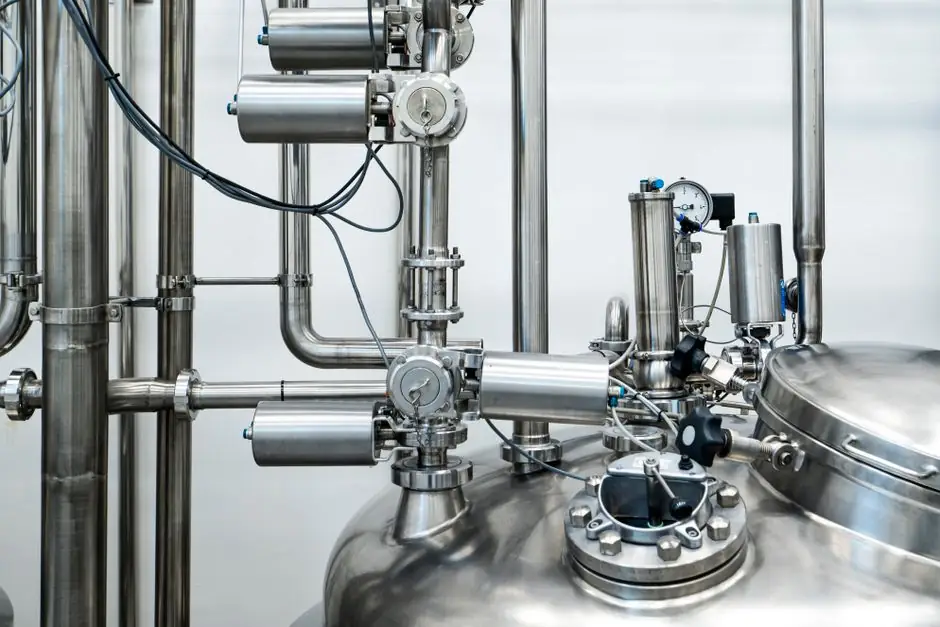
Food processing plants should match sprinkler system selection to commodity hazard, ceiling temperature, and product-contamination risk rather than defaulting to a single wet-pipe layout across the whole facility.
A snack, meat, dairy, or grain plant typically sits under FDA food-safety authority, OSHA 29 CFR 1910.157 portable-extinguisher coverage, the local fire marshal on NFPA 13, and an insurance carrier using FM Global data sheets [S3]. Selecting the wrong suppression medium creates a food-safety finding on top of the fire-safety finding, because discharge residue and water damage to exposed product are treated as contamination events by FDA inspectors [S3].
Heat-Triggered Activation, Not Smoke: The Baseline Design Rule
Standard commercial sprinkler heads activate when ceiling-level air reaches roughly 155°F to 165°F, via a glass-bulb thermal element or a fusible metal link that ruptures at its rated temperature [S1]. Commercial sprinkler systems are NOT triggered by smoke, steam, burnt food, cigarette smoke, dust, fire alarm activation, or pull stations, which matters in bakeries, fryer rooms, and flour-handling zones where particulates and cooking aerosols are constant [S1].
Only the sprinkler head or heads directly exposed to sufficient heat open; a single warehouse-aisle fire typically activates a localized cluster rather than the full floor, which limits product loss and clean-up compared with deluge or foam systems [S1]. For food plants this targeted response is the main reason wet-pipe sprinkler layouts dominate general production areas, where the goal is fast ceiling-level cooling and limited water spread to packaged goods.
Wet-Pipe, Dry-Pipe, and Pre-Action: Matching the Thermal Envelope
Wet-pipe systems hold water in the piping at all times and give the fastest head-to-water discharge, typically under 10 seconds from bulb rupture, which is why they are the default for ambient production, dry storage, and packaging halls above 40°F. Dry-pipe systems hold pressurized air or nitrogen in the piping and are required where ambient temperatures can drop below 40°F, including cold storage warehouses, freezers, and unheated loading docks, at the cost of a 30-60 second air-discharge delay before water flows. [S1]
Pre-action systems sit between the two: the piping is dry, but a detection event (often a separate heat or smoke detection circuit on a non-sprinkler-listed basis) must trip a valve before water enters, and the sprinklers still need their own thermal element to open. This double-interlock arrangement is favored in electronics-adjacent cold rooms and some cleanrooms, but is generally overkill for raw food processing unless a property carrier specifically requires it [S3]. For ammonia-refrigerated cold storage, IIAR-2 also applies on top of NFPA 13 placement rules [S3].
Fryer Lines, Cooking Oil, and the Wet Chemical vs Water Mist Decision
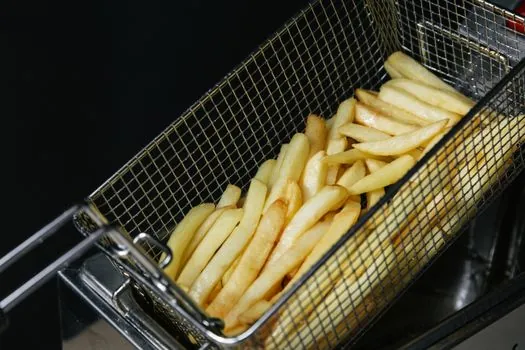
Class K wet chemical fixed systems, with a minimum 1.5 gallon (about 6 L) wet chemical agent charge for the typical portable extinguisher and proportionally larger fixed-system tanks, are required wherever a fryer line or combustible cooking oil is present, and this is the area where the standards and the sanitation team collide [S3]. NFPA 96 governs cooking operations, and for meat, poultry, and egg plants the FM Global DS 4-5 data sheet is the most commonly cited property-carrier standard [S3].
Fire sprinklers release more water than a water mist system, which directly increases clean-up time, sanitation requirements, and production downtime, and that trade-off is the central engineering decision over a fryer or oven line [S2]. Water mist systems reduce water damage and downtime versus conventional sprinklers, at the cost of higher unit cost and the need for more careful nozzle placement around hot oil. For a snack line that runs near 24/7 with tight changeover windows, the water-vs-downtime math usually pushes the spec toward water mist or localized wet chemical over the fryer, with conventional wet-pipe sprinklers retained for the surrounding production hall.
Combustible Dust and Grain Handling: NFPA 660, Not Just NFPA 13
Grain, flour, sugar, and starch handling areas are regulated under NFPA 660 for combustible dust, on top of NFPA 10 for portable extinguishers and NFPA 13 for sprinkler layout, and the same applies to any powder-handling zone in a pet food or snack plant [S3]. The dominant failure mode here is not a single flaming commodity but a dust cloud deflagration, which is why housekeeping and explosion protection (NFPA 654 / NFPA 660) are the real engineering controls, with sprinklers as the secondary layer.
Sprinkler density in these areas is driven by commodity classification and dustiness, and ESFR (Early Suppression Fast Response) heads are often specified for high-piled storage of bagged flour or sugar because they are engineered to suppress, not just control, a developing fire at the ceiling [S1]. FM Global DS 4-5 and the carrier's data sheets will frequently dictate ESFR versus standard spray versus in-rack layouts, and ignoring that layer risks both a code finding and a coverage dispute after a loss [S3].
Regulator Stack and Inspection Cadence: What the AHJ Will Actually Look At

OSHA 29 CFR 1910.157 incorporates NFPA 10 by reference, mandates annual maintenance by trained personnel, and requires documented training for any employee expected to use an extinguisher during an incipient-stage fire, which applies to every food plant with employees, not just federally inspected ones [S3]. FDA does not write a fire extinguisher rule, but inspectors expect a controlled environment, and a discharge event that contaminates product is recorded as a food-safety finding alongside the fire-safety finding [S3].
USDA FSIS jurisdiction is narrow: it covers meat, poultry, and egg product processors only, so a potato plant, dairy-only plant, bakery, or grain handler is not under FSIS and should not over-scope the compliance program to FSIS expectations [S3]. Tagged monthly visual inspections plus annual certified service are the minimum paper trail that satisfies FDA, OSHA, and the insurance carrier at the same time [S3].
Comparison: Suppression Options for Food Processing by Decision Criteria
The core decision is which suppression medium to specify over each zone, and four criteria drive the call: water-damage exposure, sanitation downtime, cooking-oil compatibility, and cold-ambient suitability. Wet-pipe sprinklers score low on cost and high on water/discharge volume, so they suit ambient dry storage and general production but hurt over fryers and exposed product. Dry-pipe sprinklers are the only practical option below 40°F but add 30-60 seconds of air discharge delay before water flows. [S3]
Water mist cuts water release volume significantly and reduces clean-up and downtime versus conventional sprinklers, which is the central argument over a snack fryer line, but it costs more per head and is more sensitive to nozzle placement [S2]. Wet chemical (Class K) is the only cooking-oil-rated option, with a minimum 1.5 gallon (about 6 L) agent size on the portable side and proportionally larger fixed tanks, and is required by NFPA 96 wherever fryers or combustible cooking oils are present [S3]. For grain, flour, sugar, and starch zones, ESFR or standard spray fed by a wet-pipe network is the typical NFPA 13 / NFPA 660 stack, with housekeeping and explosion protection as the primary controls [S3][S1].
Spec Checklist and Common Failure Modes
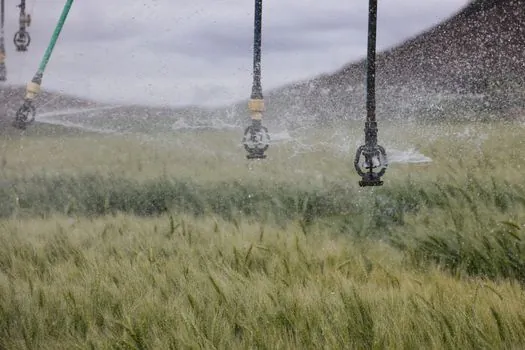
Four specs should be locked before ordering: ceiling temperature class (135°F, 155°F, 165°F, 212°F, or higher for fryer-area ambient), commodity hazard classification under NFPA 13, ambient temperature for dry-pipe versus wet-pipe routing, and the governing carrier data sheet (FM Global DS 4-5, DS 1-12, or carrier-specific). A 165°F ordinary-temperature rating is the default for most production halls; 212°F or higher is needed near ovens, fryers, and some dryer exhausts to avoid nuisance trips from process heat [S1].
Common failure modes in food plant sprinkler programs are: specifying ordinary-temperature heads too close to a fryer or oven line and getting nuisance discharges that contaminate product, routing wet-pipe piping into a freezer or cold dock and causing pipe freeze, using water-only suppression over a deep-fat fryer (where Class K wet chemical is required by NFPA 96), and under-designing dust-zone density to commodity classification under NFPA 660 [S3][S1]. The Sanitation side will also reject any layout that traps organic residue in sprinkler piping, which is one reason dry-pipe and pre-action systems are sometimes preferred in produce wash-down zones despite their slower discharge.
Signals to Track Over the Next Two Quarters
Two trackable signals: the FM Global data-sheet revisions for food processing (DS 4-5, DS 1-12) issued in 2026, which directly drive carrier-accepted sprinkler densities and ESFR head spacing, and any NFPA 96 or NFPA 660 update cycle that changes cooking-oil and combustible-dust rules. NFPA 13 placement for cold storage, governed in part by IIAR-2 on the ammonia side, is the third area to watch for plants that ship refrigerated [S3]. For facilities expanding a fryer or powder line, re-running the hazard classification against the current data sheet before buying heads avoids a rework finding from the carrier or the local fire marshal.
Detailed specification references: asrs system, and shuttle system.
This topic is covered further in XPS Board Selection for Cleanrooms: Spec Map for Moisture, Strength, and Outgassing.