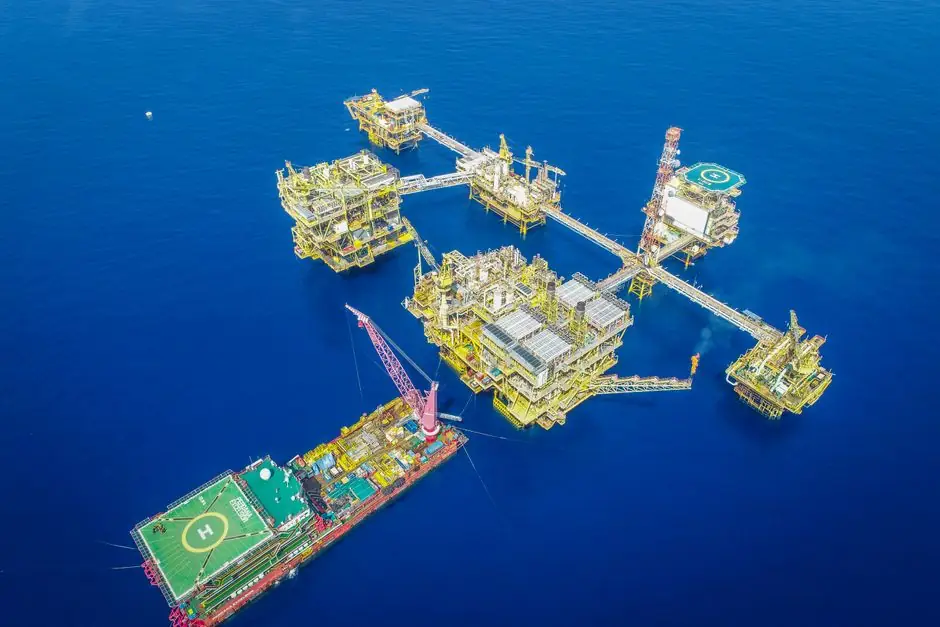
In an oil and gas facility, a deluge sprinkler system, a foam/water sprinkler system, or a pre-action system is selected zone by zone, not building by building, because the same plant contains hydrocarbon pools, cold storage, control rooms, and electrical rooms, each with a different fire load [S1][S2][S3].
Two governing facts drive the design: hazards in this industry come from flammable vapor, process gas, crude oil, condensate, and hot work, and many zones are classified for explosion-proof equipment, which forces ignition-source and detection hardware decisions long before a sprinkler head is chosen [S2]. For a related yard-water perspective, see the fire hydrant selection guide.
System families commonly specified for oil and gas
Four commercial sprinkler families show up in the oil and gas spec sheet, and the published guidance for high-hazard facilities lines up with two of them, deluge and foam/water, as the primary suppression layers, with wet, dry, and pre-action handling the support buildings [S1][S2][S3]. Deluge systems are listed as commonly used in aircraft hangars, chemical processing plants, oil and gas facilities, power generation plants, and fuel storage areas, and they discharge large volumes of water through open nozzles once a separate detection system trips the deluge valve [S1][S3]. Foam/water sprinkler systems combine foam concentrate and water for versatile control and are commonly used in oil and gas facilities, petrochemical plants, fuel storage areas, and warehouses handling flammable liquids, governed by NFPA 11 and NFPA 16 [S3].
Wet pipe systems are still the most common commercial type installed, but they sit downstream of a risk review: in a heated control room or admin block they are the default, in a sub-freeze pipe alley or unheated compressor shed they are not [S1][S3]. Dry pipe systems hold pressurized air or nitrogen until a head opens, and they are the fallback for cold environments where wet piping would freeze [S1][S3]. Pre-action systems gate water behind a fire-detection confirmation, which makes them the go-to for data centers, server rooms, telecommunications rooms, museums, libraries, archives, clean rooms, and other mission-critical spaces where an accidental discharge would itself become a loss event [S1].
Hazard mapping that drives the spec
Engineers are told to map hazards before picking a system, and the typical high-risk area list in an oil and gas plant is long: process area, storage tank, loading and unloading area, pump station, compressor area, electrical room, control room, instrument room, power generation area, utility area, jetty or marine terminal, chemical warehouse, and hot work area [S2]. Each of those zones carries a different fire-load profile, and the published recommendation is not to rely on a single system, but to combine detection, alarm, automatic suppression, manual firefighting, and evacuation procedures [S2].
Three environmental multipliers are flagged as material killers: corrosion, humidity, and chemical exposure, all of which shorten system life if materials are not upgraded at the spec stage [S2]. In classified areas, the spec must also call for explosion-proof devices, corrosion-resistant materials, and integration with the process safety / ESD (emergency shutdown) interface, because suppression that does not talk to the shutdown logic can re-ignite a still-fed pool fire [S2]. Detection hardware, flame, gas, smoke, and heat detectors plus manual call points and sounder strobes, has to be specified as part of the same package, since deluge and pre-action systems depend on detector confirmation, not on a glass bulb, to open the valve [S2].
Decision matrix by zone
A side-by-side read of the four families on four criteria, response time, freeze tolerance, accidental-discharge risk, and typical oil-and-gas use, is the cleanest way to pick a system per zone [S1][S3].
Wet pipe systems win on response (the head opens and water is already at the nozzle), have zero freeze tolerance, carry the highest accidental-discharge risk for any piping breach, and are normally confined to heated admin, control, and instrument rooms where the fire load is electrical or paper, not hydrocarbon [S1]. Dry pipe systems have a slower response because compressed air or nitrogen must vent before water reaches the open head, but they tolerate sub-freezing ambient, and they are used in unheated warehouses, parking garages, loading docks, exterior canopies, cold storage, and freezer buildings, not in the live process area [S1][S3]. Pre-action systems gate water behind a fire-detection confirmation, which suppresses accidental discharge, and they are picked for data centers, server rooms, telecommunications facilities, museums, libraries, archives, and clean rooms, including the IT and SCADA rooms that sit inside the perimeter fence of a gas plant [S1]. Deluge systems have the highest water delivery rate, require a separate detection-and-actuation chain, and are the published common choice for aircraft hangars, chemical processing plants, oil and gas facilities, power generation plants, and fuel storage areas, with compliance to NFPA 15 and NFPA 13 called out in current vendor guidance [S1][S3]. Foam/water sprinklers overlay that matrix where the fuel is a flammable liquid, with low-expansion foam for quick spread and high-expansion foam for large or confined spaces such as tank dikes and bunds, governed by NFPA 11 and NFPA 16 [S3].
Standards, codes, and the documentation stack
Wet, dry, and pre-action sprinkler systems are aligned with NFPA 13, deluge systems additionally follow NFPA 15, and foam systems are pinned to NFPA 11 (low/medium/high-expansion foam) and NFPA 16 (foam-water sprinkler and spray systems) in current published guidance [S3]. For a parallel yard-water spec that the sprinkler system ties into, see the fire hydrant spec map for food plants, and for a project-site (not in-service) sprinkler perspective see the construction-site sprinkler field guide.
The documentation stack the spec must travel with includes the fire alarm control panel, flame, gas, smoke, and heat detectors, manual call points, sounder strobes, hydrant system, fire pump, water tank, foam system, deluge system, sprinkler system, fire monitor, fire extinguisher, clean agent system, inert gas system, ESD interface, and valve monitoring system, with complete technical documentation to support inspection, commissioning, audits, and long-term maintenance [S2]. Clean agent and CO₂ systems are referenced against NFPA 2001 and NFPA 12 respectively, and they are typically used for enclosed electrical and control rooms where water or foam would damage the asset they are meant to protect [S3]. A short verbatim requirement from the published guidance: facilities need a combination of detection, alarm, automatic suppression, manual firefighting systems, and evacuation procedures, the design must not rely on one system only [S2].
Failure modes, limits, and where each system is the wrong call
Wet pipe is the wrong call anywhere a piping leak or a ruptured head would itself be the incident, which is why data centers, museums, archives, and clean rooms are pre-action by default [S1]. Dry pipe is the wrong call for fast-developing hydrocarbon fires, because the air-vent-to-water delay plus a single head opening is not enough for a pool or jet fire, and that is exactly why those zones move to deluge or foam/water, not to a larger dry pipe [S1][S3]. Deluge is the wrong call for any occupied space where the simultaneous discharge of every open nozzle would injure or trap people, and it is also the wrong call where the detection chain is unreliable, because an open-nozzle deluge system without a working detector cannot be reset to "armed" by a fusible link [S1][S2].
Foam systems are limited by the foam concentrate stock, the proportioner accuracy, and the compatibility of the concentrate with the specific hydrocarbon (some alcohol-resistant foams are required for polar solvents, not standard AFFF), and they lose effectiveness in high wind unless the application rate is derated or wind shields are added [S3]. Detection is its own failure mode: flame detectors suit open-flame and flash-fire areas but can be blinded by smoke, smoke detectors suit smoldering electrical fires but lag a fast pool fire, and heat detectors are the slowest, which is why the spec stacks them per zone rather than picking one technology for the whole plant [S2]. Explosion-proof and corrosion-resistant device ratings, plus an interface to the process ESD, are not optional in classified areas; omitting them is the most common reason a fire protection system passes the commissioning test but fails the operational audit [S2].
Sourcing and what to verify on the data sheet
Three reference documents do most of the work in a 2026 oil-and-gas sprinkler spec: the VFPG type overview (published 2026-06-26), the Adiwarna high-risk facility guide (published 2026-06-05), and the First Advanced Saudi Arabia firefighting guide (published 2026-04-21), and they consistently place deluge and foam/water at the top of the list for flammable-liquid and gas hazards, with wet, dry, and pre-action handling the support buildings [S1][S2][S3]. On the data sheet, the items a process engineer should not let through without a check are: NFPA 13 for wet/dry/pre-action, NFPA 15 for deluge, NFPA 11 and NFPA 16 for foam and foam-water, NFPA 2001 for clean agents, NFPA 12 for CO₂, and a written interface to the plant ESD [S2][S3].
Trackable signals to watch for the next spec cycle: any update to the explosion-proof device rating list for the classified-area zones, the proportioner and concentrate spec for any new polar-solvent inventory, and the documentation pack covering inspection, commissioning, audits, and long-term maintenance, which is the file the auditor will ask for first, not the hydraulic calculation sheet [S2].
The underlying component specifications are covered under sprinkler system, oil seal, and construction machinery and equipment.