
Sprinkler system selection for firefighting reduces to four NFPA 13 system families, each matched to a different combination of ambient temperature, water-damage tolerance, and hazard growth rate, with wet, dry, pre-action, and deluge covering the bulk of commercial and industrial builds [S3][S5].
Per USFA/FEMA, residential-grade sprinkler heads cost roughly $1.35 per square foot in new home construction, and combined with smoke alarms reduce the risk of dying in a fire by 82%, while insurance carriers typically credit 5-15% on premiums for code-compliant residential installations [S1]. For broader context on how suppression interfaces with other plant firefighting equipment, see this oxygen detector selection for firefighting guide.
Wet pipe: the default for heated occupancies
Wet pipe systems hold water in the piping at all times and discharge immediately from the activated head, giving the fastest response of the four families and the lowest installed cost [S3][S5]. NFPA 13, first consolidated at the 1896 NFPA meeting, governs the layout, and the system is sized for a specific number of sprinklers at a design pressure and flow; turning off the risker mid-event can let additional heads open beyond the hydraulic design, after which the available supply may no longer cover the operated heads [S2].
Wet pipe is the right call where interior temperatures stay above 4°C (40°F) year-round, and it covers office, retail, healthcare, school, hotel, apartment, and government stock as the typical default [S3][S5]. Because the pipe is water-filled, any space subject to freezing must route to one of the other three families, and water-sensitive assets (electronics, archives) should pre-screen for pre-action. For a deeper look at how suppression links to the wider sprinkler system ecosystem and fire alarm logic, refer to the linked encyclopedia entry.
Dry pipe: cold spaces at the cost of a small delay
Dry pipe systems keep pressurized air or nitrogen in the piping instead of water; when a head opens, the air bleeds off, a dry-pipe valve trips, and water then fills the branch line before discharge, which adds a measurable delay versus wet pipe but eliminates freeze-burst risk [S3][S4][S5]. Typical fit-out includes parking garages, loading docks, exterior canopies, cold storage facilities, unheated warehouses, and freezer buildings [S3].
Operationally, dry pipe requires more attention to the compressor, air-quality, and trip-test discipline, and the added water transit time means it should not be the first choice for high-hazard rapid-growth occupancies where every second counts [S3][S5]. For occupancies that swing between cold ambient and high hazard, dry pipe plus a faster-response sprinkler (lower RTI) is the typical compromise.
Pre-action: detection-gated water for water-sensitive assets

Pre-action systems interpose a fire detection event between the detection of heat at a sprinkler head and the admission of water into the piping, which sharply reduces the chance of accidental water discharge from a damaged or heat-stressed head [S3][S5]. There are three flavors: non-interlock (detection OR sprinkler opens the valve), single interlock (detection only), and double interlock (detection AND sprinkler must both occur), with double interlock the slowest and the wrong choice for fast-growing fires [S5].
Common fit-out is data centers, server rooms, telecom facilities, museums, libraries, archives, and clean rooms, anywhere unintended water release would create losses comparable to or exceeding the fire loss itself [S3][S5]. Specification should pin down which interlock type is in scope, the detection device coverage, and the test cadence, since mis-specified interlock logic is one of the recurring causes of pre-action systems failing to perform on demand. Cross-reference: Safety Relay Specs for Firefighting Loads covers the F&G and ESD relay logic that often drives pre-action valve actuation.
Deluge: open heads for high-hazard rapid growth
Deluge systems use open sprinkler heads (no thermal element) and a deluge valve that admits water to the entire branch line the moment the detection system, typically smoke or flame detection, signals a fire, so every head in the protected zone flows simultaneously [S4][S5]. This is the one configuration where the "every head at once" Hollywood image is actually correct, and it is the right call for aircraft hangars, flammable-liquid storage, and other rapidly developing high-hazard fires [S3][S5].
Because all heads in the deluge zone open together, the hydraulic demand is the highest of the four families, and the water supply, fire pump sizing, and detection coverage must all be designed together from day one, not retrofitted after the hazard classification is finalized. Detection device selection and zoning are the dominant engineering variables; the sprinkler layout is the easier part. Related: Fixed Gas Detector Selection for Chemical Plants covers the detector-stack side of the same hazard-driven design problem.
Selection criteria mapped to system type
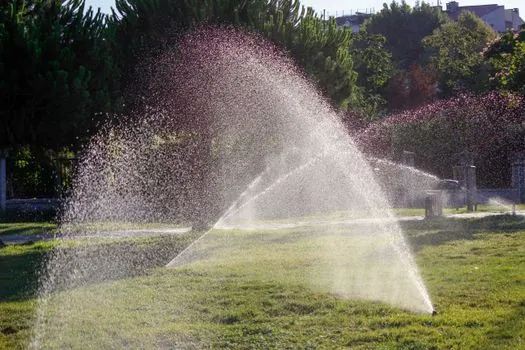
The decision tree reduces to eight inputs: occupancy classification, construction type, interior temperature, fire hazard, commodity storage, ceiling height, water supply, and local code plus insurance requirements [S3][S6]. Wet pipe wins whenever the space stays above freezing and the asset base tolerates water; dry pipe is the answer for any unheated or freeze-exposed space; pre-action is the right call only when water-damage cost rivals or exceeds fire-damage cost; deluge is reserved for high-hazard rapid-growth occupancies where simultaneous discharge of every head in the zone is the design intent [S3][S4][S5].
Per NFPA 13E and the underlying NFPA research, the three principal causes of sprinkler system failure are a closed control valve, inadequate water supply for the system, and occupancy changes that render the installed system unsuitable, all of which are independent of the wet/dry/pre-action/deluge choice and must be managed through valve supervision, hydraulic verification, and occupancy-change review [S2]. This is why the cheapest correct system almost always beats the most expensive wrong system over a 20-year service life.
Cost, hydraulics, and code anchors
Residential wet-pipe sprinkler rough-in tracks around $1.35 per square foot in new construction, comparable to upgraded cabinets or carpet, with insurance premium credits of 5-15% for code-compliant installs [S1]. Commercial pricing is driven by the hydraulic design: pipe sizing and material choice are tuned to keep friction losses inside the available pressure envelope, and hydraulic calculations will flag cases where larger pipe or a fire pump is needed to hit the design density at the most remote sprinkler [S7].
NFPA 13 is the governing installation standard in the U.S., first consolidated in 1896, and the companion NFPA 13E (first issued 1966) covers fire department operations in sprinklered properties, including the rule that fire crews should not close a control valve until overhaul confirms the fire is fully out [S2]. The IBC, via Chapter 5, allows sprinklers to trade for building height and area in many construction types, which is why the architect's ceiling-cavity, riser-room, and FDC coordination decisions directly affect whether the system is even feasible at the schematic-design stage [S4].
What sprinkler selection is NOT for
Sprinkler selection is not a substitute for detection and alarm design: in a pre-action or deluge system, the detection side carries the timing burden, and a weak detection layout will mask an otherwise well-specified suppression system [S3][S5]. It is also not the right place to cut cost on hydraulic margins: NFPA 13E documents the failure mode where additional heads open beyond the original design after a shut-off, and the supply can no longer cover the operated heads, a direct consequence of under-specifying the water supply or the design area [S2].
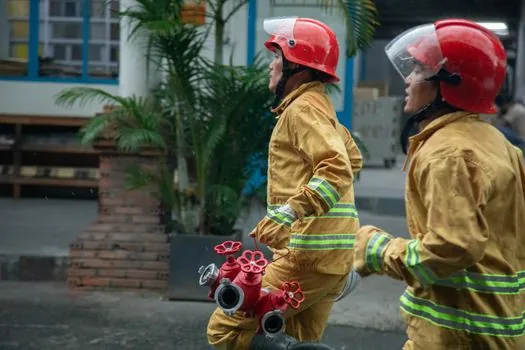
Finally, sprinkler selection is not a one-time decision: occupancy changes that push a wet-pipe light-hazard area into a higher commodity class can silently invalidate the hydraulic design, which is exactly the third principal cause of failure NFPA tracks [S2]. For plant-side personal protective equipment that pairs with firefighting work, see firefighting helmet selection and the insulated tools checklist for live-system service. Track, on the next design review cycle, whether any pending NFPA 13 or NFPA 13E revision changes the design-area or valve-supervision tables, and whether the local AHJ has adopted the latest edition.
Detailed specification references: asrs system, and shuttle system.