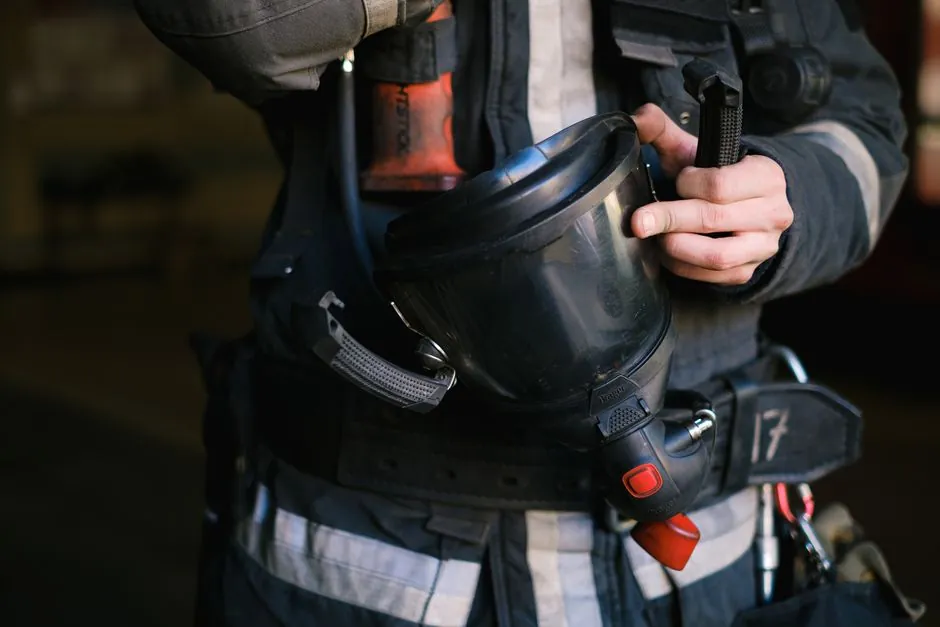
A firefighter oxygen detector is rarely sold as an O2-only instrument: on the fire ground it almost always rides alongside a CO sensor, frequently an HCN sensor, and often an LEL channel, because the dominant life-safety hazards during overhaul are oxygen deficiency plus the "Toxic Twins" of CO and HCN, as Dräger frames them for U.S. fire-service buyers [S3].
Selection is therefore a mission-profile decision, not a catalog pick: a single-gas O2 monitor suits a rehab-sector atmospheric check, while overhaul, hazmat, and confined-space entries demand 4-gas or 7-gas portable units with O2, CO, H2S, and LEL, plus optional HCN/NO2/Cl2 electrochemical channels [S2][S3].
Sensor Stack: What Channels Belong in a Fire-Service O2 Meter
Fire-service gas detection splits cleanly into three tiers by sensor count, and the O2 cell is present in all but the cheapest CO-only disposables [S1][S3]. Entry tier: single-gas units. The Dräger Pac 6000 is a maintenance-free disposable available with O2, CO, H2S, or SO2 electrochemical sensors and a stated 24-month runtime with no calibration, which makes it the lowest-friction option for a station-level CO monitor or rehab-sector carry [S3]. Mid tier: dual-gas. The Dräger Pac 8500 adds a second sensor, with documented combinations of H2S+CO or O2+CO, and a hydrogen-compensated CO cell that reduces cross-interference from H2 on the CO reading [S3]. Top tier: 4-gas to 7-gas. The Dräger X-am 8000 reads up to seven gases simultaneously in pump or diffusion mode, and the mPower MUNI/POLI 4-gas confined-space-entry monitors carry the O2/CO/H2S/LEL baseline used for IDLH entry [S2][S3].
The O2 sensor itself in this market is an electrochemical cell (the dominant technology in portable fire-service instruments), distinct from the zirconia or paramagnetic cells used in fixed oxygen detector or dissolved oxygen meter packages, so fireground units should not be cross-purchased with industrial process instruments even when the model numbers look similar. mPower's spec sheet lists O2 alongside CO, H2S, NH3, Cl2, ClO2, O3, HCN, HCl, HF, NO, NO2, SO2, PH3, AsH3, methyl mercaptan, and ETO as available electrochemical channels, the broadest single-vendor toxic-gas menu in the cited material [S2].
Setpoints, Alarms, and the 19.5% / 23.5% O2 Rule
Every fire-service O2 monitor is built around the OSHA-defined atmospheric envelope: 19.5% O2 as the low alarm (oxygen-deficient atmosphere) and 23.5% O2 as the high alarm (oxygen-enriched atmosphere), which is the threshold band used across confined-space entry in NFPA-aligned practice and reinforced in manufacturer guidance for first responders [S2]. Below 19.5% the atmosphere is treated as IDLH for oxygen; above 23.5% the fire-service concern is flammability, since every common combustible gas has a widened LEL and burn rate in oxygen-enriched air.
For comparison, the three common fireground sensor packages line up against the decision criteria a purchasing officer actually weighs: a single-gas O2 unit (Pac 6000 in O2 config) is low cost, zero-calibration for 24 months, but offers no CO or LEL coverage; a dual-gas O2+CO unit (Pac 8500) adds the silent-killer channel with hydrogen-compensated CO; a 4-gas O2/CO/H2S/LEL unit (MUNI/POLI) is the IDLH-entry baseline and the de facto overhaul kit, with optional HCN, Cl2, NO2, or SO2 cells for hazmat [S2][S3]. The X-am 8000 extends to seven gases for clearance measurement after knockdown [S3]. This O2 + companion-sensor ladder is the central oxygen detector selection logic for the fire service.
Mission Profile: Overhaul, Confined Space, Hazmat, Arson
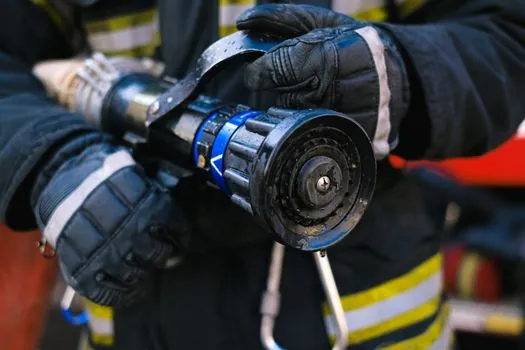
Overhaul is the dominant use case, and the cited mPower technical note states that during overhaul, when firefighters are not wearing SCBA, they are subject to poisoning by CO, HCN (from plastics), and oxygen deficiency, which is exactly the scenario a single-gas UNI O2 monitor is sized to flag so the crew can re-don SCBA gear [S2]. The Dräger X-am 8000 targets the same phase in pump or diffusion mode for clearance measurement, measuring toxic, flammable gases and vapors, and oxygen all at once [S3].
For confined-space entry at a fire scene (basements, ship holds, underground vaults, tanker interiors) the 4-gas O2/CO/H2S/LEL monitor is the documented baseline, because the crew must test the atmosphere in the prescribed order (O2 first, then combustibles, then toxics) before committing a rescuer [S2]. Hazmat teams layer in PIDs (e.g., mPower NEO ppb-level) for broad-band VOC detection, with the acknowledged limitation that PIDs are not chemically specific and do not respond to inorganic toxics like Cl2, SO2, HCN, or HCl, which is why electrochemical cells stay in the kit [S2]. Arson investigation uses a dedicated ppb PID like the NEO to sniff residual accelerants trapped under tile or absorbed into masonry, with confirmatory lab analysis downstream [S2].
Form Factor, Battery, and Crew-Carry Constraints
Fire-service form factors differ sharply from fixed oxygen detector units, and the constraints below drive selection as much as the sensor list. Single-gas disposables like the Pac 6000 are designed to be strapped to a medical kit and left on 24/7 for up to two years, with shock- and chemical-resistant housings rated for the abuse of a turnout coat pocket [S3]. The legacy Gas Tech OX-90, cited as far back as 1990, illustrates the long-standing personal-portable spec: compact, lightweight, audible and visual alarms, LCD showing concentration, peak, battery voltage, and elapsed time, plus output jacks for an earphone, recorder, or external alarm for high-noise environments [S4, 1990-10].
Multi-gas units add pump-mode sampling for confined-space pre-entry, a heavier battery, and a sensor count that drives cost and calibration burden upward: a 4-gas MUNI/POLI must be bump-tested on a schedule the volunteer department can actually maintain, which is the explicit design constraint mPower cites for its low-cost, simple-operation instruments [S2]. For 85% of U.S. fire departments that are all or mostly volunteer, maintenance simplicity is a hard requirement, not a soft preference [S2]. Cross-link to the broader respirator installation specs and selection logic for the SCBA side of the same decision tree.
Limitations, Failure Modes, and Cross-Sensitivity
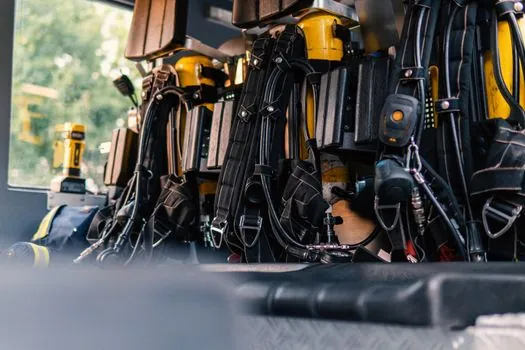
Fire-service O2 detectors fail in three repeatable ways that the spec sheet alone will not flag. First, electrochemical O2 cells consume themselves: the 24-month Pac 6000 runtime is a real cap, not a marketing line, and an expired cell drifts without warning, which is why disposable units are not used as overhaul sensors [S3]. Second, CO cross-sensitivity to hydrogen is a documented false-positive source in fire-ground atmospheres where H2 is present, and the hydrogen-compensated CO sensor in the Pac 8500 is the cited mitigation, eliminating the need to carry a second dedicated instrument [S3]. Third, PIDs miss inorganics: a hazmat scene with Cl2, SO2, HCN, or HCl will read near zero on a PID even at hazardous concentrations, so a PID-only kit is unsafe for an unknown chemical release, and the electrochemical O2/CO/H2S/LEL/HCN suite has to stay in the response bag [S2].
For an IDLH or post-knockdown atmosphere that is also potentially flammable, the LEL channel and the O2 channel interact: in oxygen-enriched air above 23.5% the LEL reading becomes unreliable because the standard combustible-gas calibration is done against normal atmosphere, so the 23.5% high alarm is the hard stop, not a soft warning [S2]. Buyers should also confirm whether their chosen unit carries hazardous-location certification for the zones they enter, a separate decision from sensor selection; the explosion-proof electrical selection spec-first guide for 2026 covers the enclosure side, and the explosion-proof vs anti-static spec-first selection piece covers the matching hardware taxonomy.
Sourcing, Standards, and Buying Signals
The principal public sources a fire chief can cite in a purchase justification are: Dräger's fire-service product pages for the Pac 6000, Pac 8500, and X-am 8000 [S3]; mPower's Tech/App Note 5 (v. 1.12, dated 7 Oct 2021) for sensor-channel selection and the 4-gas confined-space baseline [S2]; and retailer catalogs such as TheFireStore's "Firefighter Gas Meters" category, which groups multi-gas detectors, O2 monitors, and four-gas kits under one buying menu for first responders [S1]. The legacy Gas Tech OX-90 remains useful only as a historical reference for the personal-portable form factor that the current generation of disposable and 4-gas instruments replaced [S4, 1990-10].
Trackable signals over the next buying cycle: any move by Dräger or mPower to extend disposable runtime past 24 months for the O2 single-gas unit, since that is the cited constraint on station-level adoption [S3]; integration of HCN as a standard channel in the 4-gas overhaul kit (currently offered as an option on the MUNI/POLI) given the Toxic Twins framing both vendors use [S2][S3]; and whether the broader industrial oxygen detector buying guide 2026 line converges with fire-service models on hazardous-location certification.
Spec-level background on the components involved: dust detector.