NFPA 25 drives wet-pipe sprinkler inspection at a layered cadence — weekly gauge checks, quarterly valve and gauge verification, annual main-drain and trip-test, with internal pipe assessment and 5-year/10-year hydrostatic intervals layered on top [S1][S2].
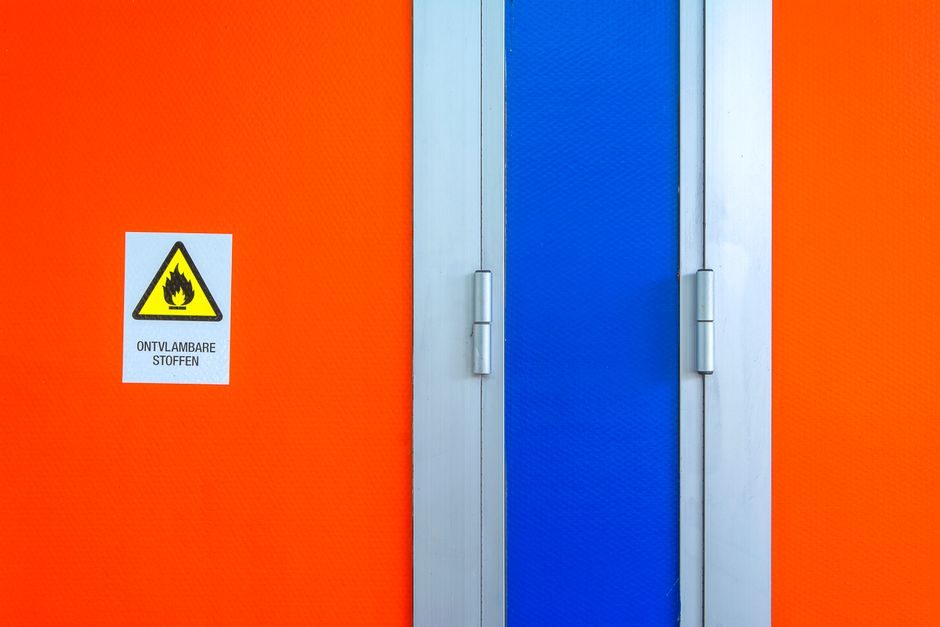
NFPA 80 frames fire doors on a flat annual cycle: drop-test (functional closure), visual inspection of labels, gasketing, glazing, and fasteners, plus a 1-year-after-installation reverification baseline [S3].
Two standards, two cadences, no shared beat
NFPA 25 separates sprinkler tasks by frequency band: weekly visual/operational on the fire pump and riser gauges, quarterly on control valves, alarm devices, and hydraulic nameplates, and annually on main drain, antifreeze loops, and dry-pipe trip tests [S1][S4].
Fire-door inspection under NFPA 80 collapses the same risk control into a single annual event — drop test + label/frame/hinge/closer/latching visual sweep — repeated every 12 months for the service life of the assembly [S3][S5].
Implication for facility owners: the two systems share almost no interval nodes, so combining them in a single maintenance contract walk-through is operationally inefficient unless a vendor offers both disciplines under one annual visit [S2][S5].
What the annual fire-door check actually requires
NFPA 80 §5.2 inspection is a 14-point visual sweep: labels legible and affixed, no holes or breaks in door/sliding/folding or shutter faces, glazing and glass intact, no broken or missing fasteners, gasketing in place, and the self-closing / latching / pivoted hardware confirmed operational [S3].
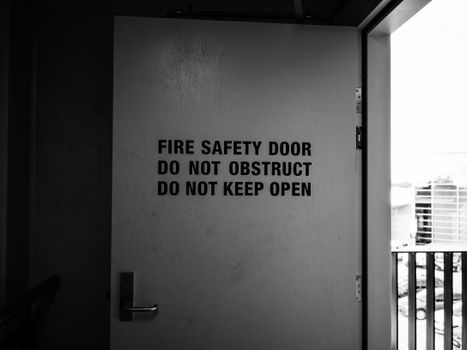
A drop test is the functional part: the door must close fully and latch from a full-open position without human intervention, and any obstruction or binding halts the assembly until repaired [S3][S5].
Records — date, deficiencies, corrective action, and the inspector's identity — must be retained by the owner; NFPA 80 §5.1.6 makes the building owner the responsible party regardless of who performs the work [S3].
What the quarterly / annual sprinkler check actually requires
Quarterly NFPA 25 walk-through covers control-valve position (open, supervised, sealed), alarm device function, gauge calibration, and hydraulic-nameplate legibility, typically a 20–40 minute visit per riser [S1][S2].
Annual tasks add the main-drain test (flowing residual/static pressure comparison against the hydraulic placard), dry-pipe valve trip, and a low-air alarm test for dry systems, plus a full forward-flow confirmation on the fire pump [S1][S4].
At 5 years: internal pipe assessment, gauge replacement, and a full flow test on private hydrants; at 10 years: an internal inspection of the standpipe system and a hydrostatic test of the FDC check valve [S1][S2].
Comparison: sprinkler quarterly vs fire-door annual on four decision criteria
Frequency: sprinkler = 4×/year (quarterly) plus weekly gauges; fire door = 1×/year (annual drop + visual) [S1][S2][S3].
Documentation depth: sprinkler requires gauge readings, valve supervision logs, and a 5-year internal-pipe record; fire door requires a single annual pass-fail inspection log per opening [S1][S3].
Failure consequence: a missed quarterly sprinkler check can leave a closed valve or failed alarm undiscovered for 90 days; a missed fire-door annual check can leave a non-latching door exposed through an entire 12-month cycle [S2][S3][S5].
Skill set: sprinkler inspection is performed by NICET II/III or water-based-systems licensed contractors with gauge and flow-test tools; fire-door inspection is open to fire-door assembly inspectors with NFPA 80 training and a torque or visual kit, no flow-test hardware required [S2][S3].
Who the two inspection regimes are FOR — and who they are not for
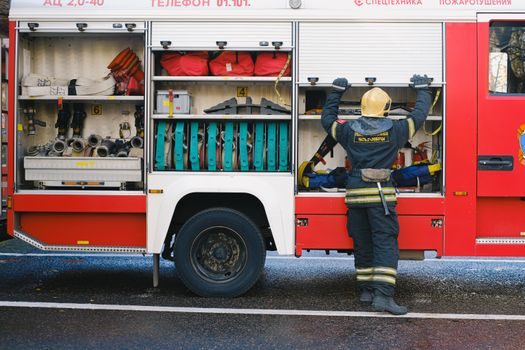
NFPA 25 is mandatory for any water-based fire suppression system — wet, dry, deluge, preaction, ESFR, CMSA, and standpipes — installed under NFPA 13 or NFPA 14, covering roughly 60+ million U.S. sprinklered buildings [S1][S2].
NFPA 80 is mandatory for swinging, sliding, rolling, and folding fire doors, fire shutters, and access doors in fire-rated assemblies — typically 60–180 minute ratings specified at the wall, not the door level alone [S3][S5].
Neither standard applies to purely residential one- and two-family dwellings, where NFPA 13D sprinklers follow a streamlined annual/quarterly subset, and smoke-rated door assemblies not in fire-rated walls fall outside NFPA 80 entirely [S2][S3].
Failure modes that change the interval, not the standard
Impaired-mode increases sprinkler inspection: a system tagged "impaired" under NFPA 25 ch. 14 demands daily fire-watch patrols and 4-hour fire-pump churn cycles until restored [S1][S2].
Fire-door drop-test failure halts the assembly immediately — the opening cannot be signed off as a fire barrier until the closer, latch, or binding issue is fixed and the drop test re-passed, regardless of where the building sits in its 12-month cycle [S3].
Penetrations, broken labels, or missing fasteners seen during a routine sprinkler walk-through are not in scope under NFPA 25 and must be redirected to a separate NFPA 80 inspection slot [S1][S3].
Sourcing, codes, and where the two cadences link up

NFPA 25 (Standard for the Inspection, Testing, and Maintenance of Water-Based Fire Protection Systems) and NFPA 80 (Standard for Fire Doors and Other Opening Protectives) are the two governing documents, and AHJs (Authorities Having Jurisdiction) — typically the state fire marshal or a third-party inspection firm — enforce both [S1][S2][S3].
Joint procurement is the practical link: a single vendor with both NICET water-based and NFPA 80 door credentials can roll the annual fire-door drop-test into a quarterly sprinkler walk-through at marginal cost, since the door check adds minutes per opening on an existing visit [S2][S5].
For spec-driven facility work, also see the rebar bender selection frame for 2026 capacity and form-factor tradeoffs when maintenance bay tooling is part of the same procurement package, and the shuttle system selection gates when warehouse fire-risk drives AS/RS compartment design.
Reference links and equipment categories
The underlying equipment categories in this comparison — sprinkler heads and risers, fire-rated door assemblies, wet and dry sprinkler networks, and fire doors as opening protectives — are cataloged on the encyclopedia pages cited in this article. [S1]
Track next: confirm whether your AHJ accepts combined sign-off under one inspector's license, since several U.S. jurisdictions require the sprinkler and fire-door signatures to come from separately credentialed technicians even on the same date [S2][S3].