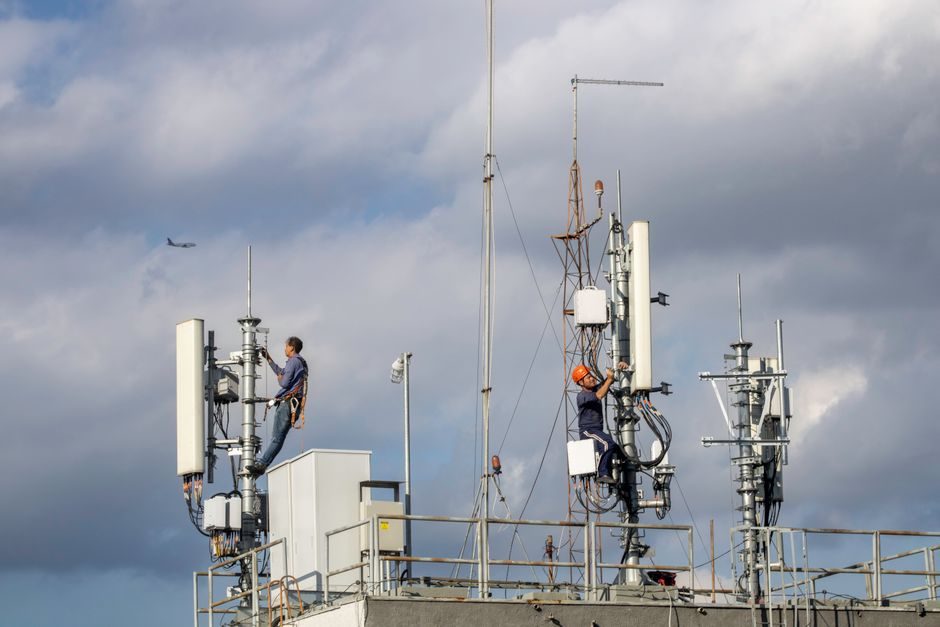
Aluminum telecom enclosures — TV amplifier housings, RF filter boxes, 5G small-cell radomes — sit in the 200–800 ton clamp window where vertical squeeze casting machines dominate the spec sheet, with 350-ton presses cited as the workhorse for sub-5 kg telecom-grade die cast parts [S5].
The hardware list behind that decision reads: cold-chamber and hot-chamber die casting cells spanning 160T–1250T, in-house CAD/CAE mold design on UG/Pro-E with 25–45 day lead times, and 16 CNC machining centers holding ±0.01 mm precision for the post-cast drilling, tapping, and EMI gasket grooves that telecom enclosures demand [S1]. Squeeze casting's slower shot speed and elevated intensification pressure (versus standard die casting) is the lever that drives porosity below 1% — the threshold most telecom OEM drawings call out for hermetic RF housings.
Why Squeeze Casting Beats Conventional Die Casting for Telecom Housings
Vertical squeeze casting applies direct gate pressure during solidification rather than relying on a horizontal cold-chamber shot, and that geometry is the reason telecom enclosure buyers keep returning to it [S4]. Slow intake and shot speeds prevent air entrapment, high squeezing pressure collapses any remaining gas into solution, and the strong cooling path that follows locks in a fine metallographic structure — exactly the dense, leak-tight skin that an IP65/IP66 RF enclosure needs around its gasket groove [S4].
Conventional horizontal cold-chamber die casting machines running 400–800 ton clamps can hit telecom price points, but they leave micro-porosity clusters at the die-entrance side that show up as paint blisters after salt-spray testing. NADCA's published production checklist for die, semi-solid, and squeeze casting routes is the industry document procurement teams hand to suppliers when the RF-leak specification forbids post-cast impregnation [S2]. For enclosures that must pass 500-hour neutral salt spray (ASTM B117) without sealing rework, squeeze casting is the process that arrives at the test chamber with the part already sealed.
Machine Tonnage and Platen Size for Telecom Enclosure Footprints
Most telecom enclosures — amplifier cans, diplexer housings, pole-mount RF boxes — fit inside a 400 × 400 mm to 600 × 600 mm platen envelope, which maps to the 350-ton vertical squeeze press footprint documented at Case School of Engineering's Metal Processing Lab [S5]. That lab installation pairs a 350-metric-ton Ube VSC squeeze casting machine with a Sterling Oil Die Heating System, a dedicated vacuum system, and a Visi-Trak process monitor — the reference configuration telecom buyers benchmark against [S5].
For larger parts such as 5G base-station filter housings or outdoor MIMO radomes, the spec window steps up to 800–1,000 ton presses. THT Presses publishes standard shuttle press offerings at 100, 200, 300, 500, 800, and 1,000 ton shot forces, with the higher tonnage aimed at dedicated or small production runs that require frequent tool changes [S7]. THT's squeeze casting variant is built around a direct-gate vertical press architecture, the same topology that telecom enclosure drawings tend to call out in their tooling notes.
Aluminum Alloy Selection and Process Window

Aluminum squeeze casting alloys — typically A356, A357, and A380 family variants with controlled Fe and Cu — are the dominant spec for telecom enclosures because they combine low density (≈2.7 g/cm³), RF-friendly thermal conductivity (≈150 W/m·K for A356-T6), and corrosion resistance that survives coastal tower deployments [S6]. Liquid aluminum is introduced into a preheated die and solidified under pressure, and squeeze casting's ability to feed that solidification shrinkage is what eliminates the micro-shrinkage cavities that would otherwise compromise EMI gasket compression.
Process control variables that the casting cell must hold on a telecom job: die preheat typically 200–300 °C, melt temperature 680–720 °C for Al-Si systems, intensification pressure 70–140 MPa, and dwell pressure held through full solidification. A Visi-Trak-class monitoring system [S5] is the practical way to record shot profile and pressure curve per part — the data pack telecom OEM PPAP submissions require. For comparison across process routes, NADCA's 2015 specification standards break down alloy data, dimensional tolerancing, and the production checklist that an OEM engineer walks through with the caster [S2].
Process Comparison: Squeeze Casting vs. Die Casting vs. Gravity Die Casting
Telecom enclosure sourcing teams normally evaluate three casting routes against four decision criteria: [S1]
1. Porosity / leak-tightness. Vertical squeeze casting machines running 70–140 MPa intensification pressure deliver sub-1% porosity, the level RF housings require [S4]. Cold-chamber horizontal die casting machines at 400–800 ton clamp forces hit 1–3% porosity on thick sections, acceptable for non-hermetic trim covers but marginal for sealed amplifier cans. Gravity die casting machines sit at 2–5% porosity and are reserved for cosmetic covers and heat-sink fins, not gasketed RF enclosures.
2. Mechanical properties. Squeeze-cast A356-T6 typically reaches 240–290 MPa ultimate tensile and 180–220 MPa yield — close to permanent-mold A356-T6 and well above the 160–200 MPa range typical of conventional die cast A380 [S6]. For pole-mount telecom hardware that has to carry antenna mass and wind load, that strength margin is the difference between specifying a 4 mm wall and a 5.5 mm wall.
3. Surface finish and post-machining. Cold-chamber die casting's higher velocity shot gives marginally better as-cast surface (Ra 1.6–3.2 μm) than squeeze casting, but the 16-CNC machining center cell with ±0.01 mm precision documented on Chinese telecom enclosure supplier lists [S1] easily handles the secondary milling, drilling, and tapping that both processes leave behind. Telecom enclosures almost always need drilled connector cutouts, threaded RF port holes, and milled gasket grooves regardless of casting route.
4. Tooling lead time and cost. In-house mold design with UG/Pro-E/CAD/CAE and 25–45 day mold lead time is the typical Chinese telecom enclosure supplier envelope [S1]; squeeze casting dies carry slightly higher cost than gravity dies because of the integrated shot sleeve and intensification ram, but the per-part cost premium is recovered when impregnation and weld-repair steps are eliminated.
Limits, Failure Modes, and Sourcing Watch-outs
Squeeze casting is not a universal answer. For very thin-walled cosmetic telecom covers (under 2 mm wall) that don't carry a pressure-tightness requirement, the slower shot speed of vertical squeeze casting machines leaves cold-shut risk that horizontal cold-chamber die casting handles better. Buyers with annual volumes under 5,000 parts will struggle to amortize squeeze-casting die cost; gravity or conventional die casting on shorter cycle times is the economic pick at that volume. [S7]
Alloy management is the other failure path. Squeeze-cast aluminum is sensitive to melt temperature drift and die preheat uniformity — a 20 °C swing in die temperature can shift the pressure-tightness window enough to fail a helium leak test at 1×10⁻⁶ Pa·m³/s. The Sterling Oil Die Heating System specified alongside the Ube VSC press at the Case lab installation [S5] is the kind of closed-loop thermal control that closes that window. A Visi-Trak process monitor [S5] is the second non-negotiable: it logs every shot's pressure-time curve and is the only practical way to demonstrate process capability to a telecom OEM's SQA team.
Standards, Documentation, and Buyer-Side Verification
NADCA's 2015 Product Specification Standards for Die Castings — the 9th edition covering aluminum, aluminum-MMC, copper, magnesium, zinc, and ZA alloys — is the cross-industry reference document, with sections on alloy data, geometric dimensioning and tolerancing, and a production checklist for die, semi-solid, and squeeze casting purchasing [S2]. The standard is explicit that its data are generic and that final specifications depend on the OEM's own engineering judgment and application testing, which is why most telecom enclosure buyers couple NADCA reference values with their own corporate material specs [S2].
On the supplier side, the Made-in-China telecom enclosure listing [S1] publishes the relevant production envelope: 20 die casting sets covering 160T–1250T, UG/Pro-E/CAD/CAE mold design, 25–45 day mold lead time, and a 16-machine CNC finishing cell at ±0.01 mm precision. The NADCA checklist for production part purchasing [S2] is the document buyers should walk that supplier through before releasing a tooling order — it covers alloy, process, dimensional, and quality items in a single pass.
For related spec-driven selection work, see Squeeze Casting Machine Selection for Agriculture Machinery, the Squeeze Casting Machine Spec Map for Electronics Housings, and the Aluminum Die Casting Machine encyclopedia entry for material-side reference.
Trackable signals to watch through 2026: NADCA's stated revision cadence (the 2015 edition was the most recent in the research; a 3-year major-revision cycle points to a 2026/2027 update) [S2], and any new telecom enclosure PPAP submissions that cite a 1,000-ton vertical squeeze press for outdoor 5G radome production.