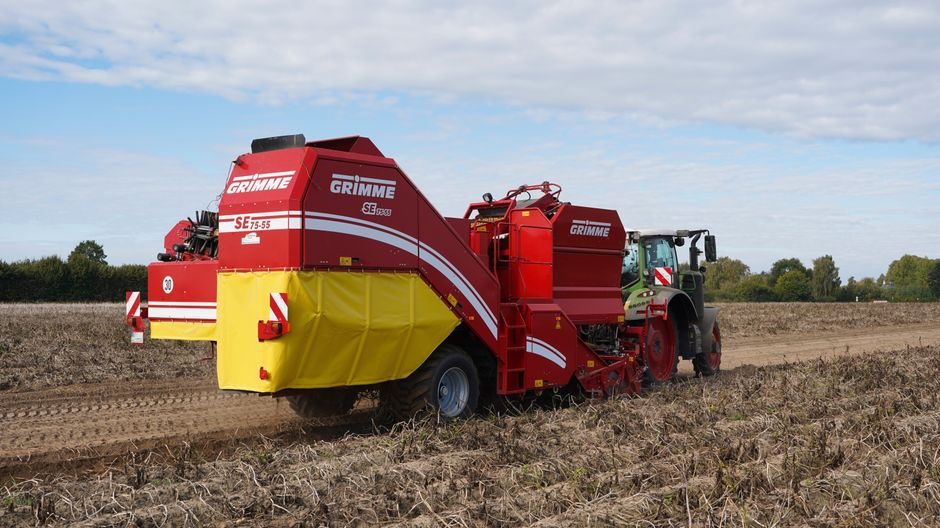
For agriculture-machinery buyers evaluating metal-forming capital equipment, a squeeze casting machine sized between 500 and 1,500 tons clamp force, with 3-5x intensification pressure on the pin/piston, is the practical envelope for housings, gearbox cases, axle supports, and chassis nodes used in tractors, combines, and sprayers [S7][S2].
Squeeze casting — also called liquid-metal forging — combines preheated-die injection with sustained pressure during solidification, producing parts that are denser and more heat-treatable than typical cold-chamber high-pressure die castings. Aluminium alloys A380, A360, and B390 dominate the alloy menu for agricultural castings, balancing fluidity, corrosion resistance, and machinability [S1][S5].
Definition and Process Window vs HPDC
Squeeze casting injects molten metal into a preheated die and holds pressure through solidification, typically at 70-140 MPa sustained intensification, against an HPDC peak of 30-90 MPa with a short intensification window [S4][S5]. The slower fill and longer dwell shrink porosity and let castings respond to T6 heat treatment, which HPDC parts generally cannot survive without blistering.
For agriculture applications, this matters because gearbox housings, final-drive cases, and linkage brackets are often machined and may require anodising or impregnation; lower porosity translates directly into fewer scrapped bores and tighter leak-rate acceptance on hydraulic manifolds [S1]. A spec-aware buyer should treat any quote below ~70 MPa sustained pressure on the shot end as outside the squeeze-casting window and reclassify it as conventional cold-chamber HPDC.
Machine Sizing and Footprint for Farm Equipment
Clamp force for agricultural castings should be matched to projected area, not part weight: a 1,500-ton vertical machine with 1,200-ton injection/squeeze force and a 0.84 m² (1,296 in²) projected-area envelope covers the upper end of tractor and combine structural castings, while 500-1,200-ton horizontal units suit brackets, pump bodies, and small gearbox covers [S7][S1].
Loukas Tech's 1,500-ton vertical press (built by REL) accepts parts up to 0.84 m² projected and 5 in (12.7 cm) thick — the kind of dimensions that show up in combine header adapters and large axle knuckles [S7]. For buyers comparing platforms, squeeze casting machine selection should start with the largest single casting in the BOM and work down, since a single oversized part can dictate tonnage more than annual volume.
Selection Criteria: Tonnage, Intensification, Die Preheat, and Cycle
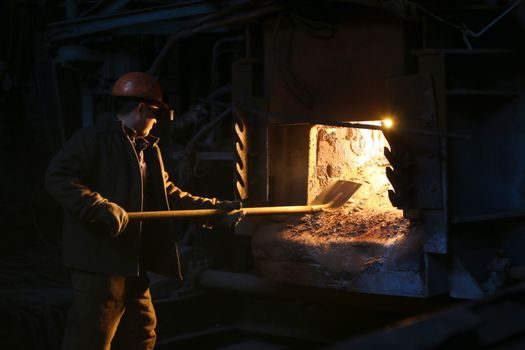
Four criteria separate a workable squeeze-casting cell from a misapplied HPDC retrofit: (1) clamp tonnage, (2) sustained intensification pressure, (3) die preheat capability to ~200-300 °C, and (4) cycle time acceptance of 90-300 s versus the 30-90 s typical of HPDC [S4][S5]. Buyers who fix only on shot weight usually over-buy tonnage, because squeeze casting trades cycle speed for solidification under pressure.
Shibaura Machine's Squeeze Master addresses the intensification side of this trade-off, applying targeted local pressure of more than 3x the casting intensification pressure at squeeze-pin locations to displace hidden porosity into non-critical zones before secondary machining [S2]. For agriculture buyers running HPDC cells that need porosity control on a specific bearing bore, die casting machine retrofits with localised squeeze-pin hydraulics are often cheaper than a full squeeze-casting cell changeover.
Alloy Choices and Heat-Treat Compatibility
A380, A360, and B390 are the three aluminium workhorses specified by agricultural-equipment die casters, with A380 as the general-purpose default, A360 for better corrosion resistance in fertiliser-exposed parts, and B390 for high-hardness wear surfaces like gearbox sliding sleeves [S1][S5].
Magnesium squeeze casting is feasible on the same press architecture and is used where weight matters — for example, large implement frames — but adds tool-steel wear and molten-handling cost [S7]. Buyers chasing light weight should review aluminum die casting machine and magnesium die casting machine options side by side, because the tonnage and shot-end hardware are similar but the furnace, protective gas, and tool-lubrication bills diverge sharply.
Where Squeeze Casting Wins and Where It Loses
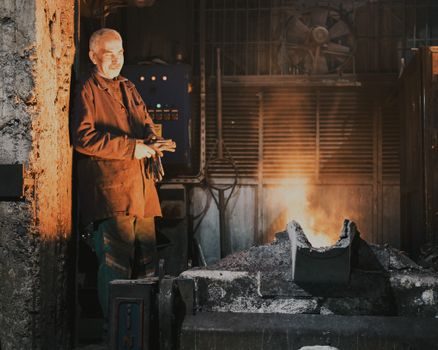
Squeeze casting wins for thick-walled structural castings (gearbox cases, axle housings, swing-arm nodes), parts that need T6 heat treatment, and any component that will be welded or anodised. It loses on thin-wall cosmetic covers, ultra-high-volume small parts, and any programme where cycle time is the production-rate bottleneck [S4][S5].
The honest call for an agriculture OEM is this: use squeeze casting on 8-15 of the heaviest, most-loaded castings per machine platform — engine blocks, transmission housings, final-drive carriers, and large hydraulic manifolds — and keep HPDC on the brackets, covers, and small housings. A typical farm-machinery BOM skews 60-70% by part count to HPDC-size parts and 70-80% by mass to the squeeze-cast subset.
Comparison: Squeeze Casting vs HPDC vs Gravity Die Casting
Across four decision criteria — minimum porosity, weldability/heat-treat, cycle time, and tooling cost — squeeze casting leads on the first two, HPDC on the third, and gravity die casting machine cells lead on the fourth for short runs [S4][S5][S1]. Squeeze casting carries the highest per-part equipment amortisation and the longest cycle, gravity casting the lowest tooling cost but the loosest tolerances, and HPDC the fastest cycles but the worst as-cast machinability on thick sections.
For telecom-grade sealed enclosures and other thin-wall applications with leak-rate pressure, buyers should also examine vacuum die casting machine options, since vacuum-assist addresses a different porosity mechanism (entrapped air) than the solidification-shrinkage mechanism that squeeze casting attacks. The two are complementary, not redundant.
Quality Systems and Standards to Require
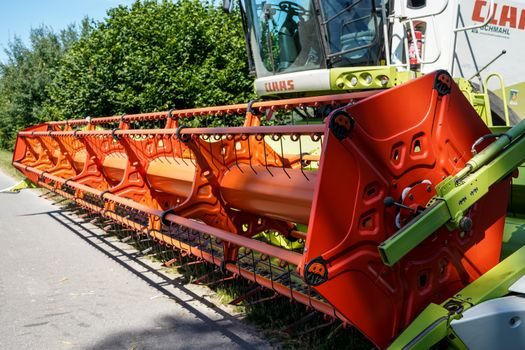
ISO 9001:2015 certification at the caster is the baseline, and PPAP-level or equivalent first-article documentation is standard for agriculture OEMs feeding into tractor and combine assembly lines [S1]. For castings that will be pressure-tested (hydraulic manifolds, brake housings), require a documented leak-rate acceptance criterion and a radiographic or CT-sampled porosity audit per lot, because squeeze casting reduces but does not eliminate shrinkage porosity.
Buyers running the same casting on both HPDC and squeeze-casting cells should require a metallurgy report comparing microstructure, Brinell hardness, and ultimate tensile strength between processes; A380 in squeeze-cast form typically lands near 60-80 HB and 280-330 MPa UTS after T6, versus 75-90 HB as-cast in HPDC, with the hardness differential explaining the machinability gap [S5]. A direct read on carbon steel grades for automotive parts helps frame the equivalent mechanical-property expectations for cast iron versus cast aluminium gearbox housings.
Vendor Map and Sourcing Signals
For farm-machinery buyers sourcing in 2026, the practical sourcing map is: (a) Kurt Die Casting and similar North American cold-chamber houses for 500-1,200-ton runs of A380/A360 structural castings [S1]; (b) Shibaura Machine for the Squeeze Master retrofit option if you already run HPDC and need targeted porosity control on a specific critical bore [S2]; (c) integrated houses like Loukus Tech with 1,500-ton vertical squeeze-casting cells for very large castings up to 0.84 m² and 12.7 cm thick [S7].
Watch two trackable signals over the next two procurement cycles: (1) whether a quoted squeeze-cast cell specifies a die-preheater capable of holding 200-300 °C steady-state — its absence is the single most common indicator that the quote is really a slow HPDC; (2) whether the press builder publishes a sustained intensification-pressure curve, not just a peak number, because the sustained figure is what controls shrinkage porosity in thick sections [S2][S4]. A related cross-buy worth bookmarking is road roller selection for agriculture, since the same supply-chain decision logic (match tonnage to largest part, not to annual volume) applies when sizing compaction equipment for field prep.