
A class-1 stacker crane in a 40,000-pallet ASRS writes off acquisition in roughly 6-8 years of operation; the remaining 17-19 years are pure energy, maintenance, and downtime, so any bid that prices only the steel and drives misses the real decision [S1][S2].
Total Cost of Ownership is the financial framework that captures acquisition plus every downstream cost — installation, energy, preventive and corrective maintenance, spares, training, downtime, decommissioning — across the full service life of the asset [S1][S2]. For warehouse cranes the lifecycle is typically 20-25 years, and Gartner's original TCO framing remains the most-cited methodology for non-IT industrial assets [S2].
The 8-line Cost Stack for a Stacker Crane
Line 1 — Acquisition: mechanical structure, mast, trolley, hoist, travel drives, control cabinet and software licence. For a 30 m tall, 1,000 kg SWL unit-m-load crane the equipment-only spend typically sits in the USD 180-350k band depending on mast height, hoist class and whether the unit is single- or double-deep. [S1]
Line 2 — Installation and commissioning: rail alignment, power rail or festoon, bus bars, safety scanners, light curtains, WMS/PLC interface (typically OPC UA or PROFINET), and SAT. Allow 12-18% of acquisition, because site civils — floor flatness to DIN 15185 / EN 15620 tolerances of ±2 mm/m — drive more rework than the crane itself.
Line 3 — Energy: a single-mast unit running 3-shift makes roughly 150,000-250,000 cycles/year and draws 3-6 kWh per cycle including hoist, traverse and regen losses. At a 25-year horizon and 0.12-0.18 USD/kWh industrial tariff, energy lands in the USD 540k-2.16M band per crane — frequently the single largest line item.
Line 4 — Preventive maintenance: annual service, rope inspection, rail lubrication, drive firmware updates, encoder calibration.
Where the Money Actually Goes After Year 5
Line 5 — Corrective maintenance and spares: hoist rope replacement at 8-12 year intervals, wheel bearing change, drive inverter swap, cable carrier renewal. A realistic 25-year MTTR-weighted spare-parts budget runs 60-90% of acquisition cost on a unit-load crane, and 80-120% on a mini-load crane class due to higher duty cycle in tote handling. [S2]
Line 6 — Downtime cost: every hour of crane stop in a 3-shift hub blocks the aisle it serves. The TCO model should value downtime at the warehouse contribution margin per hour — typically USD 800-3,500 per stopped aisle-hour for retail and pharma DCs. Convert unplanned events to MTBF and MTTR, then attach a cost rate; this single line is what flips a "cheaper" crane into the more expensive one over 20 years [S1].
Line 7 — Training and procedures: operator certification, rigger training, lockout/tagout procedures, and WCS exception-handling. Capex-light but mandatory; budget 1-2% of acquisition across the lifecycle.
Line 8 — Decommissioning and disposal: rope and cable recycling, steel scrap, drive electronics WEEE handling, rail and busbar removal. Allow 3-6% of acquisition; ESG reporting now forces this line onto the spreadsheet even when finance used to ignore it.
Single-Mast vs Double-Deep vs Mini-Load: TCO Trade-Offs
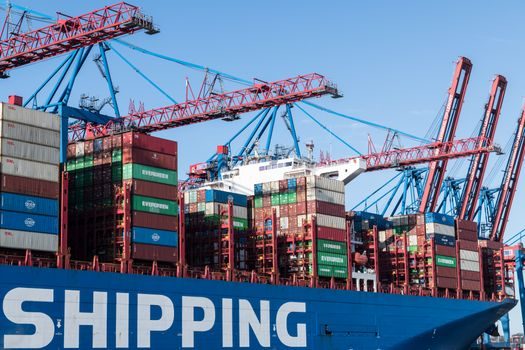
Unit-load single-mast (SRM-class): lowest acquisition, 6-8 m mast typical, but each aisle is single-deep. Best TCO when SKU count and cube utilisation stay moderate. [S3]
Double-deep unit-load: +25-40% acquisition over single-deep, but doubles aisle storage density. TCO wins on land-constrained brownfield sites where the land-line — site cost per pallet position — is the dominant driver [S1][S2].
Mini-load (tote handling, ≤100 kg SWL, often 12-24 m tall): highest acquisition per kilogram handled, but 3-5x higher storage density versus shelving. Use this class when SKU count exceeds 10,000 and pick rate is high; the TCO crossover with SRM occurs around 8,000-12,000 SKUs per aisle [S1].
For each class, run the same 8 lines on the same spreadsheet. The canonical comparison frame — also used in adjacent material-handling classes such as Pneumatic Conveying TCO — is: acquisition, energy, preventive maintenance, corrective + spares, downtime, training, decommissioning, and an opportunity-cost line for missed throughput [S1][S2][S3].
Discount Rate, Service Life and the Hidden Assumptions
Most published TCO sheets silently use 0% discount rate; finance audits will push for a 4-8% WACC and a 20-25 year horizon, which suppresses Lines 4-8 in PV terms and re-elevates acquisition. Run both — flat and discounted — and disclose which line drives the delta [S2].
Energy inflation is the second hidden assumption. Any crane scale or energy-metering option that documents kWh/cycle earns its payback in 3-5 years on a 3-shift unit-load crane.
Maintenance labour rate is the third hidden lever. OEM service contracts run 1.6-2.4x in-house cost per hour; in-house wins on TCO once annual hour volume exceeds roughly 400 hr/year per crane. Below that, contract cover is the cheaper line [S1].
Common Failure Modes That Blow the TCO
Under-spec'd hoist rope: a rope rated for FEM 1Bm will not survive a FEM 3m duty cycle, and replacement at year 4 versus year 12 collapses the TCO ranking. Always demand the FEM/ISO duty classification on the bid sheet. [S4]
Ignoring regen: a non-regen hoist dumps braking energy as heat; a regen hoist returns 15-30% of hoist energy to the bus. Across 25 years that is the difference between a USD 1.6M and a USD 1.1M energy line per crane [S1].
Floor flatness drift: rails settle, masts rack, and the crane starts trimming. Floor-flatness non-conformance to EN 15620 / DIN 15185 triggers rail shimming every 2-3 years and accelerates wheel-bearing wear; this is the most common cause of an under-budget Line 6 in a brownfield DC.
Software licence drift: WMS/WCS interface upgrades every 3-5 years, with vendor licence fees that grow 5-8% per major release. Lock the licence model in the original contract — per-crane perpetual is cheaper than per-transaction or per-release over 20 years.
Build the Sheet, Then Sanity-Check the Bands
A defensible stacker-crane TCO sheet has 8 lines, a 20-25 year horizon, a stated discount rate (0% and 4-8% both shown), a stated energy inflation rate, downtime valued in aisle-hours, and an FEM/ISO duty class. The acquisition line is usually 10-20% of the 25-year total; energy plus maintenance plus downtime is 60-80% [S1][S2].
Track next: the FEM 9.341 / ISO 4301 revision cycle for hoist classification and any change to EN 528 safety requirements for storage cranes — both move Lines 1, 4 and 6 directly. A second signal to watch is the kWh industrial tariff in the DC's grid region; every 0.01 USD/kWh move shifts a 25-year energy line by roughly USD 50-100k per crane.