
As of 2026-06-23, austenitic 304 cold-rolled sheet on Made-in-China.com (US$1,440-1,510/t) and 316L wire-rope (US$0.25-0.30/m at 50 m MOQ) bracket the spot-price band buyers actually see in mainland China [S8][S3].
The procurement question is no longer "is stainless steel expensive" but "is the quoted stainless the right grade, finish, and form factor for the duty." A buyer's leverage in 2026 sits in the specification, not the spot price, because the spread between 304 and 316L in sheet form runs hundreds of USD per ton even before finish surcharges are added [S8].
Stainless Grades 304 vs 316L vs 430: Where Each One Earns Its Premium
304 remains the default austenitic grade for kitchen, architectural, and general-process service, with cold-rolled 4x8 ft sheet quoting US$1,440-1,510/t in March 2026 spot offers from audited Shandong manufacturers [S8].
316L adds 2-3% molybdenum for chloride and chemical resistance; 430 is a ferritic, nickel-free option used where magnetic response or cost dominates corrosion duty. The price gap between 304 and 316L on plate products is visible in the same supplier listings, where 310S/316/304 BA 8K cold-rolled sheet is offered as a graded SKU rather than a single number [S8]. For buyers specifying by stainless steel grade families, the 18% chromium / 8% nickel baseline of 304, the Mo-bearing 316L, and the 16-18% Cr-only 430 cover roughly 80% of industrial sheet, tube, and bar purchases in the SME range. Selection rule: if chloride exposure (coastal, de-icing salts, process brines, bleach) is on the duty cycle, 316L pays back; if not, 304 is the spec floor, and 430 only earns its slot on cost-driven indoor duty.
Form Factor and Finish: The Two Price Multipliers Buyers Miss
Finish code is a separate cost axis from grade. No. 1 hot-roll, 2B cold-roll, BA (bright anneal), No. 4 brushed, HL (hairline), and 8K mirror each carry their own mill surcharge, and the Made-in-China.com 4x8 ft sheet listings explicitly enumerate all six finish codes against 201/304/310S/316L/321/410/430/904L grades [S8].
Form factor compounds the grade premium. Cold-rolled sheet, hot-rolled plate, wire rope, and seamless tube each draw from a different supply chain, and each has its own MOQ economics: 50 meters of 316L/304 stainless wire-rope with Kevlar or aramid core clears at US$0.25-0.30/m [S3], while a 10-piece run of a stainless-cased 10 kg digital kitchen scale (Shandong factory direct) lists at US$1.00-2.00 per piece [S4]. A buyer who locks grade but leaves finish open to the mill's "default" is paying a quiet surcharge on every shipment; the explicit finish code, written into the PO, is the lever.
Price Anchors in June 2026: Sheet, Wire, and Downstream Goods
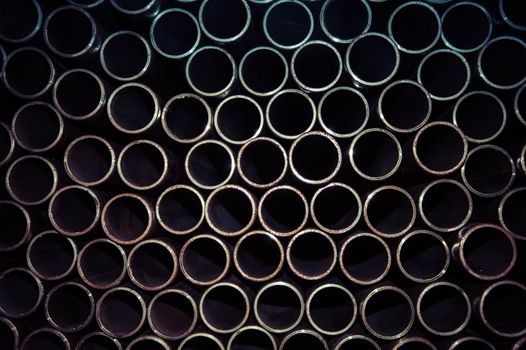
The Made-in-China.com hot-products page for stainless plate on 2026-05-11 shows cold-rolled 4x8 ft sheet at US$1,440-1,510/t, with adjacent SKUs covering 201, 304, 310S, 316L, 321, 410, 430, and 904L [S8]. Wire-rope in 304/316L with aramid, basalt, or PTFE impregnation clears at US$0.25-0.30/m at 50 m MOQ from Qingdao Rongshangyuan [S3].
Downstream consumer goods make a useful sanity check on raw-price direction. A 50-piece MOQ stainless pendant in geometric, 18K-gold-plated form clears at US$1.80-2.20 from Hangzhou suppliers, and a 100-piece MOQ water-drop pendant with rose-gold plating clears at US$4.38-4.68 from Shenzhen Hengda Xin [S9]. These are finished-goods benchmarks, not raw-material prices, but they show that 304 base-stock is being absorbed into the jewelry chain at a price point that confirms mill-output cost stability. For comparison, stainless pipe buyers in 2026 should expect 304 seamless tube to price above sheet on a per-kg basis because of the conversion cost, not because of the underlying nickel content.
End-Use Selection: Kitchen, Process, Architecture, and Wear Parts
Stainless steel countertops remain a primarily commercial-kitchen specification, with residential adoption rising as more homeowners choose commercial appliances; the neutral tone coordinates with most cabinetry, and the surface reflects both natural and artificial light [S2].
For industrial wear parts and chain hardware, 304 and 316L load-bearing buckles from Qingdao suppliers continue to surface in bulk-offer listings, with buy-side guidance flagging load capacity, environment suitability, and material traceability as the three real discriminators [S5]. Specialty applications such as 1949-to-date PRC coinage (Jiao, 2005-to-date stainless issue) demonstrate how the same material is specified for wear and tarnish resistance in non-industrial duty [S7]. The through-line: pick grade for chemistry, pick finish for duty, and pick form factor for the assembly process - not in the other order.
Standards, Certifications, and the Audited-Supplier Filter

ISO 9001:2015 factory certification is the most consistently cited quality-system anchor on Made-in-China.com supplier cards, including the Shandong stainless-thread and chain-buckle manufacturers in the June 2026 listings [S3][S5].
For EU-bound process equipment, ATEX and PED conformity sit one layer above ISO 9001, and for chloride-service piping, NACE MR0175 compliance is the gate. Buyers who skip the audited-supplier filter and source on price alone will see lower headline numbers but absorb the risk on a missed MTC (mill test certificate) or a 304 masquerading as 316L on PMI. The alloy steel and carbon steel reference pages sit alongside the stainless spec sheet for buyers triaging among the three families.
Comparison: Three Common Stainless Purchase Types on One Page
Cold-rolled 4x8 ft sheet (304, 2B/BA/No.4/8K finish) transacts at US$1,440-1,510/t, MOQ typically 1-5 t, with a 4-6 week mill-to-port lead time and a finish surcharge layered on grade [S8].
Stainless wire-rope / thread (304/316L, aramid-Kevlar-PTFE core options) clears at US$0.25-0.30/m, MOQ 50 m, with a 2-3 week lead time and a minimum order fee that makes sub-50 m orders uneconomic [S3]. Finished stainless consumer goods (pendants, kitchen scales, buckles) price at US$1-5 per piece, MOQ 50-100 pieces, with 1-2 week lead times but no mill-test-certificate discipline [S4][S5][S9]. The decision criterion is the unit of value: per ton for capital equipment, per meter for cable assemblies, per piece for finished goods. Specifying the wrong unit of value at the inquiry stage is the most common reason quote-to-PO cycle times blow past four weeks.
Limitations and Failure Modes in 2026 Procurement
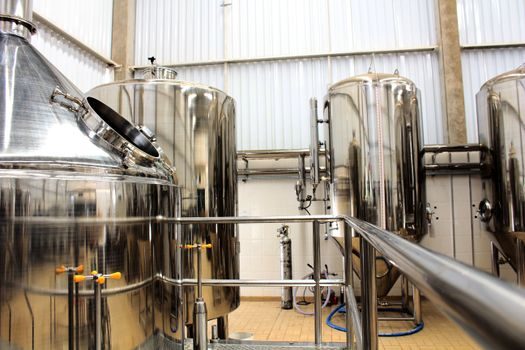
Spot prices on Made-in-China.com are FOB-or-FCA mill offers, not delivered-to-EU or delivered-to-US duty-paid numbers; freight, anti-dumping duty (where applicable on 304 cold-rolled), and inspection surcharges typically add 12-25% to the headline sheet price [S8].
MOQ gates are a hard constraint: a buyer needing 30 m of 316L wire-rope pays effectively more per meter than the 50 m MOQ buyer once the factory fee is amortised [S3]. 904L and other super-austenitic grades are listed on the same product page as 304, but the actual offer depth and lead time diverge sharply; assume 8-12 weeks for 904L versus 4-6 weeks for 304 unless the supplier confirms in writing. Cross-grade substitution (e.g. 304 quietly shipped for a 316L PO) is the most common quality incident; PMI testing at receipt is the only reliable filter, since visual inspection will not catch it.
Where to Verify the Price Before You Cut a PO
The Stainless Steel Club (stainless.club) maintains a 75-country feed of stainless and raw-material prices, supply/demand, and end-use demand forecasts, useful for tracking nickel and ferrochrome input cost direction between spot offers [S6].
Two trackable signals for Q3 2026: (1) the CBCIE European Strategic Minor Metals / High-Carbon Ferrochrome price page, updated 2026-03-11, which sets the input-cost ceiling on 304 and 316L for the rest of the year [S1]; (2) the 904L and 310S SKU depth on the Made-in-China.com plate-search page, which is a leading indicator of whether super-austenitic supply is loosening or tightening [S8]. Buyers who cross-check raw-material feed (S1, S6) against spot-sheet offers (S8) and against downstream-consumer absorption (S9) get a triangulated read that no single source provides. For buyers whose purchases touch a process skid, the process gas analyzer selection logic and the roller conveyor gate-based spec method carry the same grade-finish-form discipline into adjacent equipment classes.