Global stainless steel market volume is projected to climb from 14 million tons in 2026 to 17.63 million tons by 2031, a 4.72% CAGR over 2026-2031 [S3].
Stainless coil sits inside that envelope as the dominant flat-product form: flat products held 67.20% of 2025 stainless tonnage and cold-rolled material alone accounted for 54.11% of 2025 volume at a 5.11% CAGR through 2031, outpacing long products and hot-rolled sheet [S3]. For procurement teams sizing 2026-2030 supply, that means flat-product share, not long-product share, sets the coil-relevant baseline.
2026 demand baseline: 1.8 billion tonnes of steel, with stainless taking a faster growth lane
OECD projects global steel demand at 1.8 billion metric tonnes in 2026, up 0.4% after a 2.6% contraction in 2025, recovering to 1,885 million tonnes by 2030 at roughly 0.9% annual growth [S4]. Stainless is a faster-growing slice inside that total: stainless demand reaches 14 million tons in 2026 and 17.63 million tons by 2031 at 4.72% CAGR, versus broad-steel growth under 1% on the same OECD horizon [S3][S4].
Regional dispersion matters for sourcing. Procurement teams exposed to Chinese-origin coil should weight Indian, Indonesian, and ASEAN mills as the marginal supply source for incremental 2026-2030 demand. For context on mill-output category splits that drive coil availability, see the alloy steel reference and the carbon steel reference.
Product form: cold-rolled coil outruns hot-rolled, with automotive and appliances pulling
Cold-rolled stainless coil is the highest-growth form segment at 5.11% CAGR through 2031, reflecting end-user preference for premium surface finish in automotive, appliance, and food-processing lines, with cold-rolled already at 54.11% of 2025 stainless volume [S3]. Hot-rolled stainless and carbon coil sit in a different lane: the hot-rolled steel coil market (predominantly carbon) grows from $207.56 billion in 2026 to $244.3 billion in 2030 at 4.2% CAGR, a slower but wider volume base [S1].
The growth split is informative. Cold-rolled stainless demand is being pulled by automotive lightweighting, particularly battery-enclosure stainless for thermal stability (the automotive application segment is the quickest-rising end-use at 5.27% CAGR), plus FSMA-driven food-processing equipment replacement in the U.S. (impact +0.5% on CAGR, short term) [S3]. Cold-rolled coil also benefits from the stainless pipe procurement cycle because buyers who qualify a stainless grade for piping usually extend that approval to adjacent coil forms.
Grade mix: 300-series leads, duplex is the highest-CAGR play
The 300 series captured 56.18% of 2025 stainless demand, while duplex grades posted the fastest 5.29% CAGR on rising electrolyzer orders across Europe (impact +0.7% on CAGR, medium term) [S3]. Green-hydrogen electrolyzer adoption in the EU, with early projects in Sweden, Germany, and the Netherlands, is the structural driver pulling duplex volume, while LNG and cryogenic storage build-out across Asia contributes another +0.6% on CAGR over the long term [S3].
For buyers, the 300-series vs duplex choice turns on three criteria: corrosion duty, temperature window, and price. 304/316 austenitic grades cover food-processing, sanitary equipment, and architectural cladding at the lowest unit cost; duplex (2205/2507) buys higher strength and chloride resistance for desalination, offshore, and electrolyzer stacks, at a 1.5-3x price premium. Where stainless pipe selection already specifies duplex for chloride service, the same alloy family typically extends to coil form for skid frames and headers.
Comparison: hot-rolled carbon coil vs cold-rolled stainless coil on five decision criteria
For buyers deciding where to commit 2026-2030 procurement spend, the four main coil options line up as follows. Hot-rolled carbon coil: $207.56 billion in 2026, $244.3 billion by 2030 at 4.2% CAGR, dominant in construction, oil and gas, shipbuilding; thickness split is above-3 mm vs below-3 mm; lowest unit cost, rough scaled surface, limited formability [S1]. Cold-rolled stainless coil: 54.11% of 2025 stainless volume, 5.11% CAGR, dominant in automotive, appliances, food processing; 2B/BA finish, tight thickness tolerance, premium corrosion resistance [S3]. Hot-rolled stainless coil: smaller share, used where thickness above ~3 mm and mill-finish surface are acceptable, typically structural and pressure-vessel work. Electrical-steel coil (grain-oriented and non-grain-oriented): USD 30.86 billion incremental 2025-2030, 11.8% CAGR, the highest-growth lane, but isolated to transformer and motor laminations rather than general structural duty [S5].
Selection rule of thumb: specify hot-rolled carbon coil when duty is structural and corrosion is managed by coating or cathodic protection; specify cold-rolled stainless 304/316 when surface finish, hygiene, or moderate corrosion duty drives the design; specify duplex stainless coil when chloride concentration, temperature, or pressure rules out 300-series; specify electrical-steel coil only when magnetic properties (core loss, permeability) are the binding requirement. The silicon steel reference covers the grain-oriented and non-grain-oriented sub-grades used in transformer and motor laminations.
Drivers and constraints: rebar codes, hydrogen, anti-dumping, and Chinese supply
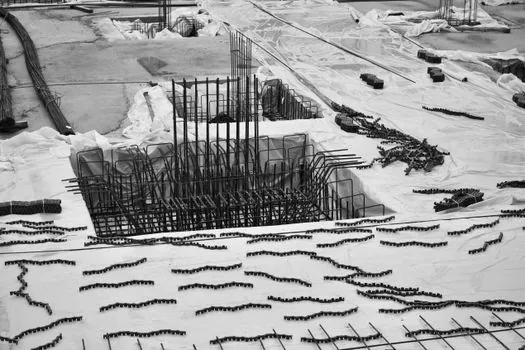
Five demand drivers pull 2026-2030 stainless coil volumes. India's 2024 circular mandating stainless rebar within 30 km of coastlines under IS 16651:2017 enforces a 75-year design life and cuts lifecycle cost 40% versus epoxy-coated carbon steel, contributing +0.8% to CAGR with Mumbai, Chennai, and Kochi metro rail projects alone representing roughly USD 600 million of captive pull [S3]. Green-hydrogen electrolyzer adoption in the EU adds +0.7% to CAGR, medium term [S3]. LNG and cryogenic storage build-out across Asia adds +0.6% to CAGR, long term [S3]. U.S. FSMA-driven food-processing equipment replacement adds +0.5% to CAGR, short term [S3]. Construction demand globally adds +1.2% to CAGR, with Asia-Pacific and the Middle East as the concentration zones [S3].
Three constraints cap the upside. First, OECD flags persistent global overcapacity, with China and excess-capacity regions continuing to flood international markets despite rising trade actions, which keeps coil prices under pressure and complicates ROI for new capacity outside Asia [S4]. Second, anti-dumping duties in Europe and North America on Chinese-origin stainless push landed cost higher but also redirect volumes to Indonesian and Indian mills integrated with captive nickel [S3]. Third, transformer-grade GOES lead times are running above 18 months for premium grades, a bottleneck that does not directly affect stainless coil but signals the broader specialty-steel supply chain is still capacity-constrained at the high-value end [S5]. The stainless steel base reference covers the metallurgy and grade-family logic behind these moves.
Sourcing signals to track over 2026-2030
Three trackable signals will move 2026-2030 stainless coil procurement economics. First, India stainless rebar enforcement beyond the 30 km coastal band, which if extended inland under IS 16651:2017 would lift the +0.8% CAGR contribution materially [S3]. Second, EU green-hydrogen electrolyzer project FID pipeline, since the +0.7% duplex CAGR contribution depends on the Sweden, Germany, and Netherlands project cohort reaching financial close on schedule [S3]. Third, OECD-tracked Chinese crude-steel output and net exports, because a renewed acceleration of Chinese exports would re-price the global coil market and re-open the anti-dumping conversation in Brussels and Washington [S4]. Procurement teams should benchmark coil offers against these three indicators each quarter, and re-tender supply when any of them moves more than 10% off the prior baseline.