
Specifying a screw pump for corrosive chemical service is a four-axis problem — wetted-material chemistry, viscosity band, seal arrangement, and stator elastomer — and every one of those axes has a numeric threshold the buyer must confirm against the pumped fluid's SDS line by line.
The screw pump family is a positive-displacement design widely offered by Chinese manufacturers such as Jiangsu Longjie Pump Manufacturing Co., Ltd., whose published screw-pump catalog covers G-type sanitary screw pumps, direct-coupled single-screw pumps, single-stage dosing screw pumps, vertical screw pumps with pedestal, G-feeding screw pumps and GN hopper screw pumps (N with feeder), and is applied across power, metallurgy, petrochemical, mining and environmental-protection duties [S3].
Single-, Twin- and Triple-Screw: Which Architecture Fits Corrosive Duty
Three-screw pumps carry the bearing-and-timing load on a hydrodynamic film and isolate the pumped fluid from the bearing housing, which is the cleanest architecture for clean, low-viscosity, non-lubricating corrosive liquids such as light hydrocarbons, amines and glycol coolers [S1].
Single-screw (progressive-cavity) pumps tolerate the broadest viscosity range and handle entrained gas, slurries and 3–10% solids; the stator elastomer — typically NBR, EPDM, FKM or PTFE-bonded — is the chemical-resistance gate, and selection is driven by the elastomer's compatibility with the specific acid, base or solvent rather than by the metal rotor alone [S3]. Twin-screw pumps sit between the two: higher flow than single-screw at lower viscosity, with separate timing gears that demand clean, lubricating or low-friction fluids and therefore less common in aggressive acid service.
Quick mapping rule: viscosity under ~200 cSt and clean service → triple-screw; 200–10,000 cSt and solids-bearing → single-screw with elastomer selected for the chemical class; mid-range clean lube oils → twin-screw.
Wetted-Material and Stator-Elastomer Compatibility Matrix
For dilute sulfuric, hydrochloric and phosphoric acid transfer below 80 °C, SS316L is the cost-default; once chloride concentration climbs past ~500 ppm or temperature past 60 °C, duplex (2205) or super-duplex (2507) becomes the working minimum to resist pitting and crevice corrosion, and alloy 20 / Hastelloy C-276 enters the picture for hot concentrated sulfuric or mixed-acid streams where SS316L pitting resistance equivalent number (PREN) is no longer adequate [S3].
The stator elastomer is the line that most often fails first in corrosive service. NBR handles oils and aliphatic hydrocarbons; EPDM handles caustics, ketones and phosphate esters; FKM (Viton-class) handles hot acids and aromatics up to ~200 °C; PTFE-bonded or fully PTFE stator bodies push the chemical envelope further but at a 3–5× cost step and a reduced dry-run rating. The selection mistake to avoid: specifying a single-screw pump for concentrated hydrochloric acid with an NBR stator — the elastomer swells within hours.
Sanitary stainless screw pumps (e.g. G-Type Sanitary Screw Pump, Stainless Steel Sanitary Screw Pump in the Longjie catalog) are built around SS316/SS316L wetted parts with surface finishes to 3-A / EHEDG hygiene norms, which is the right architecture for food-grade acid dosing, CIP solutions and pharmaceutical buffer transfer where both corrosion and cleanability are required [S3].
Seal Architecture and Leakage Control for Hazardous Chemicals
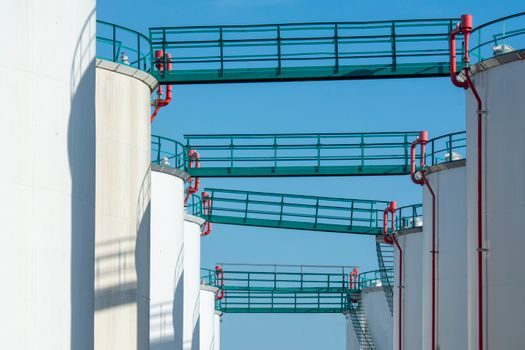
For volatile, flammable or toxic corrosives, single mechanical seals are inadequate; specify a dual back-to-back or tandem cartridge seal with a compatible barrier fluid (typically a non-reactive oil or a water/glycol mix matched to the pumped chemical), and a containment shroud for the seal area to capture leakage and route it to a safe vent or drain [S3].
Magnetic-drive screw pumps eliminate the dynamic shaft seal entirely and are offered by Jiangsu Longjie as a separate "magnetic drive pumps" line in parallel with the screw-pump series — a useful reference architecture for hydrochloric, nitric and hydrofluoric acid transfer where any seal leakage is unacceptable. The trade-off: magnetic couplings lose torque at high viscosity, so magnetic-drive screw pumps are practical up to roughly 1,000–2,000 cSt before coupling decoupling becomes a real risk.
For solids-bearing or slurry-style chemical waste streams where a magnetic drive would decouple, a single-screw pump with a hard-metal stator pin joint and a packed-gland or single mechanical seal with flush remains the field-proven architecture.
Operating Envelope: Viscosity, Pressure, Temperature and Solids
Single-screw pumps routinely deliver differential pressures to 16 bar (some industrial models to 24 bar) and flow from under 1 m³/h to ~150 m³/h, with viscosity tolerated from ~1 cSt up to ~80,000 cSt on the elastomer-stator side [S3]. Triple-screw pumps cap lower on viscosity (typically up to ~1,500 cSt) but run higher shaft speeds and reach differential pressures to 40–100 bar in light-lubricant service [S1].
Solids handling is a hard differentiator: single-screw pumps pass soft particles up to ~30 mm and tolerate short dry-run periods because the elastomer is the wearing interface; twin-screw and triple-screw pumps, with their close-clearance meshing rotors, tolerate essentially zero solids and almost no dry running without accelerated wear. The dry-run rating of a single-screw pump with an EPDM or PTFE stator is typically capped at ≤30 minutes continuous; beyond that the stator surface temperature climbs and the elastomer chars.
Temperature window: most NBR and EPDM stators cap at 80–120 °C; FKM extends to ~180 °C; PTFE-bonded or fully PTFE stators reach 200 °C and beyond. The rotor metallurgy must be specified in parallel — SS316L is fine to ~200 °C continuous, duplex to ~300 °C, alloy 20 to ~400 °C, Hastelloy C-276 to ~600 °C in non-oxidising service.
Selection Criteria Comparison: Single-Screw vs Twin-Screw vs Triple-Screw for Corrosive Service
Stacking the three screw-pump architectures against the four corrosive-duty decision criteria, a defensible grid is: Single-screw wins on chemical compatibility (elastomer-selectable), viscosity range (up to ~80,000 cSt) and solids tolerance (soft particles to ~30 mm), but loses on dry-run rating and peak differential pressure. Twin-screw wins on flow rate and clean-service pressure, loses on chemical compatibility (timing-gear lubricant contact) and solids. Triple-screw wins on differential pressure (40–100+ bar) and clean fluid handling, loses on viscosity ceiling and solids. [S3]
For acid-transfer skid builders, the default architecture is a single-screw pump with a PTFE-bonded or FKM stator, SS316L or duplex wetted parts, a dual mechanical seal with barrier fluid, and a flush line tapped from the discharge. For light-lubricant or low-viscosity amine service, a triple-screw with hydrodynamic bearings is the more efficient pick. For solids-bearing chemical waste, only the single-screw with an elastomer matched to the dominant chemical survives economically.
Where the Screw Pump is the Wrong Tool
For high-pressure clean water boiler feed above 40 bar, multistage centrifugal pumps dominate and screw pumps are the wrong selection — efficiency drops and the cost gap to a centrifugal becomes punitive; this is a frequent mis-spec to flag, and the Multistage vs Self-Priming Pump selection map lays out the dry-run and efficiency boundary in more detail. [S3]
For very low flow precision dosing (under ~10 L/h with ±1% accuracy), metering pumps — also catalogued alongside the screw-pump range as a separate product line [S3] — outclass screw pumps, which simply cannot throttle that low without bypass loops and unacceptable slip. For shear-sensitive polymer or latex transfer, the single-screw pump's elastomer-on-metal wiping action is itself the problem, and a peristaltic or diaphragm pump is the correct architecture.
Specifying the Right Pump in Practice
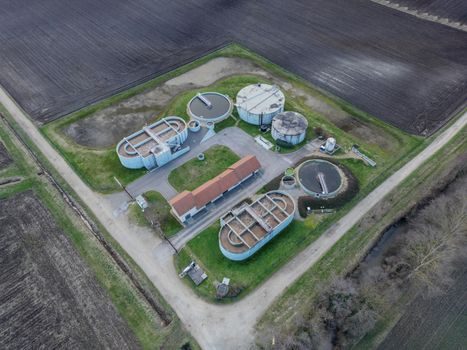
The first-pass shortlist: a single-screw pump with a PTFE-bonded stator and SS316L or duplex wetted parts, dual cartridge seal, barrier-fluid reservoir, and a discharge-flushed mechanical-seal chamber, supplied by a manufacturer with documented chemical-pump case studies — Jiangsu Longjie lists "Chemical industry" and "Environmental protection industry" among its application case categories, which is a useful sanity check that the vendor has actually run corrosive duty rather than only clean-water service [S3].
Trackable signals to confirm on the data sheet before signing the PO: (a) wetted-material certificate with PREN value for the rotor material, (b) stator-elastomer compatibility letter against the specific chemical and temperature, (c) declared maximum dry-run duration at the duty point, (d) seal arrangement drawing with barrier-fluid spec, and (e) ATEX/IECEx zone rating if the duty is flammable. A screw pump spec that clears all five is a spec that will run the two-year MTBF the chemical plant is budgeting for, and not return as a six-month failure.
The underlying component specifications are covered under chemical anchor, and chemical reagent.