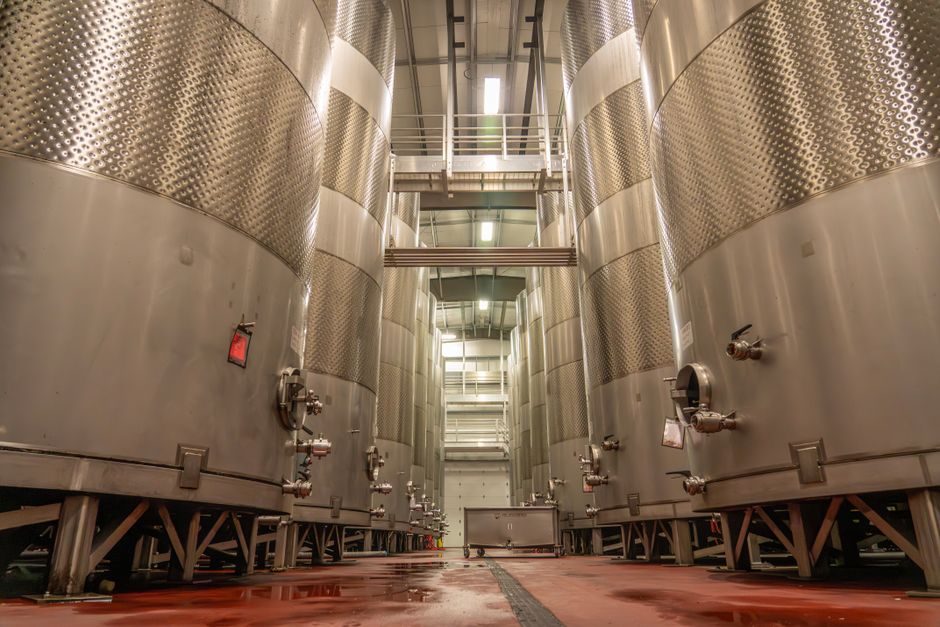
A stainless steel is defined as a steel alloy containing a minimum of 11% chromium and a maximum of 1.2% carbon, with the chromium layer forming a self-healing passive film that drives corrosion resistance [S4].
For a process engineer, the practical definition is narrower: a stainless is the cheapest alloy whose corrosion rate, mechanical strength, and fabrication route all clear the service environment — never the shiniest line on a data sheet [S2]. Selection lives or dies on five gates: corrosion mechanism, mechanical duty, temperature window, fabrication route, and total cost of ownership. This article walks each gate in order, then maps the common grade families against them.
Gate 1 — Identify the Corrosion Mechanism Before You Name a Grade
Uniform atmospheric attack, pitting, crevice corrosion, stress-corrosion cracking (SCC), and galvanic coupling each demand a different alloy system — picking 304 by default is the single most common stainless mis-spec [S2].
Pitting Resistance Equivalent Number (PREN = %Cr + 3.3×%Mo + 16×%N) is the working shortcut for chloride-bearing service. 304 sits near PREN 18, 316 near 25, 2205 duplex near 35, and super-austenitic 254 SMO near 43 — the ladder that maps roughly to seawater, brackish water, and hot brine exposure. For SCC in chloride-bearing water above ~60 °C, austenitic 300-series is the wrong family; duplex or ferritic grades are specified instead [S2].
Gate 2 — Mechanical Duty: Strength, Hardness, and Temperature Window
Austenitic 300-series delivers roughly 200–250 HB and excellent cryogenic toughness; martensitic 410/420 can be heat-treated above 50 HRC; duplex 2205 nearly doubles the 0.2% proof strength of 304; PH grades such as 17-4 PH combine ~1,100 MPa tensile with useful corrosion resistance [S4].
Temperature window is the silent gate-killer. Austenitic grades handle oxidising service up to ~870 °C intermittently; ferritic 430 sensitises and embrittles above ~400 °C; martensitic 420 loses hardness above ~200 °C. Springs and high-temperature cyclic parts shift the spec toward 302/304 or nickel-chromium heat-resistant variants (Ni-Cr heat-resistance steel family) where oxidation resistance and elastic stability both have to hold [S1][S5].
Gate 3 — Fabrication Route: Forming, Welding, and Machinability
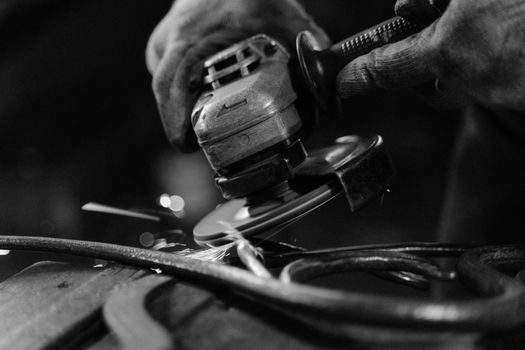
Welding is where most stainless upgrades are lost. Austenitic 304/316 weld cleanly with matching fillers; martensitic grades require preheat (~200–300 °C) and post-weld temper to avoid HAZ cracking; ferritic 430 is prone to grain growth in the HAZ and is generally avoided in welded assemblies; duplex 2205 demands a controlled heat input window (roughly 0.5–1.5 kJ/mm) to keep the austenite-ferrite balance near 50/50 [S2].
Machinability is a cost gate, not a performance gate. Free-machining 303 adds sulphur for ~70–80% better chip break at the price of corrosion resistance; 304/316 default to stickier chips and shorter tool life. For deep-drawn or spun parts the work-hardening rate matters more: 304 work-hardens fast, 305 and 316L are specified for severe draws, and ferritic 430 draws cleanly but with limited ductility [S4].
Gate 4 — Compare the Main Grade Families Against Decision Criteria
Side-by-side, the five families answer the same four questions differently — a structured table reads cleanly and is the form an engineer actually pins to a spec wall [S2].
Austenitic 300-series (304, 316, 321, 347) wins on formability, weldability, and low-temperature toughness, costs the least per kg, and is the default for food, architectural, and chemical-plant pipework — see stainless pipe for the line-pipe view. Ferritic 400-series (409, 430, 439, 444) is cheaper, magnetic, and resists SCC but welds poorly. Martensitic 410/420/440 takes a heat treat for cutlery, valves, and shafts. Duplex 2205/2507 nearly doubles yield strength and resists chloride SCC, at roughly 1.5–2× the price of 304. PH grades (17-4 PH, 15-5 PH) deliver aerospace-class strength with moderate corrosion resistance. The full stainless steel reference frame sits inside the broader alloy steel and carbon steel decision space — stainless is almost never the cheapest material, only the cheapest fit.
Gate 5 — Cost, Availability, and Standards Compliance
Nickel content drives price volatility: 304 tracks LME nickel within weeks, while 430 (no nickel) is markedly more stable. Stock availability and mill lead time often override data-sheet preference — a 4–6 week duplex lead time routinely pushes specs back to 316L [S2].
Standards are the final gate, not the first. ASTM A240 (plate/sheet), A276 (bar), A312 (pipe), and EN 10088 govern the common forms. For pressure equipment, ASME BPVC Section II and PED 2014/68/EU each impose their own traceability and impact-test rules. For sour service, NACE MR0175 / ISO 15156 caps hardness on carbon-steel and low-alloy components, and lists acceptable stainless grades by environment — the rule, not the marketing brochure, is what the inspector checks. Buyers comparing commodity stainless fasteners and studs will find the same gate logic — the SKU list at the stainless stud end of the catalog is dominated by 304 and 316 for exactly these reasons [S3].
Who Stainless Is For — and Who It Is Not For
Stainless is for chloride-bearing wet service, hygienic or food-contact surfaces, architectural finishes, springs in corrosive atmospheres, cryogenic and high-temperature oxidising service, and any application where paint, galvanising, or plating maintenance is uneconomic [S1][S4]. It is not for: high-load, low-speed wear (use tool steel or hard-facing instead), hydrochloric or hot concentrated sulphuric acid (use alloy 20, C-276, or non-metallic linings), and any application where the same corrosion resistance is achievable with coated carbon steel at a fraction of the material cost [S2].
Trackable signals to watch over the next quarter: LME nickel movement (drives 304/316 surcharges), duplex mill lead times out of European and Chinese producers, and any update to ASTM A240/A276 revision tables — each will shift which gate binds tightest on a given spec. Engineers sourcing springs for corrosive duty should also confirm that the supplier holds the EN 10204 3.1 certification and lists the actual ASTM/EN grade on the test certificate, not a generic "stainless" [S1].
For related coverage, see Storage Rack Selection: Load Class, Frame Geometry, and Seismic Compliance.