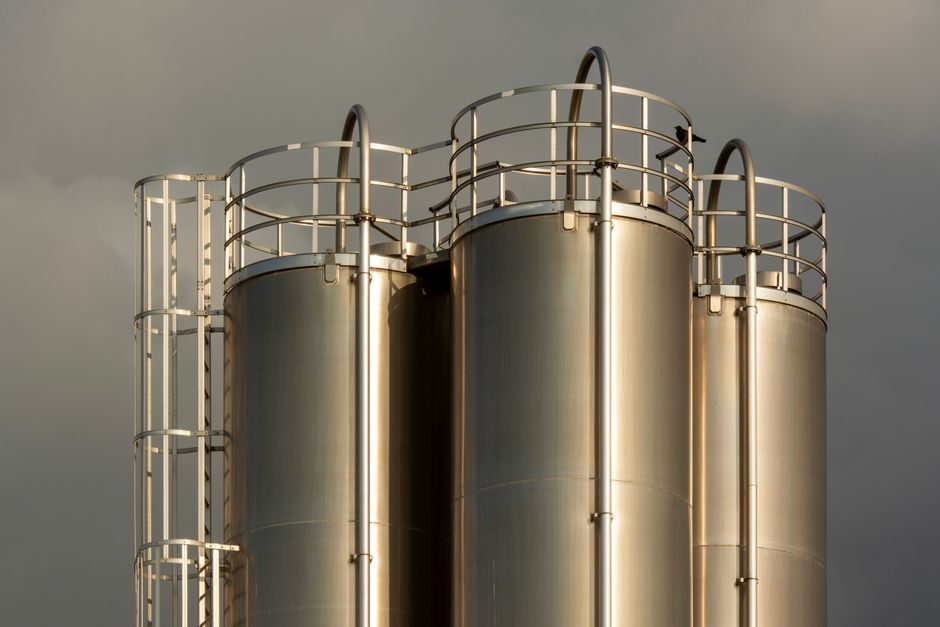
Stainless steel sheet is supplied in coils or cut flats from 0.4 mm up to roughly 6 mm in stock gauges, with austenitic grade 301, martensitic 420, and 440B commonly carried as standard stock [S2]. The product is delivered to BS 1449 dimensional tolerance in the UK supply chain and to ASTM A240 / EN 10088 in international mill practice, with surface finishes 2B, BA, and No.4 dominating the architectural and ducting trades [S2][S3].
Steel section, by contrast, is a family of hot-rolled structural shapes — I-beams, H-piles, equal and unequal angles, channels (PFC), and hollow sections (SHS/RHS) — defined in dimensional standards such as EN 10034, EN 10056, and ASTM A6, and produced primarily from carbon or low-alloy structural grades like S275JR/J0/J2 and S355JR/J0/J2 (EN 10025-2) rather than austenitic stainless. Stainless is also available as a section — but as a specialty, not a commodity — and the cost-per-kg premium over carbon is large enough that structural framing is rarely specified in austenitic grades; the stainless-steel route is taken only where corrosion, hygiene, or architectural finish drives the spec. The steel-section family, on the other hand, is the workhorse of plant, bridge, and building framing.
Form, Thickness, and Dimensional Standard
Flat-rolled sheet is sold by gauge × width × length (or coil ID/OD), with BS 1449 controlling UK mild-steel sheet and ASTM A480 / A240 controlling the stainless side; typical stock widths run 1000 mm, 1250 mm, 1500 mm, and 2000 mm [S2]. The stainless decorative chain extends this further with antique copper PVD-coated sheets, mirror-polished panels, etched and embossed finishes stocked by finish-type rather than mechanical gauge [S3].
Steel section is sold by designation — for example UB 203×133×25 kg/m, PFC 200×75×23 kg/m, or 100×100×10 SHS — where the cross-section name carries the entire mechanical identity. Tolerances on a UB's depth and flange width are typically ±2–3 mm at the steel-section family level, while a 1.2 mm stainless sheet tolerates ±0.08 mm on thickness to EN 10051 / ASTM A480 [S2]. Pick sheet when the spec talks about gauge, finish, and flatness; pick section when it talks about section modulus, moment of inertia, and overall depth.
Material Grade and Mechanical Envelope
Stocked stainless sheet grades sit on a sliding scale of corrosion resistance versus work-hardening: 301 (austenitic, ~17 Cr / 7 Ni) for spring and formable work, 420 (martensitic, ~13 Cr) for cutlery and wear parts, and 440B (martensitic, ~17 Cr) for higher hardness [S2]. These are typically supplied in the annealed or 1/4-hard / 1/2-hard / full-hard temper for 301, with yield strength rising from ~205 MPa annealed to ~965 MPa full hard; 420 and 440B are delivered annealed for downstream heat treatment.
Carbon-steel sections run S235 / S275 / S355 in EN 10025-2, with yield of 235 / 275 / 355 MPa at ≤16 mm thickness, and Charpy V-notch impact of 27 J at +20 °C for JR, 0 °C for J0, and –20 °C for J2. A UB 203×133×25 kg/m in S275JR gives a plastic section modulus of roughly 234 cm³ and a second moment of area near 2340 cm⁴ — that is the structural envelope a stainless-steel sheet cannot match, because flat product has no preferential bending axis. Specifying stainless for primary framing multiplies the per-kg cost by a factor of 5–10 versus carbon, so it stays a niche for coastal piling trim, architectural portals, and chemical-tank supports.
Comparison Matrix: Sheet vs Section Across Four Decision Criteria
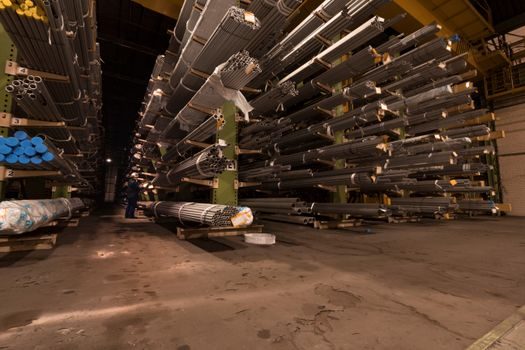
Across the four criteria that drive every procurement spec, the two families sit on opposite corners of the matrix. On cost-per-kg, S275JR / S355JR hot-rolled carbon steel-section is the baseline, with stainless sheet and stainless section each carrying a premium depending on nickel content and finish. On load-bearing capacity, sections dominate — a UB 533×210×82 kg/m yields a section modulus near 1870 cm³, orders of magnitude above anything flat-rolled can deliver. On corrosion resistance, austenitic 304/316 stainless steel sheet is the default pick; mild-steel section needs hot-dip galvanizing to EN ISO 1461 or a paint system to EN ISO 12944 to compete. On forming/fabrication lead time, sheet bends on a press brake in seconds; section requires sawing, drilling, and welding per EN 1090-1 execution class, and the welding procedure plus the CE-marked fabrication route are the schedule-killers. Comparison summary: section wins for cost, load, and stiffness; sheet wins for surface, corrosion, and forming speed. [S3]
Selection Logic: Who the Choice Is For
Specifying engineers should reach for stainless sheet when the duty is non-load-bearing enclosure: cladding panels, ductwork to DW144 / SMACNA, kitchen and food-grade surfaces to EN 1672-2, architectural soffits using 2B/BA/No.4 finishes, and decorative skins in elevator cabs and partitions [S2][S3]. The decorative chain adds antique copper PVD, mirror, hairline, etched, and 3D-pattern surfaces on the same 304/316 base, sold by panel size and finish code rather than by section designation [S3].
Specifying engineers should reach for steel section when the duty is load-bearing: building frames to Eurocode 3 (EN 1993), bridges to EN 1993-2, crane rails, mezzanine floors, conveyor trusses, and equipment skids. The hot-rolled carbon-steel UB/UC/PFC/SHS/RHS family is the default, with S355 the workhorse for plant. Stainless sections are kept in reserve for chemical-tank support frames, coastal walkways, and architectural portals where the finish must match the sheet cladding; elsewhere, alloy-steel weathering grades (e.g. S355J0W / S355J2W) bridge the gap for unpainted structural use. For decorative enclosure details and partition framing, an [aluminium sheet](/encyclopedia/aluminium-sheet.html) cladding against a carbon-steel steel-section backbone is a common cost-optimised pairing on non-corrosive sites.
Manufacturing Route and Supply Form
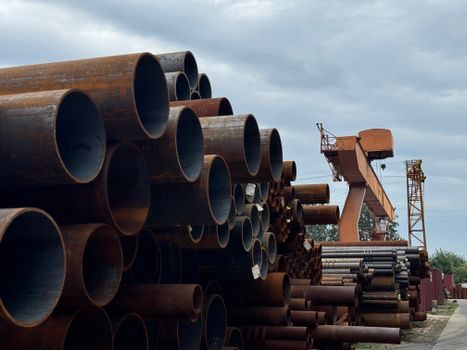
Stainless sheet is produced by hot-rolling slab, then cold-rolling coil to final gauge with intermediate annealing; finish is set in the last cold-mill pass (2B, BA) or by downstream polishing (No.4, mirror), with the stainless-pipe family sharing the same melt stock but entering tube mills instead of cut-to-length lines [S2][S3]. Stocked service centres will slit coil to custom width from 1 mm upwards, and supply shim packs down to 0.05 mm from the same mill route, which is the route used for laser-cut shims and shim-stock [S2].
Steel section is produced by hot rolling only; cold-formed SHS/RHS sections are a separate family per EN 10219 and are not directly comparable to hot-rolled UB/UC. A typical structural UB is rolled at temperatures near 1100 °C, then cooled on a cooling bed, then cut to length, and finally straightened in a rotary straightener. Procurement is by tonnage and length — a UB order is almost always 6 m, 9 m, or 12 m — and section is not generally coil-fed into downstream fabricators the way sheet is.
Failure Modes and Specification Pitfalls
Stainless sheet failures cluster around chloride pitting (PREN < 22 grades fail in seawater splash), stress-corrosion cracking above ~60 °C in chlorides, and galvanic coupling to carbon-steel fasteners — a common spec error is bolting 304 sheet with zinc-plated bolts, which then undercut the sheet edge within months. Section failures are different: brittle fracture on the J2 / K2 impact-grade line in cold service, lamellar tearing in thick T-joints (over 40 mm), and fatigue at welded gusset details. The two failure families do not overlap: a sheet will not buckle as a column, and a section will not pit from a handprint. Specifying engineers who treat them as substitutes pay a heavy weight penalty in carbon, or a heavy cost penalty in stainless. [S1]
Lead-time behaviour is also distinct. Stainless sheet stock is held in gauge × width × finish × grade combinations measured in the hundreds; sections are held in length × designation × grade combinations measured in the dozens. A change in finish on sheet is a 2-week re-polish; a change in section length is a 1-week re-cut. Both are short by steel-industry standards, but a custom section grade (e.g. S355NL to EN 10025-3 for low-temperature) is a 6–10 week mill order and a custom stainless section in 316 is similarly long. The detail is in architectural hardware TCO on the lifecycle math, where the stainless sheet premium is paid back over a 10–20 year service life only when galvanizing and repaint cycles on carbon are included.