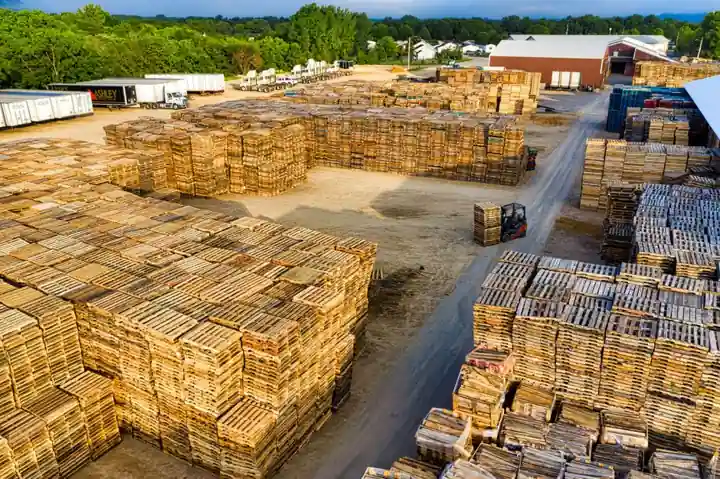
Standard AGV load capacity for unit-load pallet transport covers a 1,000-1,500 kg envelope for typical counterbalanced or pallet-truck models, while engineered unit-load decks scale the upper bound to roughly 30,000 kg (66,000 lb) on standard platforms and past 20 t (44,000 lb) on custom builds [S1][S2][S3].
The class spans compact pallet jacks replacing manual handling, conveyor-deck vehicles shuttling 1-4 unit loads, and heavy-deck AGVs carrying vehicle bodies between assembly stations, so "standard" capacity is better read as a stack of duty envelopes than a single kilogram number [S1][S4].
Where the 1,000-1,500 kg Band Comes From
Pallet-truck AGVs, the most common entry point for unit-load pallet work, are usually rated around 1,200 kg in practice even when datasheets allow higher, because typical EUR/ISO pallets rarely fully populate the rated envelope and operators stack empty or partial loads more often than full ones [S3].
Alstef's powered-conveyor AGV family covers 1-4 loads at up to 1,500 kg per load with a 500 mm standard transfer height, using rollers, chains, or modular belt conveyors for long- or short-side pickup, which puts a 6,000 kg ceiling on a 4-load shuttle before any heavy-deck engineering enters the picture [S4]. The same OEM's automated stacker and counterbalanced AGV lines target single-pallet flows where load weight, pickup/drop-off height, and manoeuvring space dominate the spec, not raw tonnage [S4].
Heavy-deck unit-load AGVs sit in a different regime: Invio Automation's standard platforms are rated to 66,000 lb (about 30,000 kg) on deck or in tow, with custom vehicles engineered for heavier still, because the application is moving vehicle bodies, aircraft structures, or skidded assemblies through a manufacturing sequence rather than pallets in a DC [S1]. AGV Network frames the upper end of the class at "very heavy loads, even 44,000 lb (20 ton) or even more" for unit-load decks handling pallets, drums, boxes, totes, and skidded items [S2].
What "Standard" Actually Means in a Pallet AGV
There is no single ISO kilogram that defines a standard unit-load AGV; the term covers any AGV that carries a discrete load on its own deck rather than towing it, and the deck can be a flat plate, a roller conveyor, a chain conveyor, a belt conveyor, a lift platform, or a shuttle table [S2][S5].
HELI's classification puts unit-load AGVs squarely in the single-pallet or single-tote category, with adjustable lift tables for ergonomic loading and sensor fusion (LIDAR plus proximity) for collision-free travel, and notes that the newest generation adds RFID for automatic pallet identification [S5]. AGV Network lists the same deck options: roller conveyors, chain conveyors, lift platforms, belt conveyors, and shuttle systems, with custom multi-compartment decks where the application needs them [S2].
For pallet-jack duty, ANTdriven's three-OEM panel (Karter, Nipper, plus a third producer) covers pharma, healthcare, plastics, electronics, automotive, FMCG, and logistics, with raw-material and finished-goods transport on compact trucks where space is tight and humans remain active in the production process [S3]. That panel is the source of the "usually capable of 1,200 kg, rarely seen in practice" data point, which matters because a 1,200 kg rated truck operating at 600-800 kg of real pallet mass is the most common unit-load AGV deployment in 2026 [S3].
Decision Criteria: Pallet-Truck vs Powered-Conveyor vs Heavy-Deck
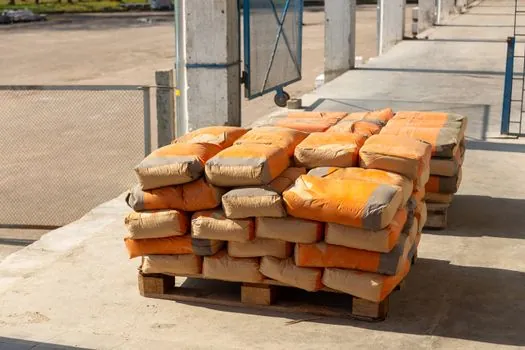
Selection across the unit-load class is a function of five decision variables, and the load number is only one of them. The table below lines the three main options against the criteria that actually drive a 2026 spec: [S1]
Pallet-truck AGV (counterbalanced / walkie replacement): typical 1,000-1,200 kg per load, single-pallet pickup, low transfer height, suited to mixed-Aisle warehouses and lineside replenishment, with compact footprints and tight manoeuvring requirements [S3][S4]. Best when labour is the bottleneck and pallet mass rarely exceeds 800 kg.
Powered-conveyor / shuttle AGV: 1-4 loads at up to 1,500 kg per load, 500 mm standard transfer height, roller/chain/modular belt interfaces, handshake via photocells or OPC, with scissor-lift variants to bridge conveyors at different heights [S2][S4]. Best when pallets must move between fixed conveyors or end-of-line equipment such as palletizers, wrappers, and AS/RS [S2].
Heavy-deck unit-load AGV: standard 30,000 kg (66,000 lb) platforms, custom beyond 20 t, low speed, magnetic-tape / laser / RFID navigation, replacing towline conveyors in body-in-white and large-assembly plants [S1]. Best when the load is worth more than the vehicle carrying it and flexibility beats the civil-work cost of a new towline trench [S1].
The tradeoff is sharp: a heavy-deck AGV at 30 t costs an order of magnitude more than a 1,200 kg pallet truck, and Mesh Automation's 2026 pricing window puts unit-load AGV (pallet and cart carriers) at $40,000-$70,000 for the standard class, with simple tugger magnetic-guided vehicles below that band [S7]. Against that, a towline conveyor rebuild requires deep trenching, extensive concrete work, and labour-intensive reconfiguration when the line changes, which is why "the vehicles built for this work have to be engineered accordingly" rather than adapted from a generic platform [S1][S2].
Standards, Safety Envelope, and Interface Reality
Unit-load AGVs operate in environments shared with people, equipment, and other vehicles, and the safety case is integrated into vehicle design and adapted to the AGV's movements and environment, not bolted on after the fact [S4]. Alstef's range statement is explicit on this: navigation, load handling, and safety systems are defined per application, with laser-based, natural-feature, and mixed navigation as the supported localisation technologies [S4].
The conveyor handshake matters more than the kilogram rating in conveyor-deck applications. AGV Network specifies that the AGV must handshake with the fixed conveyor for safe and reliable load transfer, done via photocells mounted on both ends or via OPC server, with scissor-lift decks used to bridge conveyors at different heights [S2]. That handshake is what lets a 1,500 kg-per-load AGV behave as an "unfixed conveyor extension" in the working area, which keeps escape corridors open and removes the physical barrier that a fixed conveyor would otherwise impose [S2].
On the navigation side, the historic guidance menu (magnetic tape, RFID tags, optical strips, lasers) still applies, and laser triangulation against reflective targets reaches millimetre accuracy for unit-load decks that need exact positioning of the load on a conveyor or end-of-arm tool [S1][S5]. HELI's writeup adds inertial measurement and odometry to the sensor stack for the path-following loop, which is what gives unit-load AGVs the positioning repeatability that palletizers and AS/RS interfaces demand [S5].
Where Unit-Load AGVs Fit and Where They Don't
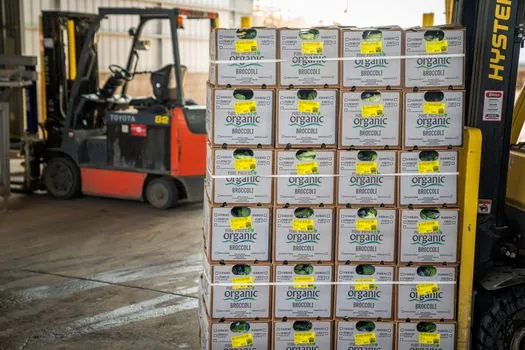
Unit-load AGVs are the right call when the load is a discrete pallet, tote, drum, or skidded item and the route is repeatable: DC pallet shuttles, lineside replenishment, end-of-line palletizer feeds, and body-in-white or large-assembly conveyance [S1][S2][S4]. They are the wrong call for case-picking in narrow aisles (use a VNA or reach-truck AGV), for order picking with high SKU variety (use an AMR / platform AGV), and for any flow where the load is too irregular to sit on a deck or conveyor [S4].
For 1-4 pallet flows between fixed conveyors with 1,500 kg per load and a 500 mm transfer height, a powered-conveyor AGV is the cleanest fit; for 1,200 kg single-pallet flows in mixed-aisle warehouses, a pallet-truck AGV is the cleanest fit; for 30,000 kg vehicle bodies through a flexible assembly line, a heavy-deck unit-load AGV is the cleanest fit [S1][S3][S4]. Outside those envelopes, the spec drifts toward automated reach trucks, VNA storage AGVs, or AMRs that are not unit-load class at all [S4].
For a fuller picture of how this fits alongside other heavy-handling equipment, the spec logic for truck-crane pallet fork attachments in this capacity-derate guide and the density-versus-access tradeoff in single-deep versus double-deep stacker cranes both turn on the same question of how much mass you are committing to a single load envelope. The core AGV robot reference covers the broader vehicle taxonomy that unit-load decks sit inside.
Limits, Failure Modes, and Open Constraints
Two failure modes dominate the unit-load class. First, real-world payload rarely matches rated payload: pallet-truck AGVs are usually rated to 1,200 kg but typically run partial, which means the fleet is sized for peak pallet mass, not average, and battery and fleet-management software have to absorb that peak [S3]. Second, conveyor-deck AGVs fail at the interface, not on the road, so any spec that does not lock the conveyor height, transfer direction, and handshake protocol (photocell or OPC) before the AGV is ordered is a spec that will be re-engineered on site [S2][S4].
Heavy-deck AGVs trade flexibility for floor loading and route width: standard 30,000 kg platforms need appropriate slab design, charging infrastructure sized for the duty cycle, and a fleet-management system (Alstef uses OPAL, others use equivalent) that can coordinate multiple heavy vehicles in a shared space without deadlocks [S1][S4]. The heavy-deck case also depends on the safety case over manual handling being the strongest economic argument, which is why the class is concentrated in heavyweight manufacturing rather than general warehousing [S1].
Open spec items to track in the unit-load class include: the shift from 1,200 kg-rated pallet trucks to 1,500 kg powered-conveyor shuttles as DC throughput rises, the adoption of lithium-ion traction packs with modular hitches for fast swap, and the spread of RFID-based automatic pallet identification as a standard option on new builds [S2][S5][S8]. Unit-load capacity itself is unlikely to move much, because the EUR/ISO pallet envelope, not the AGV, is the binding constraint at the low end, and assembly-line floor loading is the binding constraint at the high end.
The underlying component specifications are covered under electronic load, and load cell.