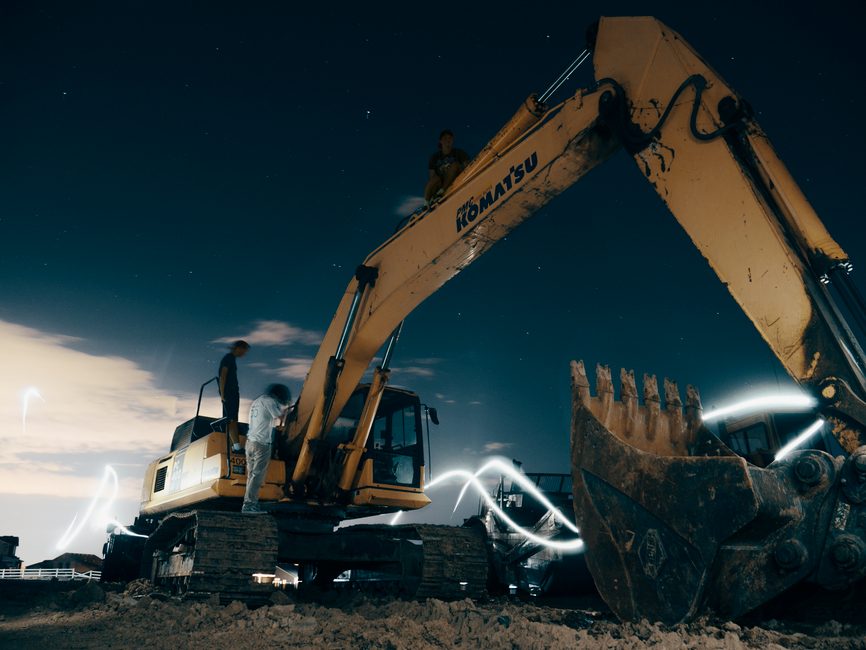
For automotive-yard and dealership-service applications, a standard backhoe loader in the 6,000-11,000 kg operating-weight class with a 0.08-0.30 m³ rear backhoe bucket and a 0.6-1.5 m³ front loader bucket covers roughly 80-85% of the loading, trenching and snow-clearance work a dealership, fleet depot or parts warehouse actually issues in a year [S1][S2].
DirectIndustry catalogues 16 standard backhoe-loader products across 10 manufacturers as of the 2026-06-03 industry-manufacturer index, and China-side OEM/ODM lines from China Machinery (Jining) Industrial Co., Ltd. (CNMC) and Shandong Heyi Machinery remain visible in the supplier set as of 2026-07 [S1][S3][S4]. Replacement-parts distributors such as Hiap Soon Parts Supplies in Ipoh/Perak round out the after-market side, stocking buckets, pins and hydraulic cylinders for JCB, CAT and Sany-pattern machines [S5].
Standard Backhoe Loader Definition and Operating Envelope
A standard backhoe loader is a rubber-tyred, tractor-based loader that mounts a front loader bucket on a parallel linkage and a rear articulated backhoe on a swing turret, with a fixed or extendable dipper giving 3.5-5.5 m of dig depth and roughly 5-7 m of reach at the rear [S1][S2]. The class is defined by integrated loader+backhoe geometry, not by any single engine output; the 70-110 hp band with hydrostatic or powershift transmissions and open-centre load-sensing hydraulics at 200-250 bar nominal pressure is the typical configuration seen in the 2026 supplier index [S1][S3].
For an automotive reader, the key behavioural difference from a skid-steer loader is mobility at speed: a backhoe loader drives on a 30-40 km/h roading gear between yard zones without flatbed transport, which matters for multi-dealership service routes and for campus layouts where the machine must clear lanes, then trench a service-bay conduit, then re-park. The trade-off is a larger 3.5-4.5 m wheelbase and a 2.2-2.5 m transport height, which can be a clearance problem in older indoor service tunnels.
Selection Criteria for Automotive-Yard and Dealership Work
Five hard criteria should govern the spec: (1) operating weight and roading dimensions versus yard gates and bridge clearances; (2) loader bucket breakout force versus the bulk density of the material being moved (snow, scrap steel, palletised parts); (3) backhoe dig depth versus the deepest utility trench the dealership service department will ever open; (4) hydraulic auxiliary flow in L/min at rated engine rpm for powered attachments such as hydraulic breakers for frozen ground; and (5) total cost of ownership across a 5,000-8,000 hour economic life, including parts availability through distributors like Hiap Soon [S5].
For a typical 2-4 dealership group, a 75-90 hp machine in the 7,500-8,500 kg class with a 0.8-1.0 m³ front bucket and a 0.10-0.20 m³ rear bucket covers snow clearing, parts-pallet loading, light trenching for EV-charger conduit, and signpost or bollard setting without crossing into a 12,000+ kg carrier-class machine that would over-spec the job and burn fuel. Tier-2 China OEM lines from the Shandong cluster — including CNMC and Heyi — typically list at 55-70% of the equivalent JCB or CAT list price for a comparable operating-weight spec, with the trade-off being thinner dealer networks outside China and a longer lead time on wear parts [S3][S4].
Comparison of Main Machine Classes for Automotive Use
Three classes are routinely compared for automotive-yard procurement; the table below lines them up against the four criteria that drive fleet decisions. [S1]
Standard backhoe loader (6,000-11,000 kg, 70-110 hp): 0.6-1.5 m³ front loader bucket, 0.08-0.30 m³ rear bucket, 3.5-5.5 m dig depth, 30-40 km/h roading speed. Best fit for mixed loading and trenching, multi-zone yards and dealership campuses. Not a fit where machine width must drop below 1.8 m for indoor work, where a wheel loader is the correct comparison class.
Compact / mini backhoe-loader (2,000-4,000 kg, 25-50 hp): 0.2-0.6 m³ front bucket, 0.02-0.06 m³ rear bucket, 2.0-3.0 m dig depth, 10-20 km/h roading. Best fit for indoor service tunnels, narrow parts-warehouse aisles and small dealership back lots. Trade-off is single-shift productivity on snow clearing and a noticeably higher cycle time on parts-truck loading.
Skid-steer loader (1,500-4,500 kg, 40-90 hp): 0.2-0.8 m³ bucket, no rear dig, 10-18 km/h roading. Best fit for tight-quarter pallet work and snow clearing on hardstands; the comparison is to a skid-steer loader spec, not a backhoe. Trade-off is no integrated trenching capability and the need to flatbed between distant lots.
Who a Standard Backhoe Loader Is For and Who It Is Not
A standard backhoe loader is the right machine for: multi-dealership service groups running snow-clearance and EV-charger trenching programmes; automotive parts distributors with on-site loading bays; OEM training centres that need one machine to demonstrate loader work, backhoe work and roading behaviour; and fleet operators running municipal or campus contracts that include automotive sites. It is not the right machine for: indoor warehouse parts handling (use a skid-steer or electric forklift), pure long-haul aggregate loading (use a wheel loader), or precision grading around EV charging pads (use a compact track loader with grade control) [S1][S2].
Operators without a Class 1 or equivalent heavy-equipment licence will need to budget for the operator's certification in markets where it is regulated, and yard managers should expect a 2-3 week familiarisation period for an operator stepping down from a wheel loader because the rear-pivot backhoe controls are intuitive to a new operator but unforgiving in reverse.
2026 Sourcing Signals: China Cluster, Pricing Bands and After-Market
As of 2026-07, the Shandong cluster — Jining, Linyi, Xuzhou-adjacent — remains the most concentrated China-side supply base for standard and compact backhoe loaders, with CNMC and Heyi both listing active export channels [S3][S4]. For a more granular look at the Shandong excavator and loader cluster economics that sit adjacent to the backhoe-loader segment, the Shandong excavator-supplier sourcing map for 2026 lines up the regional pricing and lead-time bands a buyer should expect.
The 2026 FOB-China price band for a 75-90 hp standard backhoe loader in the 7,500-8,500 kg class is typically 35-55% below equivalent JCB or CAT list pricing, with the gap driven by brand premium, dealer-network cost and emissions-tier certification (China Tier III equivalent vs EU Stage V / US EPA Tier 4 Final on the Western OEM lines). After-market parts flow through distributors such as Hiap Soon in Malaysia for the ASEAN region, and through a layer of JCB-, CAT- and Sany-compatible independent parts suppliers for the China-built machines; pin, bushing and hydraulic-cylinder SKUs are widely cross-compatible across brands in this class, which is the structural reason parts pricing stays competitive [S5].
Standards, Compliance and Sourcing Discipline
EU-bound machines must meet the Stage V emissions regulation under Regulation (EU) 2016/1628 and the Machinery Directive 2006/42/EC; North American buyers should verify EPA Tier 4 Final certification and the applicable ANSI/SAE B30.5 mobile-crane-lifting standards if the backhoe is used for engine or chassis lifting. Operator-side compliance typically runs through OSHA 1926.602 for US construction-equipment operators and the equivalent national regime in the destination market. Buyers should request the EU type-approval certificate, the EPA family-approval letter and the machinery-directive technical file before issuing a purchase order on a China-OEM line, and confirm ROPS/FOPS certification on the cab structure [S1][S3].
On the supplier-evaluation side, treat the standard backhoe loader segment the same way an engineer would treat a pressure transmitter or flow meter purchase: pin the exact operating-weight and engine-emission-tier spec, the auxiliary hydraulic flow, the warranty terms, and the parts-availability lead time for a top-10 wear-item list, in writing, before signing. The DirectIndustry 2026-06 index lists 10 manufacturers and 16 products under the standard backhoe-loader filter, which is a tractable shortlist; cross-check it against the supplier's own published technical data sheet rather than a marketing brochure [S1].
Limitations, Failure Modes and Pre-Shipment Inspection
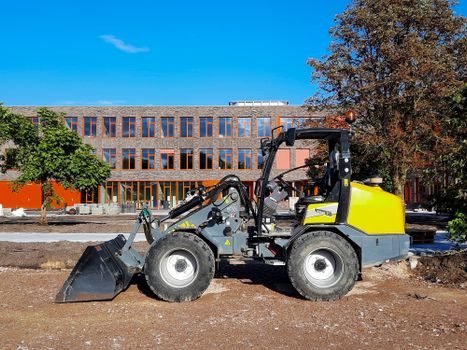
Two recurring failure modes on standard backhoe loaders in light-duty automotive service are worth flagging: hydraulic contamination from roading dust drawn through the front-loader linkage into the rear hydraulic tank, and premature wear on the rear swing turret bearings from low-cycle, high-impact trenching in frozen ground. Both are addressable through a 250-hour hydraulic-fluid sample programme and a 1,000-hour swing-bearing inspection, respectively, neither of which is usually included in the base warranty [S1][S5].
Pre-shipment inspection on a China-OEM line should cover: full functional test of the loader linkage, backhoe cylinder sequencing, and swing turret under load; hydraulic-flow measurement at the auxiliary ports with a calibrated flow meter; engine-emission certificate cross-check against the destination market; and a photographic record of frame welds, ROPS structure and the dipper-stick pin retaining hardware. The line-item discipline is the same as a buyer would apply to a industrial valve or pressure transmitter PO: the spec on the data sheet is the spec on the wire transfer, and the parts distributor (such as Hiap Soon) is the safety net when the OEM lead time stretches [S5].
Trackable next signals: the DirectIndustry standard-backhoe-loader manufacturer index is refreshed on a roughly monthly cadence, and the next refresh in 2026-07 will show whether the 10-manufacturer / 16-product count shifts; the Shandong loader-cluster pricing band is repriced quarterly, with the 2026-Q3 print expected on the same Shandong-supplier channels covered in the regional sourcing map; and EU Stage V compliance documentation for China-built backhoe loaders is the gating document for any EU-yard buyer through 2026-Q4.