Electronics-housing production demands molding equipment that holds micron-level tolerances while preventing particulate and electrostatic discharge contamination, a combination that pushes buyers toward all-electric injection platforms and tightly zoned barrel/plasticizing systems [S4].
The short list of non-negotiables for an electronics-grade static pressure molding machine build includes: servo-driven clamp force control, low-shear plasticizing, ESD-safe material handling, and ISO 14644-1 rated cleanroom integration. Buyers who skip any one of these typically face field failures rather than production-line rejects.
Selection Criteria: Clamp Tonnage, Plasticizing and Cleanroom Class
For thin-wall enclosures, micro-connector bodies, and sensor housings, the dominant process variable is wall thickness below 1.5 mm with cycle times that must drop under 6 seconds to justify tool ROI; this regime is where high-speed precision injection molding machines with closed-loop servo back-pressure control outperform conventional hydraulic units [S2].
Clamp tonnage selection follows projected area rule of thumb at 3-5 tons per square inch of cavity shadow for engineering thermoplastics, but electronics housings frequently require below this band because thin walls reduce cavity pressure. Material choices span flame-retardant UL 94 rated resins for power-supply and battery enclosures, polycarbonate for display lenses, and static-dissipative compounds for ESD-sensitive assemblies [S1].
Cleanroom class is the third axis. All-electric presses are specified over hydraulic for Class ISO 7 (10,000) and cleaner because the absence of hydraulic oil removes a primary particulate and outgassing source [S4]. When the application must run ISO 5, the press is typically enclosed in a laminar flow cabinet and tool venting is filtered.
Material and Process Window: Low-Shear, High-Purity Melt
Low-shear plasticizing design is the deciding factor when molding engineering plastics such as PC, ABS, and nylon for connector and insulating parts; standard single-screw units generate uneven shear that degrades polymer chains and produces silver streaks in thin-wall sections, defects that fail insulation resistance testing [S2].
For static-dissipative and conductive compounds, shear control is even tighter. The five-component DFS-style plasticizing system, comprising high-mixing screw, zonal barrel temperature control, closed-loop servo back-pressure module, uniform injection drive, and shear-resistant nozzle, is one architecture that holds melt purity through ultra-short cycles [S2]. Buyers should treat the screw L/D ratio and back-pressure setpoint as first-class spec items rather than commissioning details.
Compression molding remains a parallel option for thermoset housings, especially phenolic and BMC formulations used in high-temperature or arc-resistant enclosures; it delivers low internal stress and good dimensional stability, but cycle times of 2-5 minutes place it outside the economics of high-volume thermoplastic connector production [S3].
Comparison: Process Options for Electronics Housings
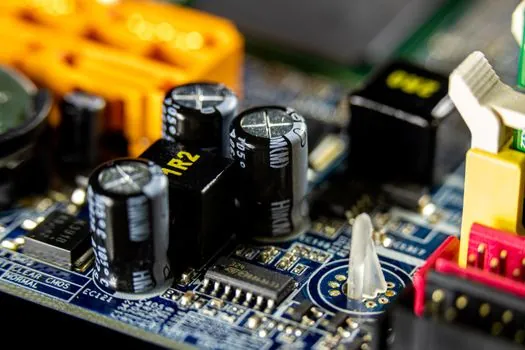
Four process routes dominate the electronics-housing build, and they line up against decision criteria as follows. (1) All-electric injection molding suits Class ISO 7+ cleanrooms and high-volume thin-wall parts, with the trade-off of higher capital cost and limited shot size above ~500 g. (2) High-speed servo-hydraulic injection molding handles larger thin-wall packaging and enclosures at lower capital cost but adds hydraulic-oil contamination risk. (3) Compression molding via shell-mold-style setups fits thermoset phenolic and BMC housings where fire and arc resistance matter more than cycle time [S3]. (4) Hybrid compression-injection (used in low-pressure die casting machine lines adapted for BMC) bridges both, at the cost of process complexity.
For buyers evaluating a static pressure molding machine build against an anti-static equipment retrofit on a standard hydraulic press, the deciding metric is total cost of ownership across 5-7 years, factoring energy use, scrap rate on thin-wall parts, and cleanroom HVAC load. All-electric presses typically win on the energy and scrap axes, hydraulic wins on upfront capital and large-shot flexibility.
Use Cases: Connector Bodies, Display Lenses, Battery Enclosures
Connector and insulating-component production is the highest-volume electronics-housing application, and the spec that matters most is plasticizing stability at injection speeds above 200 mm/s; the molding process window for these parts requires melt temperature held within +/- 2 deg C and back-pressure stability to keep dimensional drift below 0.02 mm across 24-hour runs [S2].
Display lenses and protective covers in polycarbonate call for optical-grade melt, so screw and barrel polishing (Ra below 0.2 micrometer) and vacuum venting on the plasticizing stage are common premium options. Insert molding, embedding metal threads or pins in the same cycle, eliminates post-mold assembly for EMI-shielded enclosures, where conductive coatings or metallized films are added as a downstream operation [S1].
Battery and power-supply housings are spec'd against UL 94 V-0 or V-1 ratings, so flame-retardant resin lots must be traceable and re-validated on every incoming batch; the production line then runs the molding press in a Class ISO 8 cleanroom at minimum, with ionized air bars at the part-eject station to prevent ESD damage to nearby circuits [S4].
Limitations and Failure Modes

Static pressure molding machines applied to electronics housings fail in three predictable ways: (a) hydraulic-oil micro-leakage contaminating cleanroom class, (b) screw-shear degradation of high-MFR resins causing silver streaks and brittleness, and (c) inadequate mold-venting producing burn marks on glass-filled compounds. Each mode has a documented mitigation: switch to all-electric, install low-shear screw geometry, and add vacuum or micro-vent inserts respectively [S2][S4].
Buyers who specify a press without confirming the servo drive's back-pressure resolution typically see shot-to-shot weight variation above 0.3 percent, which translates directly into flash on connector cavities and scrapped tooling. Confirming the controller's closed-loop bandwidth (typically above 100 Hz on premium machines) is a more useful acceptance test than nameplate shot-weight capacity [S2].
Standards, Sourcing, and Supplier Selection
The standards web that applies to electronics-housing molding includes UL 94 for resin flammability, RoHS and REACH for material compliance, and ISO 14644-1 for cleanroom classification; FDA-grade resin sourcing is required only when the housing contacts food or medical device surfaces [S1][S4]. For buyers comparing similar static pressure molding machine builds, the in-house molding departments of contract manufacturers typically run press fleets in the 50-300 ton range for enclosures and 20-80 ton for micro-connectors [S5].
For deeper comparison on how the same equipment class maps to non-electronics segments such as aerospace brackets, the related article on static pressure molding machine selection for aerospace components provides complementary spec bands on clamp force and material traceability. Where lighting-fixture production requires higher-temperature thermoset BMC, the static pressure molding machine spec map for lighting fixture production article covers the relevant mold-temperature and cure-time envelope.
Trackable next signals for Q4 2026 sourcing decisions: (1) the second-tier electric press brands closing the servo back-pressure bandwidth gap below 0.5 percent shot-weight deviation, and (2) the consolidation of ISO 14644-1 Class 6 cleanroom-ready injection cells into single-vendor turnkey packages. These two shifts will reshape the cost-per-part economics for mid-volume electronics-housing programs running between 500,000 and 5 million parts per year.