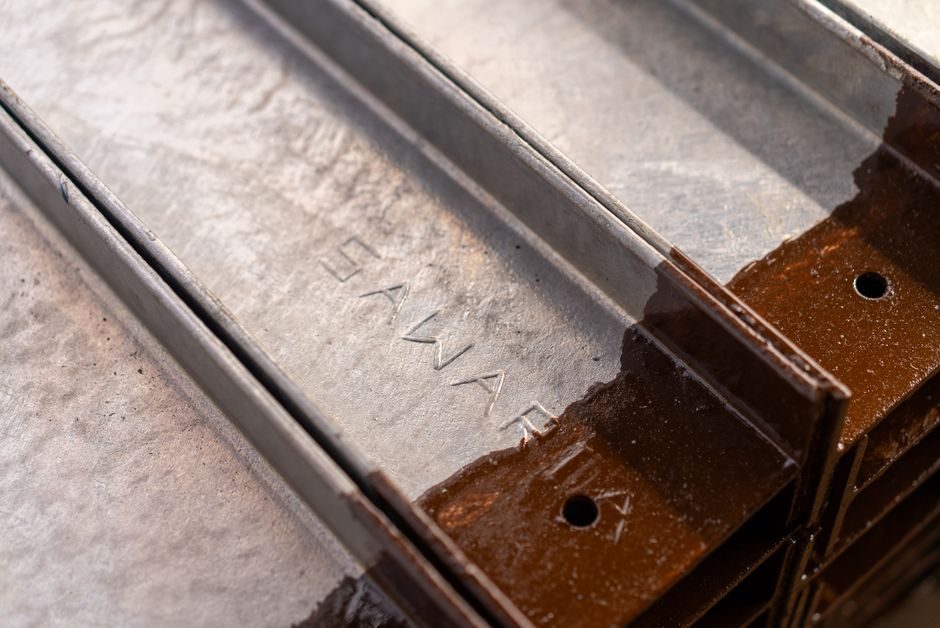
Steel fiber concrete reinforcement is specified under GB/T 39147-2020 in China, the standard top UHPC mills currently cite on their product and QA documentation [S1]. The same mills bundle three product families into a single delivery: hooked-end (waved or end-deformed) for shotcrete and industrial floors, cold-drawn straight wire for refractory castables, and brass-coated micro-fibres for crack-control in UHPC panels [S1][S3].
For a process engineer, the practical question is which dimensional and mechanical band matches the pour, and how the fiber changes the maintenance budget of the asset it sits inside — the answers below pull from the 2026 manufacturer pages and the underlying materials research on bond, flexure, fatigue and SHM-based damage detection [S1][S3][S6][S2].
Spec Bands That Matter on the PO
Bositai lists three core geometry ranges: length 13–60 mm, diameter 0.2–0.75 mm, and tensile strength 600–2,850 MPa, all QA-released against GB/T 39147-2020 [S1]. The aspect ratio (L/d) is the single number that drives crack-bridging performance — values of 40–80 are typical for structural SFRC, while 200+ ratios are used in UHPC where the matrix itself carries 120–150 MPa compressive strength [S1][S3].
For refractory service, the supplier catalogue pushes cold-drawn stainless or carbon wire at 0.4–1.0 mm diameter and 20–35 mm cut length, because the operating envelope (900–1,100 °C in castable linings) rules out anything with a polymeric coating that would volatilise on first heat-up [S3]. Brass-coated micro-fibres (typically 0.12–0.20 mm × 6–13 mm) are reserved for UHPC panels and anti-spalling layers on tunnel segments, where the 0.2–0.5 mm cover controls the cracking width at the surface [S1].
Bond Behaviour: Why Round and Melt-Extracted Types Were Phased Out
The Sogou Baike entry on steel-fiber concrete pavement flatly states that round straight wire and carbon-steel melt-extracted fibers have been "should be eliminated" because their bond with the cement matrix is poor: round wire offers only sliding friction, and melt-extracted fibers carry an oxide scale that further reduces adhesion [S5]. Hooked-end, indented, and corrugated profiles replaced them because mechanical anchorage lifts pull-out resistance by 3–5× at the same diameter [S5][S6].
Quantitative flexural gains: silica-fume high-strength concrete with 1.0–1.5 % by volume of hooked-end fibers shows 40–80 MPa flexural strength gains over the plain matrix in the CNKI test series, with split-tensile strength lifting 30–50 % and impact resistance rising by an order of magnitude [S6]. These numbers are why end-deformed geometry is the default on most Chinese mill datasheets today, not a marketing preference [S1][S3].
Calibration Checks Before a Pour

Three numbers must be checked on the CoA against the PO: aspect ratio (L/d), tensile strength band, and quantity per cubic metre. Bositai ships reference photos of each batch with a length-tolerance window of ±5 % and a diameter tolerance of ±0.02 mm on the 0.2–0.75 mm range [S1]. A field-calibrated calliper and a 10-fiber sample is enough to spot a substitution — a 0.75 mm wire in a 0.5 mm order will visibly fail the bend test on a 3 mm mandrel.
For UHPC mixes the dosage window is 2–4 % by volume (roughly 160–320 kg/m³ at 7,850 kg/m³ steel density); for SFRC industrial floors 0.5–1.5 % (40–120 kg/m³) is normal, and for refractory castables the dosage tracks the supplier castable matrix recipe, often 1–3 % [S1][S3]. A 1 % over-dosage in a slab-on-grade pour does not sound like much, but at 157 kg/m³ it is enough to push the mix outside the pumpable window on most site batchers [S3].
Maintenance and Inspection of the Reinforced Asset
Steel fibers do not require their own maintenance schedule, but the concrete they sit in does — and the fiber changes the failure mode the inspector should look for. The 2021 ScienceDirect SHM review frames this as continuous monitoring of stiffness, modal frequency and crack-width evolution, with computer-vision and deep-learning methods now able to detect surface crack patterns at sub-millimetre resolution [S2]. For SFRC pavements, the design crack width is typically 0.1–0.3 mm under service load, well below the 0.4 mm spalling threshold for unreinforced slabs [S5].
The fiber's first job is crack-width control, not crack prevention. Inspectors should flag any crack wider than 0.3 mm in a steel-fiber slab for closer review, because it suggests either under-dosage, fiber balling during the pour, or a matrix that has lost its designed strength [S2][S5]. In refractory service, end-of-cycle inspections should sample the exposed hot face for fiber oxidation; carbon-steel fibers begin to scale visibly above 600 °C and pull out of the matrix above 800 °C, which is why stainless variants are specified for the higher-temperature zones [S3].
Failure Modes and Limits to Flag
Fiber balling is the single most common field failure: it is caused by over-dosage, insufficient mixing time, or fibers added to a too-stiff mix before they can disperse. The visible signature is a clump larger than 25 mm in the cross-section after strip-out [S3]. Corrosion is a secondary risk in cracked sections — once a fiber is exposed at a crack face, carbon-steel variants will rust, stain the surface, and lose bond within 2–3 wet/dry cycles if the crack remains open; stainless or brass-coated grades are the mitigation [S1][S3].
Standards discipline: GB/T 39147-2020 covers steel fibers for concrete in China, but there is no single equivalent IEC/ISO rule that the supplier pages cross-reference [S1]. Buyers shipping to Europe should request EN 14889-1 compliance data from the mill — Bositai and similar UHPC-focused Chinese suppliers carry it, but the CoA must show it [S1]. Specifications on steel fiber reinforcement for tunnel segments and industrial floors sit in the same tensile-strength band (1,000–2,000 MPa) as the carbon fiber alternatives, but at roughly 1/20th the unit cost for the same tensile load capacity. A different but related structural concern is documented in our China steel pipe sourcing map, which covers the suppliers that feed the same construction projects.
Selection Criteria: Steel Fiber vs. Macro-Synthetic vs. Rebar Mesh
Macro-synthetic fiber at the same dosage is cheaper and corrosion-free but tops out at 4 MPa residual flexural, which rules it out for forklift traffic over 5 tonnes axle load. Rebar mesh at 8 mm @ 150 mm centres sits between the two on residual strength (3–4 MPa) and adds 25–35 kg/m² of steel that has to be chaired and tied.
For UHPC panels, steel fiber at 2.5–3.5 % by volume is mandatory — the matrix needs the tensile bridge to reach 120–150 MPa compressive strength with strain-hardening behaviour, and no synthetic alternative matches it [S1]. For refractory castable hot-face linings, the comparison collapses: steel fiber (carbon or 304/310 stainless) is the only option because polymers would pyrolyse on the first heat-up cycle [S3]. A more general framing of the maintenance question sits in our crossed roller guide sizing note, which uses the same load-vs-life trade-off language.
Sourcing and Documentation
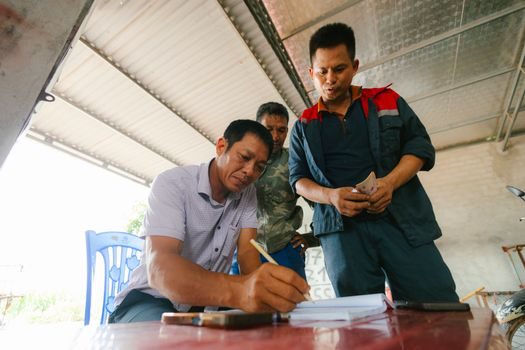
Two Chinese suppliers (Bositai, Dlharvest) publish full GB/T 39147-2020 compliance and length-tolerance data on their homepage, with batch-level CoA and reference photos of the actual fiber shape [S1][S3]. Bositai adds ISO 9001 and a CE/EN 14889-1 line on its data sheet, which is the easiest single signal that a mill can ship to European tunnel and metro projects [S1]. Dlharvest packages steel fiber alongside refractory anchors and polypropylene fiber, useful for buyers sourcing a full castable accessory kit from one supplier [S3].
Trackable signals for the next quarter: (1) any update to GB/T 39147-2020 revision drafts, which would shift the tensile-strength bands; (2) European EN 14889-1 alignment language appearing on the Bositai datasheet, currently a single line; (3) 2026 pricing moves on 0.5–0.75 mm cold-drawn wire, which moves with wire-rod scrap and is the single most volatile line item in a refractory castable PO [S1][S3].