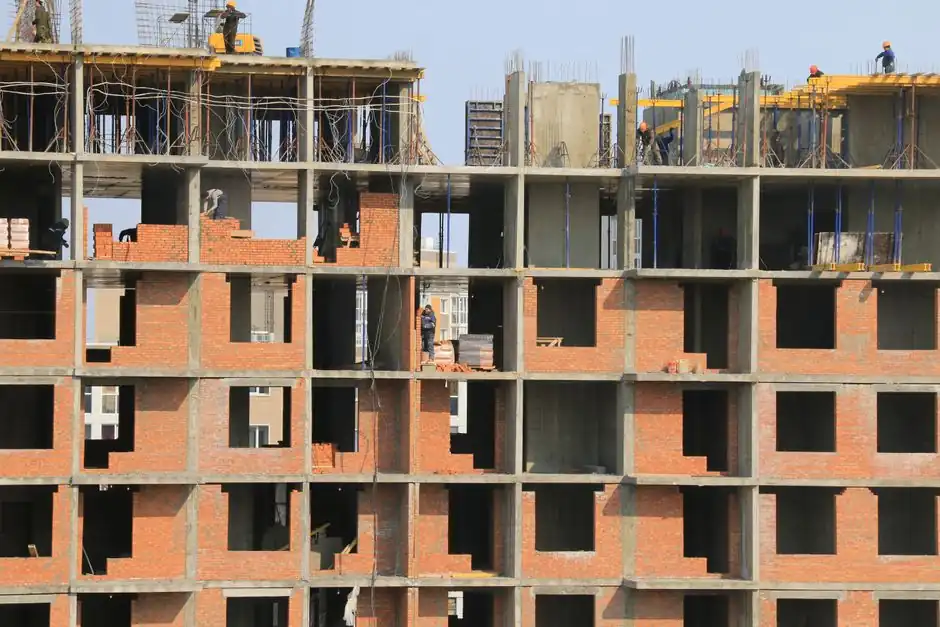
Residential-grade steel fiber concrete typically uses cold-drawn hooked-end wire fibers classified as Type I/30/50 under EN 14889-1, dosed at 15 to 30 kg/m³ for slab-on-grade and 25 to 40 kg/m³ for shotcrete applications, with fiber length held between 50 and 65 mm and diameter between 0.5 and 1.0 mm to balance pumpability and crack-bridging performance [S1].
Light-gauge steel framing and pre-engineered steel buildings dominate the structural side of Australian and US residential construction, where steel framing has become a primary alternative to timber [S1][S3]; the same supply chain that delivers cold-formed sections increasingly sources the steel fiber grades used in residential concrete, so specifiers should align fiber and framing procurement through one traceability channel.
Five criteria that drive a defensible residential fiber spec
Residential slabs, driveways, paths, and pool surrounds face a narrow loading envelope: foot traffic, light vehicle loads on driveways (typically 2.5 to 4.0 kPa live load), shrinkage stresses during the first 28 days, and occasional freeze-thaw in temperate zones; the spec must therefore optimize for crack control, not structural toughening. Five criteria separate a workable residential fiber from a problem one: (1) Tensile strength class under EN 14889-1 (Group 1 for low-carbon cold-drawn wire at 600-1000 MPa, Group 2 for sheet, Group 3 for melt extract, Group 4 for mill cut); (2) aspect ratio L/d, normally 50 to 80, with residential work staying in the 50-65 range to avoid pump-line blockage; (3) dosage band, 15 to 30 kg/m³ for slabs and 25 to 40 kg/m³ for shotcrete; (4) length matched to aggregate, with 50 mm fibers preferred where max aggregate is 10 mm and 60 mm fibers where max aggregate is 20 mm; (5) compliance with ASTM A820 Type I (cold-drawn wire) or EN 14889-1 Group 1, with mill certificates traceable to the heat number. [S1]
Beyond those five, a sixth practical criterion matters on site: bundling and glue-melt release. Bundled fibers with water-soluble glue that releases at 5-15 seconds of mixing reduce balling in the truck drum, an issue that consistently shows up in the field when dosage exceeds 35 kg/m³ [S1]. Specifiers should also confirm that the fiber supplier reports residual flexural strength per ASTM C1609, with the residential benchmark sitting at f¹₅₀ ≥ 1.5 MPa at a 1.5 mm crack-mouth opening for a 20 kg/m³ dose.
Comparison of the four main fiber families for residential use
Four steel fiber families compete for the residential concrete slot, and the choice drives both cost and finish. (a) Cold-drawn hooked-end wire (ASTM A820 Type I / EN 14889-1 Group 1, 30/50 grade): tensile strength 600 to 1000 MPa, L/d 50-80, dosage 15-40 kg/m³, the residential default because of clean finish and reliable crack-bridging. (b) Cold-drawn flat-end or undulated: similar tensile class but lower pull-out resistance, typically dosed 5-10% higher for equivalent residual strength. (c) Slit sheet (ASTM A820 Type II / EN 14889-1 Group 2): lower tensile, 380-600 MPa, cheaper, used in non-structural slabs where the engineer is only chasing shrinkage control. (d) Melt extract (ASTM A820 Type V / EN 14889-1 Group 3): irregular shape, low L/d control, lowest cost, mostly used in shotcrete and refractory work, not a residential slab choice. [S3]
For most residential applications the cold-drawn hooked-end at 30/50 grade wins on three of four decision criteria: crack control (residual flexural strength f¹₅₀ at 1.5 mm CMOD typically 1.5-2.5 MPa at 20 kg/m³), pumpability (L/d 50-65 clears 100 mm pump lines), and finish quality (no protrusion at the trowelled surface when fiber stays below 40 mm length). The concrete fiber family also includes stainless and brass-coated variants, but these only become necessary in chloride-exposed or coastal pool-deck work where carbon-steel fibers would stain.
Who it is for, and where steel fiber is the wrong call
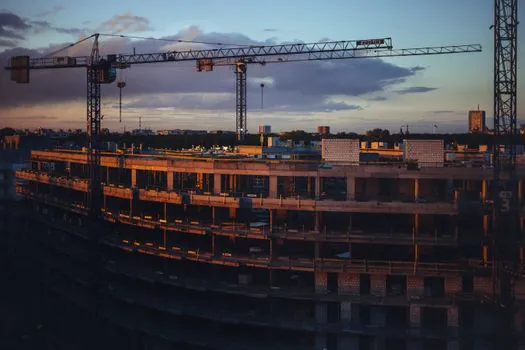
Steel fiber in residential concrete is a fit for: ground-supported slabs 100-150 mm thick, driveways exposed to light vehicle traffic, pool decks and patios where shrinkage cracking is the dominant defect mode, ICF (insulated concrete form) cores where rebar placement is impractical, and shotcrete retaining walls under 3 m height. The list of cases where steel fiber is the wrong call is shorter but worth respecting: thin toppings and screeds under 75 mm thickness (fiber will protrude through the trowelled surface), architectural polished concrete where the customer wants a uniform aggregate exposure (fiber ends rust-stain on green concrete before curing compounds seal the surface), and ground-bearing slabs carrying heavy point loads above 20 kN from trucks or forklifts (where the engineer still needs rebar or wire mesh for the static capacity check, and fiber only supplements crack control). [S2]
On a polished or decorative slab, specifiers should either switch to glass fiber alkali-resistant (AR) at 0.6-1.2 kg/m³ for shrinkage control, or specify stainless steel fiber (typically 1.0 mm diameter, 30 mm length) at a higher cost.
Standards, traceability, and on-site quality checks
Three standards govern the residential steel fiber decision: ASTM A820 (standard specification for steel fibers for fiber-reinforced concrete, classifying Types I through V by manufacturing method), EN 14889-1 (fibers for concrete, Part 1: steel fibers, defining Groups 1-4 and material classes 30/50, 40/60, 50/70, 60/80 by L/d), and ASTM C1609 (standard test method for flexural performance of fiber-reinforced concrete, the residual-strength benchmark specifiers actually use for acceptance). Mill certificates should report heat number, tensile class, dimensions, and a recent C1609 result. EN 14889-1 material class 30/50 reads as length 30 mm / diameter 0.5 mm in some older documentation, but in current usage 30/50 denotes an L/d window of 30 to 50, so check the supplier data sheet against the actual measured fiber. [S1]
On-site, three checks catch 90% of residential fiber problems before placement: (1) balling in the truck drum, prevented by adding fiber at the plant, not on site, and by limiting dosage to the lower half of the recommended band on hot days; (2) protrusion at the surface, prevented by holding length at or below 50 mm and not floating the slab until bleed water disappears; (3) uneven distribution, prevented by mixer speed 12-18 rpm and a minimum 70 revolutions after fiber addition before discharge. Sampling one panel per 100 m² for residual strength per ASTM C1609 is the practical QA step that separates a spec on paper from a performing slab in service.
Light-gauge steel framing, fiber concrete, and the residential supply chain

Australian and US markets now treat steel framing as a default option for residential builds, with cold-formed light-gauge sections specified for houses, low-rise apartments, schools, and hospitals [S1][S3]. On the concrete side, fiber-reinforced slabs and pre-engineered steel buildings travel the same procurement chain through distributors who handle both cold-formed sections and carbon fiber or steel fiber reinforcement, which simplifies quality traceability but also concentrates supply risk; if a single regional mill has a heat-certificate issue, both the framing and the slab fiber are exposed. The practical mitigation is to write the fiber spec to allow two EN 14889-1 Group 1 suppliers (typically a 30/50 and a 40/60 material class) so the ready-mix plant has a substitution path without re-approval.
For specifiers building a residential package in 2026, the workable default is: hooked-end cold-drawn wire fiber to ASTM A820 Type I or EN 14889-1 Group 1, material class 30/50, 50 mm length, 1.0 mm diameter, dosed at 20 kg/m³ for slabs and 30 kg/m³ for shotcrete, with ASTM C1609 residual strength f¹₅₀ ≥ 1.5 MPa reported on the mill certificate, and heat-number traceability from the steel mill to the ready-mix ticket. Adjacent construction tools for fiber placement, including conveyor-fed dispensers and calibrated drum-addition systems, should be sized to handle a 20-30 kg bag in under 60 seconds per cubic metre to keep the mixing window realistic. The fiber converter on a precast line is a separate piece of equipment, and only relevant if the residential build uses precast elements rather than site-poured slabs; site-poured residential work stays with the truck-drum addition path.
Two signals are worth tracking over the next two quarters: (1) EN 14889-1 revision activity around recycled-content classification, which could open a low-cost recycled-steel fiber category for non-structural slabs; (2) ASTM C1609 acceptance criteria for low-dosage residential mixes (under 20 kg/m³), where the standard currently has limited guidance. Either development would shift the cost curve on residential fiber dosage by roughly 10-15% and is worth following through the ACI 544 and RILEM TC 281 committees.
For related coverage, see Holding Furnace Selection for Rail Components: 2026 Spec Map.