
Steel fiber total cost of ownership over a 30-year concrete asset is driven by five line items: raw-material grade (Q195/Q235 carbon wire vs. 304/316L stainless), dosage rate (kg/m³), surface preparation (hooked-end vs. straight vs. glued), placement labor, and the avoided maintenance from jointless floor design. On industrial floor and tunnel-segmental-lining applications, steel-fiber-reinforced concrete (SFRC) typically replaces rebar-mesh on a like-for-like tensile load basis [S2].
Two anchor specs define the cost book. HAREX HS65/13 stainless fiber runs 0.2 mm diameter ±0.005 mm, 13 mm length ±10%, tensile strength >1800 MPa, in 304/316/316L [S1]. Harde hooked-end H67/50 carbon-steel fiber runs 0.75 mm diameter ±10%, 50 mm length ±10%, >1100 MPa tensile, in Q195/Q235 [S2]. Indentation/straight stainless sits at 0.3-0.7 mm diameter, 25-35 mm length, ≥650 MPa tensile, packed 20 kg/bag [S2].
Material Grade: Q195/Q235 Carbon vs. 304/316L Stainless
304/316L stainless steel fiber is specified for chemical-plant, marine, and de-icing-salt exposure, and the cost book is fundamentally different from carbon wire [S1]. Q195/Q235 cold-drawn wire is the default for industrial floors, jointless floors, and vibrocompacted piles, with hooked-end geometry providing mechanical anchorage at >1100 MPa tensile [S2]. 316L is the upgrade path for chloride exposure above 5% NaCl, and 304 covers general mildly-corrosive slabs.
Material-grade cost ratio is a 3-5x premium for 304 stainless over Q235 carbon on a per-kg basis, and 4-7x for 316L, driven by nickel-molybdenum alloy content rather than processing. Equivalent-diameter 1.0 mm × 38-50 mm carbon fiber at 850 MPa tensile sells against 0.3-0.7 mm × 25-35 mm stainless at ≥650 MPa tensile, so stainless delivers higher strength-per-kg in the 0.5 mm equivalent-diameter class [S2]. The procurement decision is a chloride-exposure question, not a strength question.
Dosage Math: 20-50 kg/m³ Bands and Tensile Substitution
Typical SFRC dosage for industrial floors is 20-40 kg/m³, rising to 40-80 kg/m³ for jointless floors and tunnel segmental linings, with 25-35 mm fiber length and 0.3-0.7 mm diameter as the standard cut [S2]. Hooked-end geometry delivers 30-50% higher post-crack flexural strength than straight fiber at equal dosage because the hook provides mechanical pull-out resistance rather than relying on bond alone.
The cost-driver arithmetic on dosage: at 30 kg/m³ and a 100 mm thick slab, fiber consumption is 3 kg/m² of slab. A 10,000 m² industrial floor consumes roughly 30 tonnes of fiber, and at 1,500-2,500 USD/tonne for hooked-end Q235, the fiber-only line is 45,000-75,000 USD before placement. Replacing #4 rebar at 60 kg/m³ (6 kg/m², 60 tonnes of rebar at 700-900 USD/tonne) gives a 42,000-54,000 USD rebar-only line, and SFRC breaks even on materials when rebar mesh plus placing labor is fully displaced. See the concrete fiber encyclopedia for the substitution ratio table.
Geometry and Tensile Class: Straight, Hooked, Glued, and Indented

Four fiber geometries compete on the same project, and the cost premium is driven by processing not raw steel. Straight fiber is the cheapest cut, used where crack-width control is not critical. Hooked-end (H67/50 at 0.75 mm × 50 mm, >1100 MPa) is the workhorse for industrial floors and jointless construction, delivering pull-out resistance at modest cost [S1].
Glued wire steel fiber (HAREX H80/60, 0.75 mm × 60 mm, >1100 MPa) bundles individual fibers into a strip with water-soluble glue so the bundle disperses in the mixer and balls are avoided — a 10-20% processing premium over loose fiber, justified on automated batching lines [S1]. Indentation/flat-end stainless is used for refractory and high-temperature concrete where 304/316 corrosion resistance is required at 0.3-0.7 mm diameter, ≥650 MPa [S2]. For higher tensile performance, carbon fiber reinforcement sits in a different spec class, used where steel fiber is inadequate on corrosion or weight.
Standards and Code Compliance: YB/T 151-1999 and JG/T 3064-1999
Chinese-domestic steel fiber is manufactured to YB/T 151-1999 "Standard for Steel Fibers for Concrete Uses" and JG/T 3064-1999 "Standard of Steel Fiber for Concrete Building Industry" [S2]. For North American projects, ASTM A820 covers steel fiber for concrete reinforcement, and EN 14889-1 governs fiber-reinforced concrete in the EU — both are code-equivalent references for hooked-end and straight fiber geometry, length, and diameter tolerances. Code compliance cost is in the MTR/test-certificate overhead (typically 1-3% of order value) rather than in the fiber itself.
Stainless 304/316L adds ASTM A276 material traceability and (for 316L chloride service) EN 10088 compliance, but no premium testing beyond standard mill cert. Specifying YB/T 151-1999 conformance plus a project-specific tensile-strength minimum (e.g., >1100 MPa for hooked-end, >1800 MPa for stainless HS65/13) is the cleanest procurement language [S1][S2].
Service Life and Avoided Maintenance: 30-Year Spend Stack
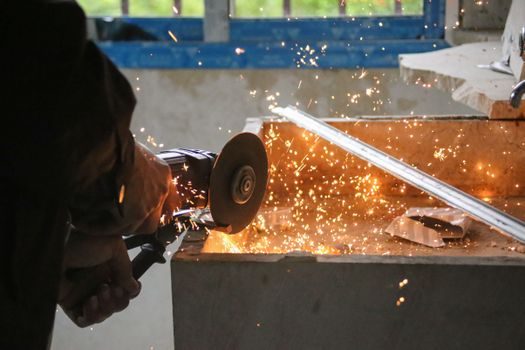
Steel-fiber-reinforced jointless industrial floors eliminate saw-cut control joints, which are the dominant maintenance cost over a 30-year asset life. Joint repair on a 10,000 m² warehouse floor runs 15-30 USD/m² per refurbishment cycle, with a 7-12 year cycle, and the 30-year present-value of joint maintenance on a rebar-mesh jointed floor is 100,000-250,000 USD. Jointless SFRC pushes that line to zero, which is where the steel-fiber TCO wins against rebar mesh even at higher fiber material cost. [S2]
On vibrocompacted piles, fiber dosage at 25-35 kg/m³ replaces spiral cage ties, cutting pile-prefab labor. The glass fiber encyclopedia covers the alkali-resistant glass-fiber alternative where non-magnetic or non-sparking service is required.
Comparison: SFRC vs. Rebar Mesh vs. Macro-Synthetic Fiber on Five Cost Lines
For a 10,000 m² 150 mm industrial floor over 30 years, three reinforcement options line up against the major cost drivers. SFRC hooked-end at 30 kg/m³ (≈30 t, 1,800-2,500 USD/t = 54,000-75,000 USD material, 8,000-12,000 USD placement, joint-maintenance near zero). Rebar mesh #4 at 60 kg/m³ (≈90 t, 750-950 USD/t = 67,500-85,500 USD material, 18,000-25,000 USD placement, 100,000-250,000 USD joint maintenance over 30 years). Macro-synthetic fiber at 4-6 kg/m³ (≈50 t, 3,500-5,000 USD/t = 175,000-250,000 USD material, 6,000-9,000 USD placement, joint maintenance moderate). [S2]
SFRC wins on 30-year TCO when joint maintenance is discounted at 4-6% and crack-width control is critical. Rebar mesh wins on lowest first cost and where future slab demolition is anticipated. Macro-synthetic fiber wins on corrosion immunity and weight but loses on fire/spalling performance above 200 °C. The fiber converter encyclopedia entry maps OEM dosing-equipment selection for each system.
Sourcing Signals and Procurement Discipline
Procurement discipline on steel fiber TCO hinges on five signals: per-tonne price locked against dosage rate (kg/m³) not against floor area, mill cert per heat, dimensional tolerance verification on diameter (±0.005 mm for stainless HS65/13) and length (±10%), hooked-end pull-out test certification, and 20 kg/bag packing line for automated batching [S1][S2]. Volume breaks of 5-10 tonnes typically unlock 5-12% discount; 25+ tonnes unlock 12-20% on Q235 hooked-end orders.
Lead-time on Chinese mill direct is 25-40 days FOB for standard Q235 hooked-end, 40-60 days for 304/316L stainless, and 60-90 days for custom diameter/length cuts below 1 tonne. Inland trucking adds 7-12 days to U.S. Gulf or EU North-Sea ports. For a 30-year concrete asset, the TCO spread between cheapest and most-specified option is 20-40% of present-value spend, so fiber spec is a procurement decision worth a two-week bid cycle rather than a low-bid PO. Cross-reference the Embedded Part TCO: Five Cost Lines That Decide a 30-Year Concrete-Asset Spend article for embedded-plate and rebar-chair line items that often sit alongside SFRC in segmental-lining and jointless-floor bid packages.
Trackable next node: Q3 2026 Chinese mill capacity utilization on 0.2 mm stainless cold-drawn wire, where HS65/13-class production competes with welding-rod and spring-wire draws for the same Q195/Q235 feedstock. A second signal is EU EN 14889-1 system-3 audit pricing, which has historically added 0.8-1.5% to fiber unit cost on CE-marked deliveries.