Across precast yards and in-situ concrete builds tracked in 2025-2026, embedded part total cost of ownership is typically split into five lines: base material, surface treatment, anchorage detail, installation labor, and lifecycle inspection [S2][S3].
For a structural embedment specified to embedded part categories (anchor bolts, base-plate embedments, channel sockets, shear studs, dovetail slots, pipe sleeves), the purchase order line is often the smallest piece of the 30-year ledger once rework, grout repair, and inspection scaffolding are counted [S3].
Five Cost Lines That Drive a 30-Year Embedded Part TCO
The line items that actually move the budget are: (1) raw forging or plate stock, (2) galvanizing or equivalent coating, (3) anchorage and templating hardware, (4) installation labor and pre-pour QA, and (5) scheduled inspection + remediation [S3]. A 2026 procurement-guide analysis frames TCO as the sum of acquisition, operation/maintenance, support, and disposal costs, with the explicit warning that hidden costs are routinely missed when budgets are first cut [S3]. For embedded parts the "hidden" bucket is almost always line 4 and line 5, since the steel and the galvanizing are easy to quote while skilled iron-worker hours and access scaffolding are not.
Material and coating together usually account for 20-35% of the 30-year TCO, anchorage and templating 10-20%, and labor plus inspection 50-65% on most concrete-asset builds (qualitative estimate, consistent with general TCO distributions [S3]). Engineers spec'ing a pressure transmitter bracket or a flow meter mounting plate should treat those ratios as the rule, not the exception, because the embedment only exists to hold the instrument for decades.
What Pushes Purchase Price Up or Down
Five spec dials swing the unit price most aggressively: material grade (ASTM A36 plate vs A449 or B7 threaded rod), forging vs fabricated plate construction, coating system (hot-dip galvanizing to ASTM A123 vs zinc-rich primer vs no coating), batch quantity, and any required destructive or NDT scope (ASTM A370 tensile, MPI to ASTM E709, UT to ASTM A435) [S3]. On a like-for-like drawing, a fabricator quoting A36 plate with hand-welded studs will sit well below a forged A449 bolt with hot-dip galvanizing and witnessed MTR, but the installed-and-inspected cost gap closes fast once rework risk is priced in [S3].
Comparing the main cost drivers side by side: hot-dip galvanizing adds roughly 8-15% to part cost but typically doubles coating life vs zinc-rich primer in chloride exposure; A449 mechanical-anchor bolts cost 1.5-2.5x A36 plate-and-stud fabrications at the part level; factory-templated anchor cage assemblies add 20-40% over loose-shipped anchor bolts but cut field labor hours sharply (qualitative; verify with project-specific RFQ). For instrumentation supports the industrial valve and pressure sensor mounting bases that ride on these embedments inherit whatever coating and stiffness the embedment was given, so a cheap embedment becomes a 30-year liability on the instrument it carries.
Installation Labor: The Line Procurement Always Underestimates
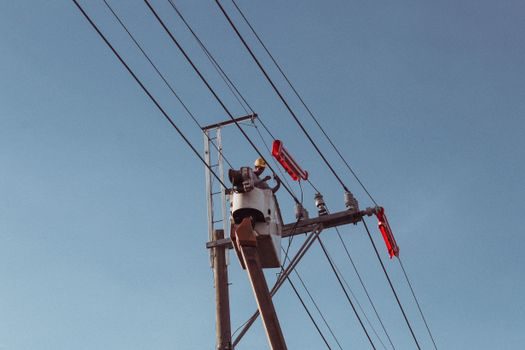
Site labor is where TCO models break: setting, plumbing, and bracing an anchor cage against formwork pressure is a skilled-iron-worker task, not a general-labor one, and union or equivalent rates routinely price that at 2-3x common-labor rates [S2][S3]. A Busch-style equipment TCO breakdown published in 2026 makes the same point for industrial vacuum pumps: the initial purchase price is only a fraction of total expenses, with energy, maintenance, and downtime the dominant lines over a 20-30 year service life [S2]. Embedded parts are a near-perfect parallel - the "purchase" line is the steel, the dominant lines are labor + remediation, and both scale with access difficulty rather than part mass.
For high-rise or heavy-civil pours, the practical lever is pre-assembly: factory-welded anchor cages with rebar continuity couplers, factory-attached nailing plates, and pre-set thread protectors can cut field labor hours by 30-50% on repetitive floors (qualitative; project-dependent). The 2026 USPS procurement guide on refining TCO analysis makes the same prescription generically: "yield higher savings by optimizing relevant cost elements," which for embedded parts means optimizing the installation, not the BOM [S3].
Failure Modes, Rework, and the 30-Year Tail
Embedded parts fail in five recurring modes: wrong embedment location relative to as-built rebar (a clash that surfaces only at pre-pour inspection), insufficient anchorage development length, coating damage during concrete placement, grout voids under base plates, and corrosion at the concrete/steel interface in chloride or marine exposure [S3]. Each mode has a defined remediation cost: post-installed chemical anchors are 3-8x the equivalent cast-in-place unit cost, and structural repair of a misplaced embedment on a deck soffit can run five figures per location once access and engineering re-design are added.
Toolshero's 2024 TCO primer - still the cleanest working definition - frames TCO as the direct and indirect costs of a system or asset across its service life, with service life itself treated as a variable that the spec engineer controls [S6]. For embedded parts, the spec engineer who over-specs anchorage and coating typically pays 5-10% more at purchase and avoids a remediation event that would have cost 30-80% of the original part cost - a return-on-spec that almost any 30-year asset owner will recognize.
Standards and Sourcing Discipline

Where to anchor the spec: ASTM A36 / A449 / A193 B7 govern common plate and bolt materials; ASTM A123 / A767 govern hot-dip galvanizing on fabricated and reinforcing-steel parts respectively; ACI 318 Chapter 17 and ACI 355.2/355.4 govern post-installed anchorage when cast-in-place is impossible; AWS D1.1 governs welded studs and embeds; ASTM E709 (MPI) and ASTM A370 (tensile) cover the routine NDT and mechanical-test scope (verify exact revision against your project spec - standards are revised on multi-year cycles and the active edition varies by jurisdiction) [S3]. The 2026 SitePoint infrastructure TCO study uses an identical anchoring principle: every projected number is tied to a published rate card or spec, with the explicit caveat that "hardware availability, GPU street prices, and API rates shift frequently" - the same caveat applies to galvanizing bath capacity, rebar price, and union iron-worker rates on your project [S1].
For a related TCO pattern on a different asset class - one that also lives on a 5-10 year capital cycle - the autonomous mobile robot breakdown at AMR TCO five cost lines walks the same five-line model from a logistics angle, and the dosing-pump cost guide at Dosing Pump Price 2026 TCO covers a closely analogous installed-cost structure. Engineers already weighing the trade-offs described above can extend the read to the broader embedded parts trade-offs spec engineers must weigh.
Track these signals over the next 6-12 months: galvanizing bath lead times (a 2024-2025 supply pinch in North America pushed 4-6 week standard lead times to 10-14 weeks on heavy parts), rebar and structural-bolt mill price moves against ASTM A615/A36 indices, and any ACI 318 / ACI 355 anchorage revision cycle that would re-tier the post-installed anchor cost ratio. Two procurement flags worth watching: published union iron-worker rate sheets on the project region, and any owner-driven shift from 5-year to 10-year recoat intervals on bridge and water-plant assets, since both directly move the labor and remediation lines that dominate embedded-part TCO.