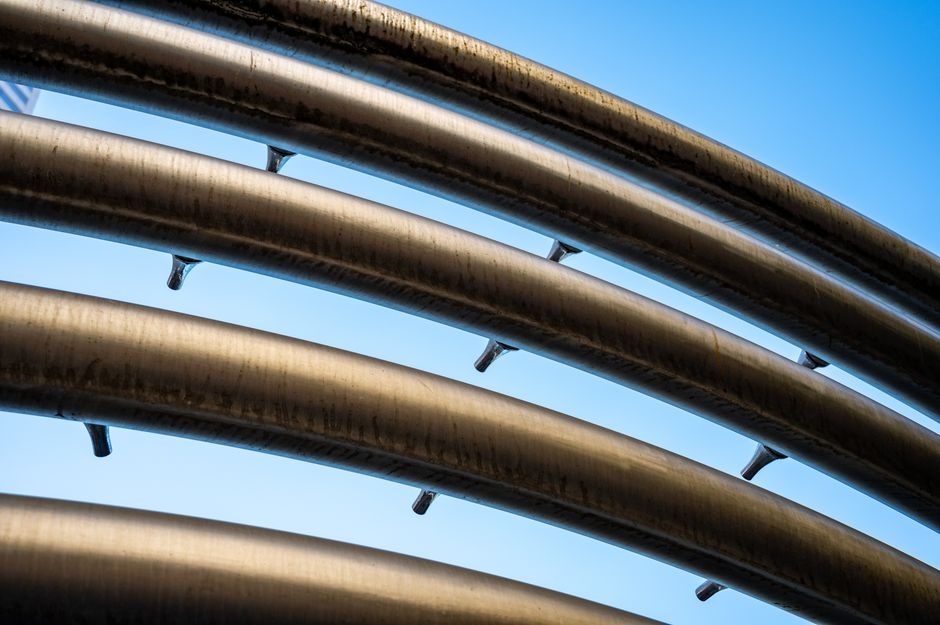
Steel pipe specification resolves along three orthogonal axes: how the tube is made (seamless, ERW, LSAW, SSAW), what alloy it is formed from (carbon, stainless, alloy, galvanized), and how thick its wall is for a given outside diameter (the ANSI schedule system, where OD stays fixed and ID shrinks as the schedule number climbs from Sch 10 through XXS) [S1].
Selecting a pipe is therefore not a single decision but a stack of three — and a mismatch on any one of them invalidates the other two. A 16-inch Sch 40 line in seamless steel pipe for hydrocarbon service is a different procurement than the same 16-inch Sch 40 line in welded A252 piling, even though the schedule chart reads identically [S1][S2].
Manufacturing Process: Seamless vs Welded
Seamless pipe is produced by piercing a solid billet at elevated temperature, which removes the longitudinal weld seam and yields a uniform grain structure around the circumference; it is the default for high-pressure hydrocarbon, boiler, and mechanical service [S2].
Welded pipe is formed from plate or coil and joined by a longitudinal or helical seam; the four commercial sub-types are ERW (electric resistance weld), LSAW (longitudinal submerged-arc), SSAW (spiral/helical submerged-arc), and EFW (electric-fusion-weld for heavy-wall). Welded pipe covers the same OD range as seamless but at lower unit cost, and is standard for structural, low-pressure fluid, and line-pipe applications [S2].
The Chinese export base currently pushes both routes hard: one Liaocheng-based mill lists API 5L line pipe, API 5CT casing/tubing, GB/T 8162 structural seamless, EN 10210 S355 seamless, and A252 seamless-and-welded pipe piles as parallel stock lines under one ISO 9001 / API quality system [S2].
Material Grades and the Alloy Hierarchy
Carbon steel (ASTM A53, A106, API 5L) dominates by tonnage for general service; stainless steel (304/304L, 316/316L, 321, 316Ti, 347H, 309S, 310S) and duplex (S31803, S32750, S32760, 254SMO) cover corrosive and chloride service; nickel alloys (Alloy 20/31, Monel 400/K500, Inconel 600/625, Incoloy 800/825) handle sour, acidic, and high-temperature media [S3].
Stainless stockists routinely cut coil and plate from 0.3 mm to 8 mm thick, and serve pipe from 6 mm OD up to 36-inch OD in seamless, welded, or fabricated form, with fabrications supplied with 100% X-ray weld reports on request [S3].
Galvanized steel pipe is a coated sub-class rather than a separate alloy: a zinc layer (hot-dip or pre-galvanized) is bonded to the underlying carbon or stainless tube, shifting the selection criterion from base strength to corrosion allowance and intended service life, commonly used in water, fire-protection, and structural scaffolding [S4].
Wall-Thickness Schedules and the ANSI Numbering
The ANSI pipe schedule chart fixes outside diameter for a given nominal size and lets wall thickness vary; higher schedule numbers mean thicker wall and smaller bore, so two Sch 80 and Sch 40 pipes of NPS 4 share an OD of 4.500 in (114.3 mm) but the Sch 80 wall is roughly twice the Sch 40 wall at 8.56 mm vs 6.02 mm in the standard table [S1].
Standard designations fall on a fixed ladder: Light Wall, Sch 10, Sch 20, Sch 30, Sch 40 (also STD / Standard Weight), Sch 60, XS (Extra Strong), Sch 80, Sch 100, Sch 120, Sch 140, Sch 160, and XXS (Double Extra Strong) — and every step in that ladder increases wall at constant OD, so the schedule number is effectively a pressure-rating shorthand for a given material [S1].
The chart applies identically to seamless and welded pipe, which is why process selection (seamless vs welded) and schedule selection (Sch 40 vs Sch 80) are independent variables in any spec line; one does not substitute for the other [S1].
How the Three Axes Combine: A Comparison of Common Pipe Categories
Lining up the main pipe categories against four decision criteria — pressure capability, corrosion resistance, typical size range, and dominant service — gives a working spec matrix: seamless carbon-steel (high pressure, baseline corrosion, 1/8″–26″ OD, hydrocarbon/boiler); welded carbon-steel (medium pressure, baseline corrosion, 1/2″–60″+ OD, line-pipe/structural); seamless stainless (high pressure, high corrosion, 6 mm–36″ OD, chemical/pharma); welded stainless (medium pressure, high corrosion, 6 mm–36″ OD, process/water); galvanized carbon (low-medium pressure, improved atmospheric corrosion, 1/2″–12″ OD, water/fire/scaffold); and duplex or nickel-alloy (high pressure, severe corrosion, 1/2″–24″ OD, offshore/sour service) [S2][S3].
Manufacturer ranges in July 2026 confirm this matrix is fully stocked: one large Indian exporter serves the full alloy ladder (carbon, stainless 304/304L/316/316L/321, duplex S31803/S32750/S32760, Alloy 20/200/400/600/625/800/825) across 6 mm to 36″ OD, and Chinese mills run dedicated production lines for API 5L, API 5CT, GB/T 8162, EN 10210 S355, and A252 piling [S2][S3].
Service-Driven Selection: Who Each Class Is For
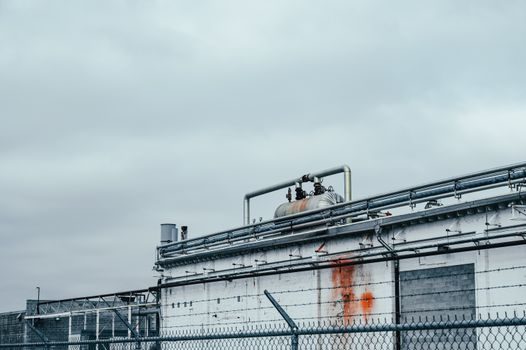
Seamless is mandatory for high-temperature, high-pressure, or sour (H2S-containing) hydrocarbon service where a weld seam is a fatigue and corrosion-initiation liability; welded is acceptable for line-pipe, structural, and lower-pressure fluid service where the seam is fully radiographed [S2].
Forged fittings and flanges for high-pressure transmission lines fall under ASTM A694, with grades F42 through F80 (and higher) setting yield and tensile requirements for sour-service flange forgings used in oil, gas, and offshore piping [S3].
Galvanized steel-plastic composite pipe variants — where a zinc-coated or polymer-lined steel core is mated with a PE/PP layer — extend the wall-thickness + material matrix into plumbing and chemical-transport niches, trading pure pressure rating for combined corrosion barrier and mechanical strength [S4].
End Connections, Fittings, and Where the Pipe Stops
Every pipe spec terminates in a fitting or flange, and the fitting itself must be scheduled to match the pipe: buttweld fittings are routinely produced from 1/2″ to 72″ in Sch 10 through XXS, in seamless and welded variants, with custom geometries on request [S3].
Flange classes follow the pressure hierarchy (ANSI #150 through #2500) and are stocked in forged carbon, stainless, and nickel alloys in PL, WN, SO, BL, SW, threaded, lap-joint, spectacle, orifice, ring, and long-welding-neck geometries, sized 1/2″ NB to 60″ NB [S3].
Mechanical joints using pipe clamps and grooved couplings are an alternative to welded and flanged termination, especially in fire-protection and modular skid piping, but the clamp pressure rating and groove geometry must be matched to the pipe wall — Sch 10 light-wall pipe will not accept a heavy-duty rigid coupling intended for Sch 40 or heavier [S1].
Limitations and Failure Modes in 2026 Spec Practice
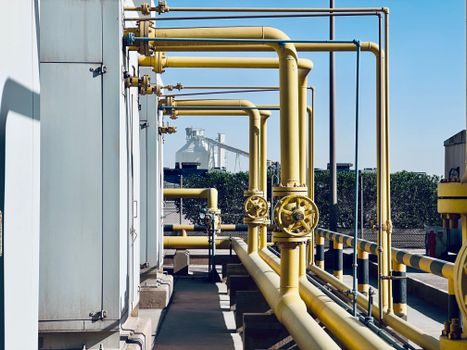
The three-axis system has clear failure boundaries: welded pipe cannot be used in services above its hydrostatic test pressure even when the wall is thick; schedule mis-selection is a common field error, where Sch 40 is specified but Sch 80 is delivered, or vice versa, with no OD change to catch the swap at receiving inspection [S1].
Material mis-classification across the stainless/duplex/nickel boundary is the second common failure mode: 304 and 316 are not interchangeable in chloride service, and 904L is not a drop-in upgrade for 316L without re-checking the entire corrosion allowance [S3].
Galvanized pipe fails in hot water above ~60 °C because the zinc-iron diffusion layer spalls; it is also not approved for potable use in some jurisdictions and should not be confused with PE pipe or steel-plastic composite which serve similar nominal duties under different corrosion and temperature envelopes [S4].
Standards, Sourcing Signals, and 2026 Trackers
Three standards families govern most procurement: API (5L for line pipe, 5CT for casing and tubing, 694 for high-pressure flange forgings), ASME/ANSI (B36.10 for the schedule chart, B16.9 and B16.11 for fittings, B16.5 for flanges), and ISO 9001 plus regional codes (EN 10210 for structural seamless, GB/T 8162 for Chinese domestic seamless) [S1][S2].
Sourcing signals worth tracking through the second half of 2026: manufacturer stocking of duplex S32750/S32760 and 254SMO at 6 mm to 36″ OD, indicating sustained chemical and offshore demand; expanded API 5CT casing/tubing lines at Liaocheng-area mills, indicating sustained oil-country activity; and a noticeable rise in galvanized and pipe fitting inventory with custom-cut and X-ray-report options, indicating tighter end-user QA requirements [S2][S3][S4].
For related engineering reference material, see Stainless Steel Coil Smart Manufacturing: 2026 Automation Stack and Sourcing Signals and Steel Plate Advantages and Disadvantages: A 2026 Spec Reference.