In hazardous-area work, warning tape and explosion-proof electrical equipment solve two different problems: tape marks the boundary, Ex equipment contains the ignition. Specifying one in place of the other fails both ATEX 2014/34/EU and IEC 60079-series area classification logic.
The 2026 sourcing landscape shows a clear divergence. Directindustry lists 4 manufacturers and 5 explosion-proof plug models under industrial plug category 223169, with protection levels rated explosion-proof and IP-coded, and pole counts spanning 2-pole through 5-pole [S1]. The Feice 8097-DN control button family separately covers Zone 1 / Zone 2 with gas groups IIA, IIB, IIC and temperature classes T1 through T6 [S2]. Warning tape, by contrast, is a passive barrier that does not carry an Ex rating and is never a substitute for certified hardware.
Where Warning Tape Stops and Ex Electrical Begins
Warning tape is a demarcation device. It is normally specified by colour code, base film, adhesive system, and tensile strength — not by an IECEx certificate or ATEX category number. It marks floor edges around battery rooms, ammonia plant perimeters, fuel storage, and pipeline corridors, and it carries no ignition-containment claim. The hazardous-area electrical discipline, by contrast, lives under ATEX 2014/34/EU for equipment and IEC 60079-0 / 60079-1 / 60079-7 for construction of the Ex d, Ex e, Ex i, and Ex t families. [S1]
Where the boundary physically meets energised equipment, the tape line ends and the Ex enclosure begins. Feice's 8097-DN button is explicitly described as having to be installed inside a matched explosion-proof enclosure, with the assembly certified for Zone 1 / Zone 2 and gas groups IIA, IIB, IIC across T1–T6 [S2]. The directindustry plug filter list shows explosion-proof and IP-coded protection as the two parallel attributes buyers actually search for [S1], which is why a control-box integrator will routinely pull both filters when qualifying a plug supplier. The rule is mechanical: tape demarcates; Ex hardware contains.
Spec Bands for Ex Plugs and Control Stations in 2026
Ex plug offerings cluster around three parameter axes: zone/gas-group rating, pole count, and mounting style. Directindustry's current filter set shows explosion-proof, 5-pole, 3-pole, and 2-pole configurations, with flying and fixed mounting at 3 and 2 listings respectively, and an IP-code option present on all 5 products [S1]. That mix is typical of a mature IEC 60079-1 plug market where 16 A / 32 A CEE-format devices dominate hazardous-area CEE socket-outlet use.
Control-button assemblies extend the spec into operator interface hardware. The 8097-DN family covers gas groups IIA through IIC and T1–T6, which is the full envelope most petrochemical, LNG, and pharmaceutical buyers actually need [S2]. A buyer walking into a Chinese expo like PTC Asia or a European Hannover Messe hall will see Ex e increased-safety terminal boxes for Zone 1, Ex d flameproof motor control stations for Zone 1 with hydrogen-rich IIC gas, and Ex tD / Ex tb enclosures for Zone 21 dust environments, and the 8097-DN spec exactly tracks that segmentation [S2]. For a deeper dive on operator-interface hardware, see the selector switch buying guide which breaks down maintained vs momentary positions and contact-block logic.
Warning Tape Selection Bands: Material, Width, Adhesive

Warning tape does not carry an Ex certificate, but it does have spec bands. Polyethylene and PVC are the two standard base films; standard widths run 50 mm, 75 mm, and 100 mm; tensile strength on the heavy-duty barricade style is typically 35–50 N/cm. Adhesive options are rubber-based (general indoor, low-tack residue) and acrylic-based (outdoor UV-resistant, higher temperature). Colour coding follows common plant convention: red/white for fire equipment, yellow/black for caution, red for restricted access, blue for informational. Underground detectable tapes add a foil layer that locators can trace. [S2]
The EN 12613 / ANSI Z535 colour conventions govern the print, while the mechanical properties fall under the tape-maker's datasheet rather than ATEX or IECEx. This is the key contrast: a polyethylene tape is dimensionally specifiable to the millimetre, but it cannot legitimately be described as "explosion-proof." Common sourcing errors come from listing the wrong product family on a hazard-area bill of material — a procurement document that calls for "explosion-proof demarcation tape" almost always has to be re-quoted against actual Ex enclosure or Ex conduit hardware.
Ex Electrical Options Lined Up Against 4 Decision Criteria
Within explosion-proof electrical hardware the main line items line up as follows on four decision axes: [S3]
1. Ex d flameproof enclosures — strongest containment, heavy cast aluminium or stainless, used in Zone 1 with IIC gas groups; heavier and costlier than alternatives, but tolerate internal ignition events without propagating [S3].
2. Ex e increased-safety enclosures — lighter aluminium or SS, used in Zone 1 / Zone 2 where the designer prevents ignition by terminal creepage, IP, and impact specs rather than by containing an internal explosion [S3].
3. Ex i intrinsic-safety barriers — low-energy circuits only, field device power limited below ignition threshold; covered by the explosion-proof isolation circuit literature [S4] and used where wiring must run through Zone 0.
4. Ex t / Ex tD dust enclosures — Zone 21 / Zone 22 dust environments; construction differs from gas-rated Ex d because dust ingress rather than flame propagation is the failure mode.
Across the four options, ignition-containment capability ranks Ex d above Ex e above Ex i; weight and cost rank the same way inversely; Ex i is the only option acceptable in Zone 0; and only Ex d is acceptable where hydrogen (IIC) service and frequent internal switching coincide. Ex elevator systems from Joylive extend the same logic to vertical-transport hardware, with the electrical and non-electrical subsystems both designed so the surrounding explosive atmosphere cannot be ignited during normal use [S5].
Use Cases: What the Two Products Are Actually For
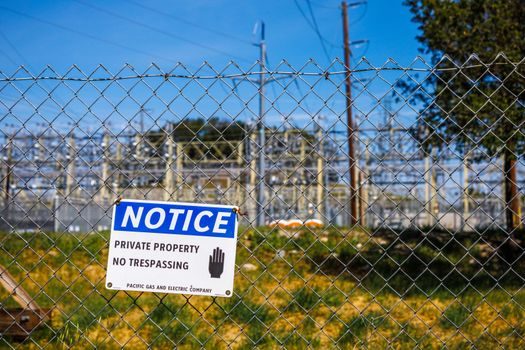
Warning tape is for: marking underground utilities before excavation, defining floor zones in chemical warehouses, marking the perimeter of LPG storage, and the public-side barrier on pipelines. Its job ends at visibility and physical notice. [S4]
Explosion-proof electrical is for: any energised equipment inside a classified area, including plugs and sockets [S1], control buttons and pilot lights [S2], distribution cabinets, motors, and elevators in classified zones [S5]. A typical Ex d flameproof control station bundles an Ex d enclosure with an Ex e terminal block, an Ex d operator interface, and Ex-certified cable glands — a system-level build that no tape product could replace.
For operator-interface logic and the difference between pushbutton and pilot light vs emergency stop button selection, the spec bands and the standard references line up cleanly. The mechanical pushbutton and the emergency-stop mushroom are two separate decision trees, but both are governed by the same ATEX 2014/34/EU equipment directive and IEC 60079-0 / 60079-1 construction logic [S2]. The wider category of explosion-proof electrical and the narrower subcategories — explosion-proof distribution, explosion-proof button, and explosion-proof light — all sit under the same directive.
Limitations, Failure Modes and Sourcing Signals
Warning tape fails by abrasion, UV, chemical splash, and adhesive cold-flow. In a refinery or a coastal terminal, specify acrylic adhesive and PE base film; never use PVC where hydrocarbons contact the tape. Tape will not contain a gas leak, will not arrest a flame front, and will not pass an area-classification audit. [S5]
Explosion-proof electrical fails in three patterns: wrong certification scope (e.g. Zone 2 plug installed in Zone 1), damaged flamepath (Ex d machined joints lose tolerance after impact), and missing barriers (Ex i field device wired to a non-isolated power supply). The 2026 sourcing market shows a heavy China cluster — Feice, CORTEM, SCAME, WISKA, Dr. Jessberger are visible names in industrial plug listings [S1] — and the procurement signal is that any second-tier supplier must be cross-checked against the IECEx CoC number on the nameplate. Explosion-proof electric control-valve packages from suppliers such as the KE30-series actuators take the same logic to process-control hardware, with the on-off and modulating service fitted for power, petrochemical, metallurgical, and light-industry process control [S6]. For enclosure details, the explosion-proof distribution and explosion-proof motor reference pages cover the line-side spec bands.
Standards, Markings and the 2026 Audit Checklist

An ATEX/IECEx nameplate must carry the Ex marking string, the equipment protection level (EPL — Ga, Gb, Gc, Da, Db, Dc), the gas or dust group (IIA, IIB, IIC, or IIIA, IIIB, IIIC), the temperature class (T1–T6 or a specific surface temperature in °C), and the certificate number. For the 8097-DN family the published gas groups span IIA, IIB, IIC and the temperature groups span T1 to T6 [S2]; that envelope is the upper bound for most hydrocarbon service. A control-box integrator in 2026 is expected to file the IECEx CoC and the ATEX EU Type Examination together.
Warning tape in 2026 carries no such marking string. Its traceability is the lot number and the resin batch, and the relevant standards are EN 12613 for underground warning tapes and ANSI Z535 for hazard communication colour, not ATEX 2014/34/EU. Tape suppliers and Ex electrical suppliers sit on two separate audit tracks, which is exactly why the procurement document must split them. A bill of material that mixes the two under one "hazardous area" line item is almost always wrong; the right structure is a tape line item on the civil/safety side and an Ex line item on the electrical side.