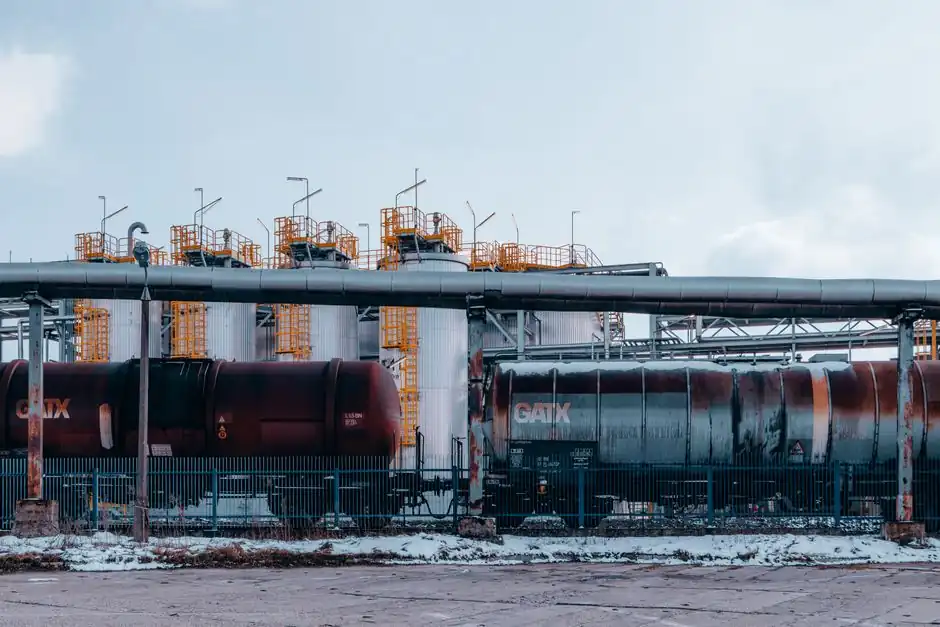
For cold storage warehouses operating between 0°C and -40°C, steel-plastic composite pipe (SPCP) covers the secondary and tertiary circuits while seamless carbon steel still owns the primary refrigerant headers, per Chinese refrigeration piping practice [S1].
Designers typically split a cold storage piping system into three tiers: the compressor-to-condenser and condenser-to-evaporator refrigerant mains (high-pressure ammonia or CO2), the chilled-glycol or brine loop (typically -5°C to -10°C), and the in-room defrost and floor-heating water circuits. Each tier has its own material envelope, and steel-plastic composite pipe is winning share in tiers two and three, not tier one.
Why Primary Refrigerant Mains Still Use Seamless Steel
Seamless carbon steel remains the default for primary ammonia and CO2 refrigerant headers because the temperature envelope and pressure class exceed what any plastic-lined or PE-AL-PE composite is rated for [S1].
Chinese refrigeration practice (per GB8163) assigns a -29°C lower limit to 10# carbon steel seamless pipe, a -20°C limit to 20# carbon steel, and a -40°C limit to 16Mn low-alloy steel, which is why 16Mn is specified for ultra-low-temperature cold storage and CO2 systems [S1]. Copper tube is banned from ammonia systems entirely and is only used on fluorine circuits below DN20 [S1]. That temperature ladder is the engineering reason a composite pipe cannot simply replace a refrigerant header; the steel substrate is the pressure boundary, the plastic is the corrosion barrier. Process engineers running new ammonia plants should treat tier-one mains as non-negotiable seamless steel and route composites to the loops downstream of the evaporator.
What Steel-Plastic Composite Pipe Actually Solves in a Cold Store
Steel-plastic composite pipe pairs a thin-wall steel core with an inner and outer polymer sheath to deliver the corrosion resistance of plastic at near-carbon-steel price points [S2][S8].
The composite structure solves a specific failure mode in cold storage: external condensation and internal corrosion on chilled-water and brine lines. Plain carbon steel sweats in a -5°C room, the condensate attacks the outside wall, and un-treated water attacks the inside. Semcor's industrial pipe selection guide notes that lined pipe combines "the excellent resistance properties of plastic lining to the low cost of steel" for long-term performance [S2]. The King County pipe guide adds that steel maintains structural integrity at temperature extremes, which is precisely the value the steel core brings to the composite: dimensional stability across the -29°C to +40°C swing a defrost line actually sees in service [S7]. Cold-storage designers specifying composites for the in-room circuit typically get a 50-year design life on the steel core and a 30-plus-year life on the polymer liner, with no external painting required [S6].
Selection Criteria for Cold Storage SCP Service
Cold storage SCP specification is driven by four filters: inner-medium temperature, working pressure, refrigerant or brine chemistry, and jointing method. [S1]
For a typical -10°C glycol loop, the polyethylene-lined steel composite (PE-AL-PE or HDPE-lined) is the workhorse, rated to roughly 1.0 MPa at 60°C with the steel core carrying the pressure. For a -25°C brine service, the engineer steps up to a cross-linked polyethylene (PE-Xb) or PEX-lined variant because standard HDLE becomes brittle near its lower glass-transition limit. Process-engineers should also verify the fitting system: cold rooms make threading and flaring slow and cold-unfriendly, so push-fit or crimp-ring mechanical joints outperform welded joints on the in-room network [S9]. The selection guide from RK Infra notes that pipe choice directly impacts trench width, depth, and flexibility during installation, which in a cold storage context translates to wall-cavity routing and ceiling-hung brine lines rather than buried work [S9].
Comparison: Seamless Steel vs. Copper vs. Steel-Plastic Composite vs. All-Plastic
Engineers choosing cold storage pipe material usually line up four candidates against the same five criteria; the table below reflects the operating envelope in current Chinese and US practice [S1][S2][S4][S7].
Seamless 20# carbon steel: lower temp limit -20°C, working pressure up to 4.0 MPa, ammonia-compatible, must be painted, welded joints only [S1]. Seamless 16Mn: -40°C lower limit, used for CO2 and ultra-low systems, welded [S1]. Copper tube: limited to DN20 fluorine circuits, banned in ammonia, brazed joints, premium cost [S1]. Steel-plastic composite: -40°C to +95°C envelope, pressure 1.0 to 2.5 MPa, mechanical or crimp joints, inner-medium must be chemically compatible with PE/PE-X/PPR liner [S2][S4][S8]. All-plastic PPR or PE-RT: -40°C capable but limited to 1.0 MPa, no ammonia, fusion-welded, susceptible to rodent and UV damage in un-traced spaces [S4][S9]. The trade-off is sharp: composite wins on corrosion resistance and install speed, all-plastic wins on cost per meter, and seamless steel wins on pressure, ammonia, and fire rating. For a building-side reference on composite selection, see Steel-Plastic Composite Pipe for Commercial Buildings: Selection Criteria, Limits, and.
Where SCP Fits, Where It Does Not
Steel-plastic composite is the right answer for chilled-water and brine secondary loops, defrost water return, and floor-heating circuits in cold storage, and the wrong answer for primary refrigerant headers, ammonia lines, and any section exposed to open flame or temperatures above the liner rating [S1][S2].
Process engineers should also avoid SCP in three specific cold storage scenarios: (1) any line carrying ammonia, even trace vapour, because the liner will permeate; (2) any high-pressure section of a CO2 transcritical system where peak pressure can exceed 8.0 MPa and rupture the steel-core weld seam; (3) any section passing through a fire-rated wall unless the composite carries an independent fire-resistance certification, since the polymer sheath will burn and release toxic fumes. Outside those three constraints, SCP is the most cost-effective pipe material in the cold storage envelope, and it pairs well with the standardized storage rack infrastructure by keeping the in-room piping light and field-cuttable without hot work.
Installation and Field Practice
Pre-fabrication in a warm shop, not field fabrication in a -25°C room, is the single biggest productivity gain when installing cold storage piping [S6].
Hurckman's cold storage piping project notes that pre-fabricating piping for the cooling system creates a food-grade system and decreases installation time, while standard carbon steel piping would require painting that is difficult to perform in a finished cold room [S6]. For composite pipe, the parallel rule is to cut, crimp, and pressure-test every joint at +20°C on the shop floor, then carry the numbered spools into the cold room for mechanical assembly only. Cleaning protocol also changes: composite pipe must be kept capped end-to-end until final connection because the smooth polymer liner is harder to inspect for debris than a steel bore, and any swarf left inside will not show on a post-installation borescope [S1]. For project-level planning, designers running the same composite decision for adjacent warehouses and packing lines can compare notes via the Digital Twin for Plant Layout Review Before CAPEX Commitment workflow before they lock the pipe specification.
Standards and Sourcing Anchors
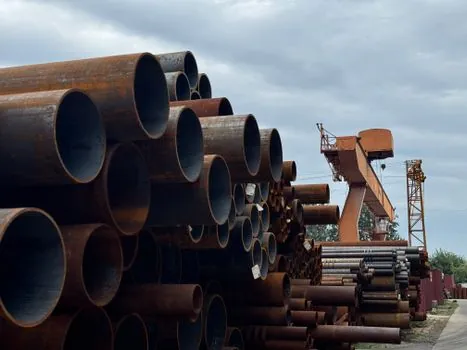
The relevant governing standards for cold storage SCP are GB/T 13663 (PE pipe for water supply), GB/T 18742 (PP-R pipe), CJ/T 136 (steel-plastic composite pressure pipe), and for the steel substrate, GB 8163 (seamless steel pipe for fluid transport) and the ASME B31.3 process piping code on the US side [S1][S4].
Engineers specifying cold storage pipe should always order to a named standard with the steel grade, liner material, pressure rating, and delivery state spelled out on the purchase order, because the wrong combination of "steel-plastic composite" labels in the catalog can hide a 0.6 MPa PE-AL-PE unit where a 1.6 MPa HDPE-lined steel composite is required [S1]. For ammonia and CO2 primary mains, the standard reference is the Chinese refrigeration code as summarized by Haiding Group, with 20# carbon steel for general use, 10# for below -29°C, and 16Mn for CO2 and ultra-low systems [S1]. Sourcing from a manufacturer that publishes both the steel core grade (20# or Q235B) and the liner type (PE, PE-X, PPR) in the same datasheet is the cleanest audit trail.
Trackable signals for the next planning cycle: the 2026 revision of CJ/T 136 expected to tighten the low-temperature impact rating for steel-plastic composite pressure pipe, and the ongoing shift of US cold storage builders from galvanized carbon steel to PE-lined composite for the brine loop, both of which will re-rank the four candidate materials above. For the broader plant-side context, see Steel-Plastic Composite Pipe Selection for Industrial Facilities and the storage handling reference for the racking-side temperature envelope that the piping has to support.