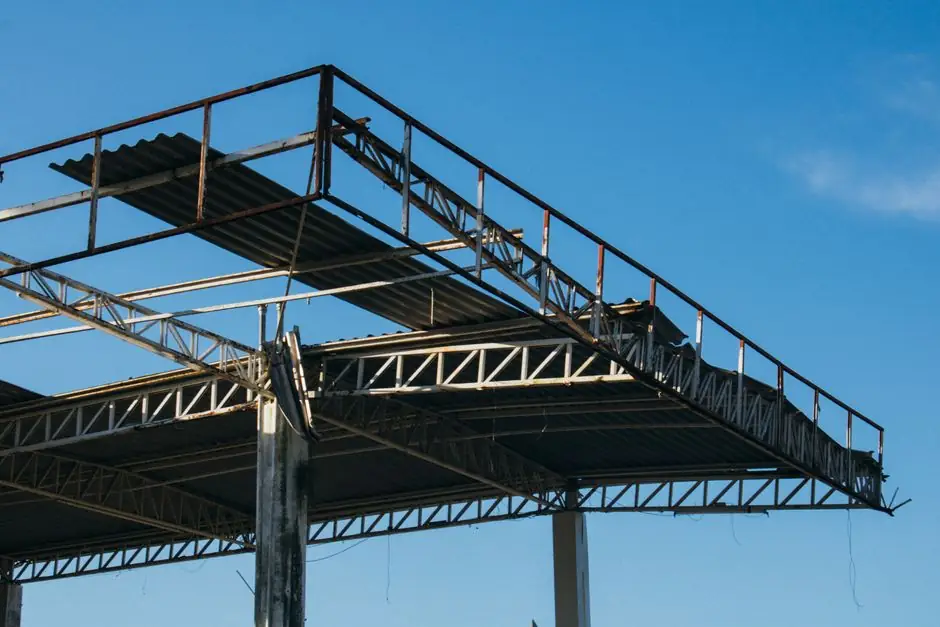
Hot-rolled H-section steel in grades Q235B, Q355B, ASTM A36, S235JR, and S355JR remains the default primary frame for prefabricated steel buildings, with wholesale price ranges reported at US$450-500 per tonne on leading China B2B platforms [S5].
Selection for a prefabricated building is driven by four engineering gates: yield strength (235 MPa vs 355 MPa grade), section modulus per kilogram, weldability for shop fabrication, and the destination code set (European, American, Canadian, Hong Kong, Chinese, Australian, or New Zealand) [S3]. Cold-drawn hooked-end steel fiber at 0.55 mm diameter, 35 mm length, 1200 MPa tensile, conforming to ASTM A820M-11, is used to reinforce the precast slabs and industrial floors inside those frames [S2].
Primary frame: H-section vs welded wide-flange vs cold-formed
Hot-rolled H-beams (HEA, HEB, IPE, and Chinese HW/HM/HN series) deliver the highest section modulus per kg for columns and rafters in modular hotels, schools, dormitories, and container-style homestay units, with CE-certified material available from Chinese mills valid since 2025-07-18 [S5]. Welded wide-flange sections (built-up from flame-cut plates) become economic when a non-standard depth, flange width, or plate thickness is required by the architect or the module transport envelope, since hot-rolling is constrained to a fixed section catalogue. Cold-formed C and Z profiles are reserved for secondary members: purlins, girts, and partition studs in steel section assemblies, where the wall thickness is typically 1.5-3.0 mm and galvanising is standard.
For multi-storey modular buildings (hotels, schools, dormitories) the typical primary frame uses HEB 240-300 columns and IPE 270-400 beams at 6-9 m bay spacing, fabricated in factory jigs to keep site erection under 1-2 weeks per floor [S1][S3]. One Qingdao-based OEM/ODM supplier of steel structure frames reports full-scope delivery of steel hangar kits, steel halls, storage sheds, villa frames, warehouses, and workshops from a single Shandong facility [S1].
Grade selection: Q235B vs Q355B vs ASTM A36 vs S355JR
Chinese domestic prefab (warehouses, light workshops) typically uses Q235B for low-rise frames and Q355B where longer spans or heavier crane duty (5-20 t) push the demand ratio, with both grades offered on the same hot-rolled H-beam line at US$450-500/t [S5]. European export modules use S235JR for non-primary members and S355JR for primary frames, with the 355 MPa yield roughly 1.5x the 235 MPa grade and proportionally higher section modulus at equal mass. ASTM A36 (250 MPa yield) and SS400 bridge the gap for Southeast Asian and Middle East projects, while a CE mark valid since 2025-07-18 is the gate-keeper for EU shipment of these profiles [S5].
Weldability is the under-rated constraint: Q355B, S355JR, and ASTM A572 Gr 50 all need preheat above roughly 25-30 mm plate thickness to avoid hydrogen cracking, whereas Q235B and ASTM A36 tolerate shop welding without preheat in most thicknesses. For multi-region prefab modules that must satisfy European, American, Canadian, Hong Kong, Chinese, Australian, and New Zealand codes simultaneously, dual-certification of the mill certificate (e.g. EN 10025-2 + ASTM A36/A572 dual grade) is the cleanest path [S3][S5].
Concrete reinforcement inside prefab modules: fiber vs rebar
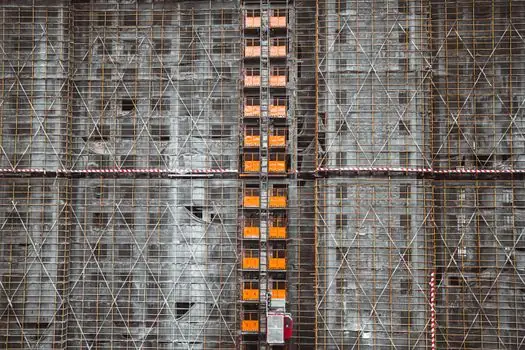
Steel fiber at 0.5-0.9 mm diameter, 30-60 mm length, aspect ratio 60-80, and 1200 MPa tensile strength is the standard dosing route for industrial floors, shotcrete slope stabilisation, and precast pipe or railway-sleeper concrete inside prefab plants, with G-6535 (0.55x35 mm, aspect 63) as the workhorse grade [S2]. The fiber is added at 20-40 kg/m3 to replace crack-control mesh in slabs; it does not replace primary rebar in beams or columns. For the steel fiber supply chain, Tianjin-origin cold-drawn wire packed at 20 kg/bag, 50 bags/pallet (1,000 kg bulk bag alternative) is the most common export format, with 25-27 t/40'GP container loading [S2].
Specifying engineers should distinguish two regimes: structural steel sections (H, I, C, Z) carry the building loads, while steel fiber doses the concrete against shrinkage and impact cracking. The two procurement lists do not overlap, but both must be on the BOM before fabrication starts, since the precast floor panels are cast in parallel with the frame shop welding.
Standards map and certification gates for export prefab
Prefabricated steel structures are typically manufactured to meet European, American, Canadian, Hong Kong, Chinese, Australian, and New Zealand standards in parallel, with a single CE certificate and an EN 1090-1 factory production control system covering the EU side [S3][S5]. On the concrete side, ASTM A820M-11 governs the steel fiber used in precast elements, while ACI 318 or Eurocode 2 govern the dosage and slab design, with the fiber supplier carrying ISO 9001:2000 and CE marks as a baseline [S2].
A practical cross-region spec sheet for a single prefab building therefore carries: EN 10025-2 grade for European code acceptance, ASTM A36 or A572 for North America, AS/NZS 3678 for Australia and New Zealand, and GB/T 700 (Q235B) or GB/T 1591 (Q355B) for Chinese domestic delivery [S3][S5]. Mills that dual-certify (e.g. S355JR / ASTM A572 Gr 50 / Q355B on the same heat) reduce the buyer's risk of being held at customs for a missing test certificate.
Process and economics: factory output vs site labour
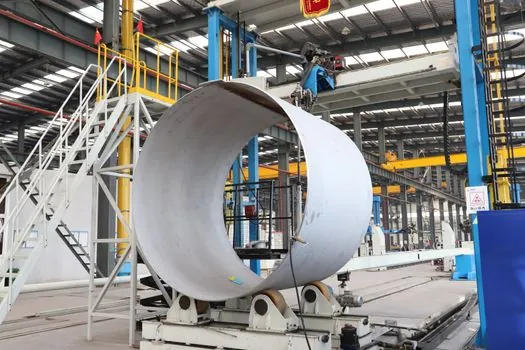
Prefabricated construction's main economic case is that structural steel and concrete elements are produced in a controlled factory and assembled on site, with literature on environmental and economic performance [S6] and supplier descriptions noting that off-site fabrication reduces on-site construction time along with noise and dust pollution at the construction site [S3]. AI-assisted scheduling research using hash and genetic algorithms now targets the remaining bottleneck, the vector-distortion loss in similar-neighbour selection during factory sequencing, with reported improvements in delivery time-loss for prefab plants [S4].
For a Chinese OEM/ODM supplier offering both the steel hangar kit and the steel hall frame, the all-in price spread for H-beams at US$450-500/t is a 10-15% premium over carbon steel rebar at typical 2026 levels, and roughly 30-40% below stainless-steel structural sections, which are rarely used in prefab because of cost [S5]. The decision rule: stainless only when corrosion class C4-C5 forces it (coastal, chemical, swimming-pool modules); otherwise Q355B plus a hot-dip galvanised or epoxy primer coating is the cost-optimised default for prefab.
Selection checklist for engineers
Step 1, lock the destination code set (EU only, North America only, multi-region) before picking the grade, because EN 10025-2 and ASTM A6/A36 mill certificates are not interchangeable at customs. Step 2, match the section catalogue to span and bay: HEB 240-300 / IPE 270-400 for 6-9 m bays, HW for heavier crane duty, cold-formed C/Z for purlins and girts. Step 3, decide on the floor system: cast-in-place slab with steel fiber at 20-40 kg/m3 for industrial floors, or precast hollow-core planks for residential modules [S2][S3].
Step 4, confirm weld procedure qualifications for any grade above S355JR / Q355B / A572 Gr 50 above 25-30 mm thickness, and preheat accordingly. Step 5, require a CE mark plus EN 1090-1 factory production control statement for any EU shipment, and an ISO 9001 quality plan plus ASTM A820M-11 mill cert for the steel fiber dosing the precast elements [S2][S3][S5]. Following these five gates keeps the prefab module code-compliant, weldable, and within roughly 5% of the lowest-grade spec on tonnage cost.
This topic is covered further in Silicon Steel Selection for Defense Platforms: Loss, Gauge, and Qualification Map.