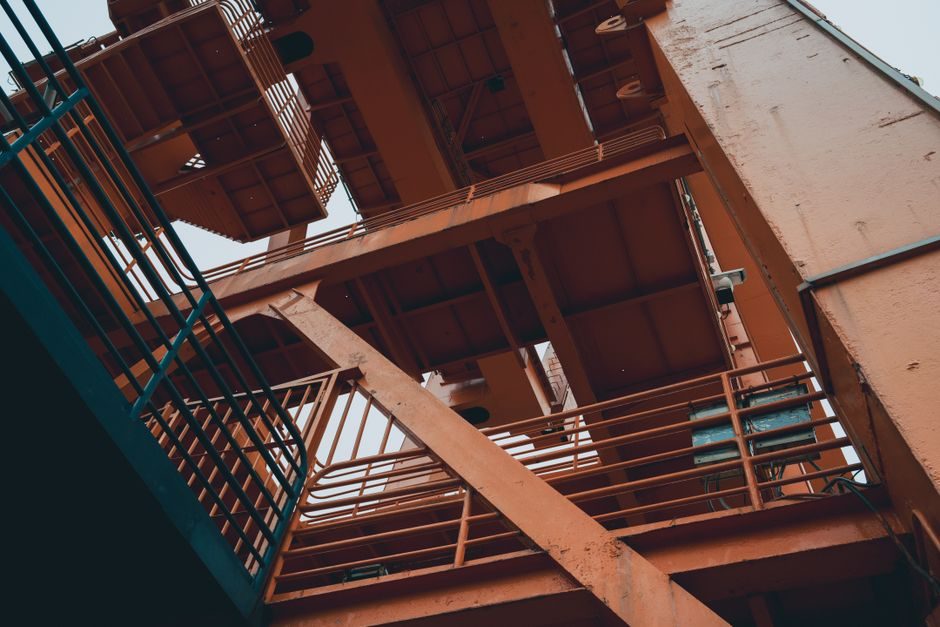
A structural steel section selected on mill-cert price alone will, over a 30-year service life, accumulate 3-5x that figure in inspection, corrosion protection rework, downtime, and disposal handling — a multiple documented across total-cost-of-ownership (TCO) frameworks for capital equipment [S1][S2][S5].
This article breaks the TCO of hot-rolled sections, hollow sections and stainless equivalents into purchase, install, operate, maintain and end-of-life cost lines, then lines them up against the cost driver that most often decides a project budget: corrosion regime, design life and inspection cadence [S1][S2].
Defining TCO for Steel Sections: Five Cost Lines, Not One Invoice
TCO is a financial analysis tool that aggregates the direct and indirect costs of a system or product across its full ownership window — purchase price, operating cost (including maintenance and depreciation), acquisition-side costs (training, procedures), and opportunity cost [S1]. The framework was popularised by the Gartner Group at the end of the 20th century, but the underlying idea dates to the first quarter of the 20th century, and methodologies since then have been extended from IT into capital equipment and infrastructure [S1][S3].
For structural steelwork, the cost lines map to five lifecycle stages: (1) mill purchase plus transport to fabrication shop, (2) fabrication, surface preparation and protective coating, (3) erection and commissioning, (4) in-service inspection, repainting and minor repair, and (5) demolition, scrap recovery and disposal [S2][S5]. The same five-stage split is used by procurement bodies such as the United States Postal Service Supplying Principles and Practices manual when evaluating capital asset alternatives [S2]. A long established IT reference point is the Gartner estimate that the five-year cost of a personal computer runs roughly $44,250, of which capital hardware and software is only about 25% — the remaining 75% being operations, support and end-user productivity overhead [S3].
Cost-Line Breakdown: Where the Money Actually Goes Over 30 Years
The purchase line — mill price plus freight — is typically 15-30% of a 30-year TCO for unprotected carbon steel sections in a C3 (urban) or C4 (industrial) corrosivity atmosphere, with the remaining 70-85% absorbed by protective coatings, routine inspection, repaint cycles and end-of-life recovery [S1][S5].
Coating and surface protection is the single largest hidden line: a hot-dip galvanised beam delivered to site can carry a zinc mass of 610-710 g/m² at 85-100 µm typical coating thickness, while a paint system on the same beam (e.g. ISO 12944 C4 high-durability) may run 250-320 µm dry film thickness with two maintenance repaints inside a 30-year design life [S1]. Inspection labour is the second silent driver — visual inspection at 1- to 2-year intervals, with closer attention to welded connections, faying surfaces and bearing stiffeners, is the standard expectation for bridge and industrial structures and is rarely included in the original capital line [S1][S2]. End-of-life scrap recovery is the one line that offsets the bill: structural steel retains 90-95% of its melt value in scrap, and a 50-60% recovery rate is commonly assumed at demolition, which materially shifts the net TCO downward when discounted back to present value [S1].
Material Comparison: Carbon, Stainless and Alloy Steel on TCO
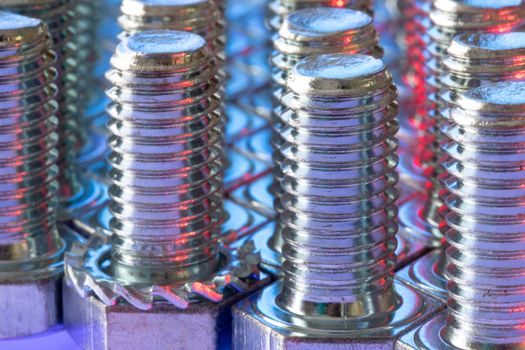
Carbon steel sections (e.g. S275JR/S355JR per EN 10025) deliver the lowest mill price per tonne but carry the highest coating and repaint burden; in a C4 industrial atmosphere, a 30-year repaint cycle of 2-3 full overcoats is the planning baseline, and the lifetime protective-coating spend can rival the original fabricated cost [S1][S5].
Stainless steel sections (e.g. 1.4404 / 316L) carry a mill price typically 3-5x the carbon-steel equivalent, but eliminate the paint system entirely and survive a 30-40 year design life in C4-C5 atmospheres with only wash-down inspection, which collapses the operating cost line [S1]. For coastal and chemical zones, the TCO crossover between galvanised carbon steel and 316L stainless typically sits inside 10-15 years of service [S1]. Alloy steel and silicon steel are specified for narrower cases — high-temperature creep resistance and electrical laminations respectively — and their TCO analysis follows a different curve driven by replacement frequency rather than corrosion [S3].
Decision-makers should also weigh three cost lines that a mill-quote comparison will never show: downtime during repaint (typically 4-8 weeks of partial access loss per cycle on a process plant), opportunity cost of capacity that cannot be run during inspection shutdowns, and end-of-life scrap recovery value [S2][S5]. The Busch vacuum-equipment reference frames this directly: initial purchase price of a vacuum solution is only a fraction of the total expenses incurred over its entire lifetime, and the same arithmetic holds for structural sections [S5].
Use Cases and Failure Modes: What the TCO Model Catches
Process-plant pipe racks and offshore platforms are the canonical cases where TCO analysis is non-optional — the corrosion regime (often C5-M or CX), the inspection access cost (rope teams, shutdown windows), and the consequence of failure (production loss, safety event) push the operating cost line to dominate the spreadsheet, not the mill price [S1][S2].
Common failure modes that a well-built TCO will flag in advance: (a) under-specified coating system for the actual corrosivity class, leading to a repaint inside 7-10 years instead of the planned 20-25; (b) welded connections designed without allowance for in-service NDT access, raising inspection labour cost 2-3x over a comparable bolted detail; (c) galvanised and painted interfaces where dissimilar metals drive bimetallic corrosion and shorten the design life of the cheaper member [S1][S5]. Each of these is a hidden cost the procurement decision never priced. The Toolshero analysis is explicit on the point: a car bought cheaply but with frequent defects, expensive parts and fast depreciation ends up costing more than a slightly more expensive, technically better and value-stable alternative — the same logic applies section-for-section [S1].
Standards, Sourcing and Procurement Rules of Thumb
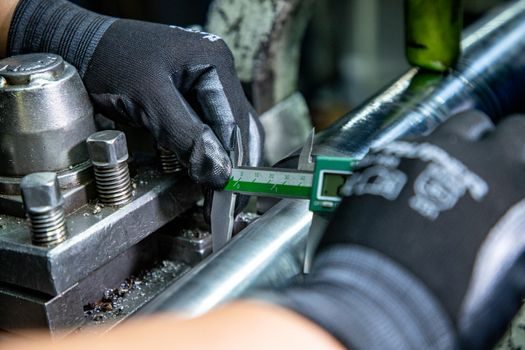
Procurement bodies treat TCO as a best-value decision tool, not a lowest-bid tool: the USPS Supplying Principles and Practices manual frames TCO as the way to expose costs hidden in budget planning and to optimise cost elements across the lifecycle, in line with the same five-stage split used for capital asset procurement [S2].
For steelwork specifically, the standards that anchor a TCO argument are EN 10025 (mill delivery of hot-rolled carbon sections), EN 10210 / EN 10219 (hot-finished and cold-formed hollow sections), ISO 12944 (corrosion protection of steel structures by protective paint systems), and EN ISO 1461 (hot-dip galvanizing). Each of these drives one of the five cost lines, and a defensible TCO submission should quote the part number and the edition in use, not a generic "coated to industry standard" line item [S1][S2]. Cloud-based TCO calculators from the major infrastructure software vendors now follow the same structure and are widely used to defend the operating-cost line in front of finance committees [S6].
Limitations of a TCO-Only Decision
TCO is a poor tool for measuring upside — productivity gains, safety improvements and customer-side benefits are more subjective and are better captured by a parallel Return on Investment (ROI) analysis [S1].
The model is also an estimate, not a forecast: operating costs can only be estimated from experience, few operations perform the depth of analysis TCO actually requires, and analytical tooling remains less mature than for ROI [S3]. For steel sections specifically, the largest residual uncertainty is the future repaint cycle length, which depends on a coating system selected today against an atmosphere that may shift class over 30 years [S1][S5]. Treat TCO as the lower bound of a range, not a single number, and stress-test the operating-cost line at ±30% before signing the mill order. Procurement officers building a multi-asset capital plan will also recognise the same pattern in adjacent categories — see the lifecycle treatment of motor grader TCO over a 10-year service life and the overhead conveyor TCO breakdown across a 10-year cycle for parallel cost-line structures.