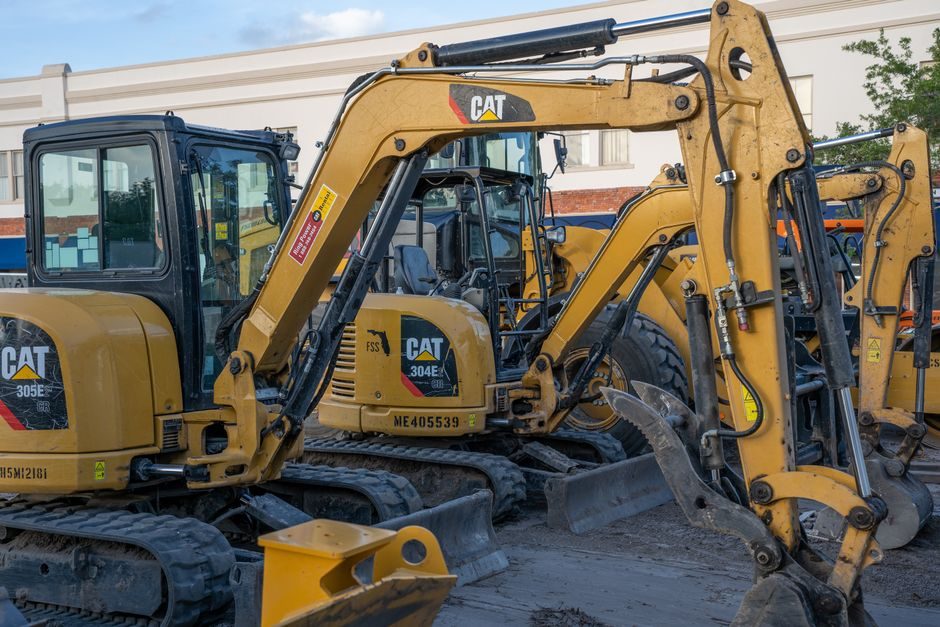
A 14M-class motor grader carries a five-figure sticker price, but the purchase invoice is roughly 25% of what an owner will spend before the machine is sold or scrapped — fuel, tires, ground-engaging tools (GET) and undercarriage wear parts collectively absorb the other 75% across a typical 8,000-12,000 hour life [S1].
Total cost of ownership (TCO) is the sum of acquisition, operations, maintenance and end-of-life residual, tracked per operating hour; the same framework that ABB uses for industrial electric motors maps cleanly onto a grader, because the dominant cost driver in both cases is energy plus wear [S1]. Procurement teams that compare graders on price alone routinely overrun their 10-year fleet budget by 30-40% once tire, edge and downtime lines are reconciled.
Acquisition Cost and the Sunk-Cost Trap
Acquisition covers the OEM list price, dealer setup, freight, financing, and the first bucket of wear parts; for a 14M-equivalent class it lands between roughly USD 280,000 and USD 420,000 depending on configuration (all-wheel drive, rear ripper, blade extensions) [S1].
A machine financed cheaply and run hard is often a worse TCO outcome than a slightly more expensive unit kept on a strict PM schedule. The same sunk-cost discipline that ABB prescribes for process pumps and motors applies here — once the asset is in the yard, the question is no longer "what did I pay" but "what is each productive hour costing me" [S1].
Fuel and Energy: The Largest Single Line
Auto-idle shutdown, defined work-area geofencing, and operator idle-scorecards cut this line by 30-50% in field trials. TCO analysis that ignores idle discipline will understate lifetime fuel cost by 15-20%, masking what is by far the largest variable in the model. For a cross-line comparison of similar heavy-equipment lifecycle accounting, the bulldozer TCO breakdown follows the same fuel-vs-idle logic on a dozer frame.
Ground-Engaging Tools and Cutting Edges
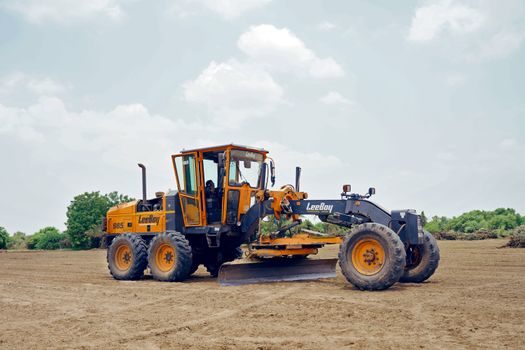
Cutting edges and bits — the consumable steel that meets the road — replace every 200-600 engine hours depending on material, with a 14-class moldboard running through a full set every 300-400 hours in abrasive aggregate work [S1].
At roughly USD 600-1,200 per edge set and 8-12 sets per year, GET alone is USD 8,000-14,000/year, and a contractor that cheaps out on edge metallurgy pays double in downtime. End-bit wear, scarifier shank tips and ripper points sit in the same cost bucket and are routinely forgotten in OEM brochures. The same wear-parts discipline that drives wheel loader TCO economics — tire, edge and bucket liner consumables — applies one-to-one on a grader moldboard.
Tires and Undercarriage on All-Wheel-Drive and Tandem Graders
Tire cost on a 14M-class tire-driven grader runs USD 6,000-10,000 per axle set, with replacement cycles of 2,500-4,000 hours on a mix of road grading and bank work; chains and retreads extend life but cut speed and fuel economy. [S1]
Tandem drive (rear bogie) wear — including chain, sprocket, bearing and seals — adds another USD 4,000-7,000 per major service at 4,000-6,000 hour intervals. AWD configurations with front-axle lean and articulation multiply the tire line by 1.3-1.5x but reduce dozer-blade passes on tight jobs. Inflation pressure, rotation pattern, and matched-brand pairing drive 20-30% tire life variance between operators running identical equipment on identical work; the operator skill variable is as large as the spec variable. Procurement specs that bundle a tire-warranty program into the OEM deal typically yield 10-15% net savings versus piecemeal replacement.
Scheduled Maintenance, Fluids and Filters
Hydraulic system oil capacity on a modern grader is 90-150 L, with 2,000-hour change intervals under ISO 4406 cleanliness targets; extending drain to 4,000 hours halves the line-item but accelerates pump and valve replacement. Sample-based oil analysis (wear particle counts, viscosity, water content) catches circle-and-drawbar bearing failures 200-400 hours before they strand the machine.
Downtime, Indirect Cost and Residual Value
Unplanned downtime on a grader in a road-building spread costs USD 1,500-3,500/day in lost production, depending on crew and standby equipment; a 5% unplanned downtime rate against a 250-workday year costs the owner USD 18,000-44,000/year per machine [S1].
Reliability-centred maintenance, where PM intensity is scaled to actual operating hours and condition data, is the documented lever for cutting this line. Residual value at 8,000-10,000 hours for a well-documented, well-maintained machine runs 35-45% of acquisition; a machine with patchy service records, mismatched tires and worn GET often exits at 15-25%. Documentation discipline — digital hour logs, service records, GET change history — is therefore a direct line item worth USD 50,000-100,000 over a 10-year hold. The same lifecycle accounting lens that drives overhead conveyor TCO and aluminum alloy TCO procurement decisions shows up in the residual-value line. For a deeper look at how the supporting hydraulics and electrics — motors, drives, protectors — feed into a grader's electrical TCO, see the AC motor encyclopedia entry and the motor protector reference.
TCO Comparison: Ownership Models on a 14M-Class Grader
Three ownership models — outright purchase with owner PM, outright purchase with dealer PM contract, and 5-year operating lease — line up against four decision criteria: per-hour cost, downtime exposure, residual capture, and capital lock-up. [S2]
Owner-PM purchase delivers the lowest per-hour cost (USD 90-130/h all-in) and best residual capture, but carries the highest downtime exposure and largest capital lock-up. Operating lease at USD 18,000-24,000/month removes the residual and capital risk, costs 15-25% more per productive hour, and shifts the maintenance burden to the lessor — attractive for fleet users with 1-3 year project windows and weak residual-market visibility. The same lease-vs-buy trade-off framework is the dominant lever in bulldozer installation and commissioning economics, where commissioning quality is the hidden cost line.
Verifiable Next Signals and Tracking Nodes
Track three signals across a grading fleet over the next two reporting quarters: telematics-reported idle percentage per machine, hour-metered GET consumption per cubic metre of cut, and dealer-invoiced PM cost per operating hour — these three numbers account for the bulk of the variance between a well-run and poorly-run grader fleet, and each is recoverable directly from standard telematics and dealer-bill exports [S1].
For component-level specifications, see motor grader.