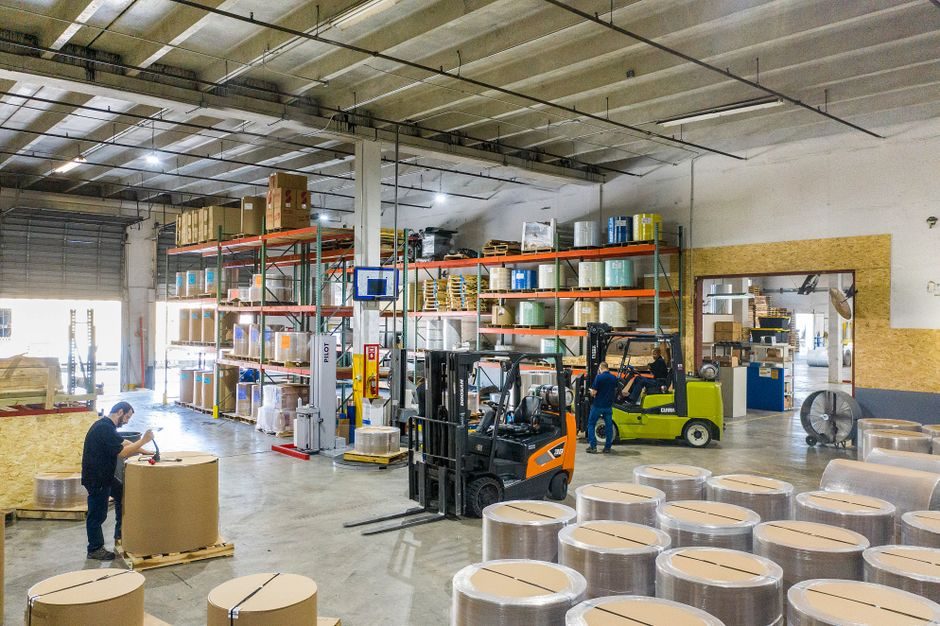
Steel storage rack certification is anchored by EN 15635 (correct use), EN 15512 (design), RMI/ANSI MH16.1 and FEM 10.2.06 — a stack that defines bay load, frame deflection and seismic bracing, and that procurement teams must verify before sign-off [S2].
The mechanical envelope behind those rules is concrete: a 42U, 199.8 cm-tall, 60 cm-wide, 120 cm-deep four-post IT rack weighs 150.6 kg empty and accepts a 1005 kg maximum dynamic load on its mounting rails, the kind of frame geometry that the rack-design standards benchmark against [S1]. MIL-R-70502-1984, the legacy four-post small-arm rack spec, shows the same idea at low bay-loads — bolted modular frames with documented static and dynamic load tables [S3].
What the standards actually cover
EN 15512 governs the structural design of adjustable pallet racking — steel grade, frame deflection limits (typically L/200 vertical and H/300 horizontal under characteristic load combinations), and bolt torque verification at base-plates. EN 15635 sits on top of it as the "safe use" code: annual inspection by a "technically competent person," beam-lock engagement checks, and load-notice signage at every bay. RMI/ANSI MH16.1 in North America performs the equivalent role, with similar L/200 vertical deflection criteria and a 1.67-1.82 safety-factor envelope on beam capacity. FEM 10.2.06 closes the loop with computational modelling rules and the section-classification logic for cold-formed lipped channel columns, the column profile used in roughly 80% of European pallet-rack frames. [S1]
Design assumptions differ: EN 15512 uses partial safety factors (gamma-M ~1.1 on steel, ~1.25 on concrete) with 1.5-1.65 load factors, while RMI/ANSI MH16.1 uses a single allowable-stress approach with a 1.67-1.82 safety factor. For a buyer comparing pallet rack quotes between a German and a U.S. fabricator, the answer to "same capacity?" is almost always yes — but the label on the beam will read different kN values, and the CE/ANSI mark on the nameplate is the cleanest way to tell which design path was followed.
Frame, beam and connection spec bands
Standard European selective-rack frames run 800-1200 mm deep, 2000-12000 mm tall, in 350-grade structural steel with a 2.5-3.0 mm column-wall thickness; beam sections are cold-formed lipped channel, 50-130 mm face height, powder-coated RAL 7035 or 5012. Base-plate thickness is typically 6-10 mm with M12x30 anchor bolts at 100-150 kN pull-out design load. The 42U, 60 cm-wide IT-rack footprint cited above (199.8 cm tall x 60 cm wide x 120 cm deep) sits well inside a single 2700 mm-tall selective-rack bay — the kind of dimensional arithmetic that warehouse planners do on the back of an envelope before quoting. [S2]
Connection detail drives the certification outcome: beam-end safety pins must engage the column slot on both sides, and the audible click is the field check; a beam locked on one side only is a top-three cause of EN 15635 inspection findings. Bracing patterns (K-bracing, X-bracing) on the rear frame plane are selected against seismic zone — Eurocode 8 Part 1 in Europe, ASCE 7-22 Chapter 15 in the U.S. — and the calculation report must reference FEM 10.2.06 sections 5.3 and 5.4 for the buckling curves used.
Seismic, fire and corrosion overlays

For storage rack systems in corrosive or cold-store environments (-30°C to +4°C), EN 15512 clauses on Charpy impact (27 J at the design minimum temperature) and galvanizing thickness drive material selection — hot-dip galvanizing to ISO 1461 at ~85 µm typically replaces powder coating below 0°C. [S3]
Fire protection typically falls back to either an FM Global DS 1-12 / NFPA 13 sprinkler density (12 mm/min over the most demanding 9 m² ceiling area for ESFR K25.2 heads) or a structural-fire-engineering report to EN 1993-1-2, with R30/R60 ratings on columns. The cheapest way to stay out of trouble is to align the rack layout with the sprinkler grid from day one — a 2.7 m frame pitch usually fits a 3.0 m sprinkler spacing, and misalignments of even 300 mm trigger hydraulic recalculations on FM Global reviews.
Inspection, audit and certification workflow
EN 15635 prescribes a documented annual inspection by a "technically competent person," typically a SEMA- or Rack Industry Association-trained inspector. Field checks cover: vertical plumb (≤L/200), beam-end engagement, base-plate anchor torque (M12 at 60-80 Nm), and load-notice signage. A "red-tag" finding — bent column, missing pin, cracked weld — pulls the bay offline until repair. RMI/ANSI MH16.1 uses a parallel system: weekly operator walk-throughs, monthly supervisor checks, and an annual third-party engineering audit. The output is a rack-condition report that the warehouse operator must keep on file for at least five years and present to the insurer on request. [S1]
For OEM/ODM buyers sourcing from China, the typical certification package per [S2] is ISO 9001:2015 plus, where EU delivery is intended, EN 15512 design reports sealed by a European chartered engineer and EN 15635 operating manuals. Lead time for a CE-marked pallet-rack bay runs 30-45 days ex-works for standard 2700-3600 mm frames, 60-90 days for galvanised or seismic-rated builds, and 120+ days for full warehouse turnkey with mezzanine and conveyors. Pricing bands observed in the same factory directory sit around USD 35-90 per 2700 mm frame and USD 8-25 per 2500 mm beam pair in Q2 2026, before surface-treatment upgrades [S2].
Who the standards are for — and who they are not

EN 15512 / EN 15635 / RMI MH16.1 are written for adjustable steel pallet racking used in warehouses, distribution centres and cold stores — they are not the correct code for drive-in rack, push-back rack, cantilever rack, or ASRS (automated storage and retrieval system) shuttle structures, which use FEM 10.2.07 or the EN 15878 series, or a vendor-specific design guide. Nor do they cover storage cage stackable stillages, mesh bulk containers, or mezzanine decking — for which EN 12811-1 (temporary works) and EN 1993-1-1 plus a separate EN 12812 mezzanine code are the right references. A buyer who lumps all steel storage into one EN 15635 quotation is going to get the wrong design factor on something. [S2]
The standards also assume the operator posts the load notice correctly and does not exceed it. A 4-tonne-per-pair beam with a 1.5 t label above it is a legal finding waiting to happen. The cheapest insurance is a plasticised A4 load chart at every beam entry, colour-coded bay for forklift eye-level visibility.
Comparison: design and use codes side by side
Three reference codes govern the same physical product with different paperwork: EN 15512 is the design code (cold-formed steel, partial factors, L/200 vertical deflection), FEM 10.2.06 is the modelling/calculation rule (section classification, buckling curves for lipped channel columns), and EN 15635 is the use code (annual inspection, beam-lock checks, signage). RMI/ANSI MH16.1 bundles design-and-use into one document for the North American market with allowable-stress factors of 1.67-1.82. [S3]
Cross-reference for sourcing

A structural engineer sealing a CE rack package typically also certifies the anchorage and slab, so for projects with heavy racks on mezzanines or ASRS, coordinate the slab design and the rack anchor layout at the same time as the wheel loader sizing and bucket-fill check, because the loader class and the bay width are coupled at the drawing stage. The same coordination logic applies to suspended working platform selection on rack-clad façades, where hoist reach and rack column spacing must be reconciled in the same CAD model. [S1]
Next verification node for any 2026 pallet-rack tender: (1) request the EN 15512 design report sealed by a chartered engineer based in the EU or the U.K. (not a self-declared CE without a calculation report); (2) confirm the FEM 10.2.06 buckling curve used for the column section; (3) confirm EN 15635 operating manuals in the local language, and (4) confirm hot-dip galvanizing thickness if any bay is below 0°C.