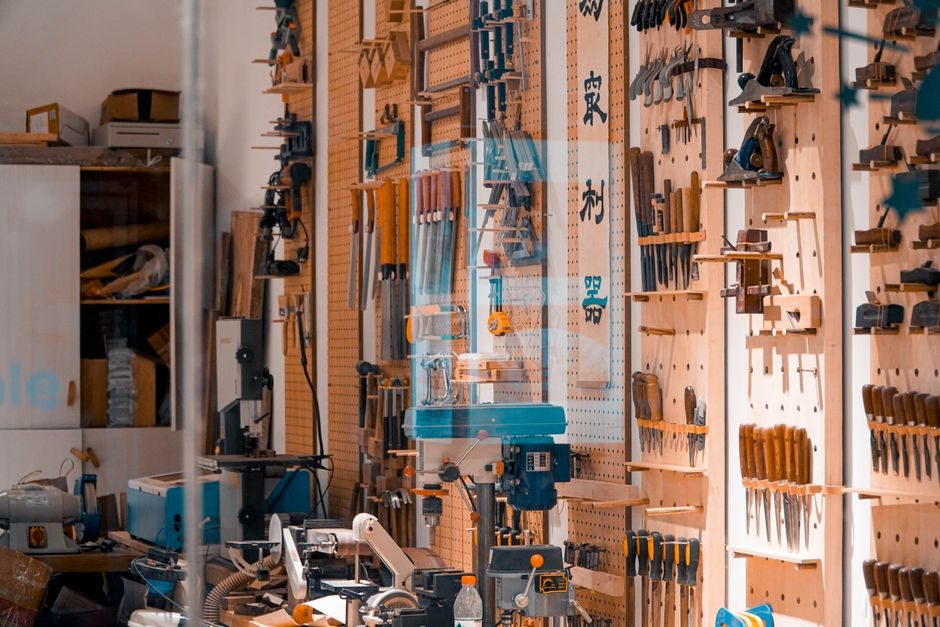
A buyer comparing storage rack system quotes in 2026 should anchor every line item to a load-capacity number: the same boltless upright-and-beam steel shelf advertised on industrial B2B portals lists 200-300 kg per tier [S4], while a consumer-grade HYLLIS unit from IKEA ships at $22.99 for a 23 5/8" × 10 5/8" × 29 1/8" footprint rated for light home/garage duty [S2]. That 10-to-100× price gap is not markup, it is steel mass, weld versus boltless connection, and seismic/asme-rated design margin.
The total addressable rack market sits on three cost tiers: light-duty shelving ($20-$300 per unit, residential and back-of-house retail), medium-duty boltless rack ($80-$500 per bay, small-warehouse and supermarket back stock), and heavy-duty selective pallet rack systems ($150-$600 per beam-and-upright pair, full warehouse installations). Trailer-mounted and loading-dock equipment racks — a category most buyers overlook — occupy their own sub-tier from $69.99 to $84.99 per bracket unit, engineered for OSHA load-bar and shoring-beam storage on truck cabs and dock walls [S3].
Price Bands by Rack Class and Load Tier
Light-duty consumer storage rack units cluster in the $20-$260 retail range: IKEA's HYLLIS shelf unit lists at $22.99 with 4.1/5 stars across more than 5,000 reviews, the BROR steel workbench at $249.00 with 4.6/5 across 245 reviews, and the HEJNE 4-section softwood shelving unit at $260.00 [S2][S5]. These SKUs share softwood, powder-coated steel, or chrome-wire construction with no published per-tier kg rating — they are dimensionally specified, not load-specified.
Medium-duty boltless rack from Chinese OEM catalogs (Guangdong-based Sinorack among the listed suppliers) advertises 200-300 kg per tier with steel-plank shelves and an inserting boltless structure assembled/disassembled without fasteners [S4]. Per-bay quotes on Made-in-China cluster in the negotiable band, with MOQ-driven pricing typically landing $40-$150 per tier for orders above a full 20' container.
Heavy-duty selective pallet rack — the workhorse of 3PL, cold storage, and grocery distribution — runs $150-$600 per beam/upright pair depending on beam length (typically 96" or 108"), frame height (8'-24'), and steel gauge. Seismic-rated (Zone 4) and high-rise (40'+ frame) configurations push the per-bay number past $1,200 once anchors, row spacers, and column protectors are added. End-aisle column protectors alone add $40-$90 per upright — a cost line item that is often missed on first-pass quotes.
Cost Drivers: Steel, Gauge, Finish, and Certification
Four variables move the price more than any others: steel coil price (hot-rolled base), structural versus roll-formed section, finish (powder coat, galvanized, or raw), and certification pack. A roll-formed tear-drop upright stamped from 14-gauge steel runs roughly half the price of a structural C-channel frame of the same height, but the roll-formed frame has a published capacity ceiling around 40,000 lb per upright pair versus 70,000+ lb for structural — so a specifier who selects roll-formed to save on the line item is paying for it in beam count and floor space [S4].
Finish selection is the second quiet budget killer. Powder-coated indoor rack is the default and cheapest. Hot-dip galvanizing (ASTM A123) typically adds 20-35% to the unit price but is mandatory for cold-storage, food-processing wash-down, and outdoor yard storage. For freezer applications at -20°C and below, galvanizing plus a 50ksi-yield structural frame is the only realistic option if the rack is going to survive five years of forklift impact.
Anchor, shim, and row-spacer kits are the third cost line that erodes budget on installation day. A standard warehouse pallet-rack row needs one anchor per base plate (typically 0.5" wedge-anchor, 4" embed), shim stacks to compensate for uneven slab (up to 0.5" total), and row spacers every two bays. Add roughly $25-$45 per upright pair for a fully compliant anchor and shim pack — line item that should be priced separately from the rack itself on every quote.
Comparison: Light-Duty, Medium-Duty, and Heavy-Duty Rack Against Four Criteria
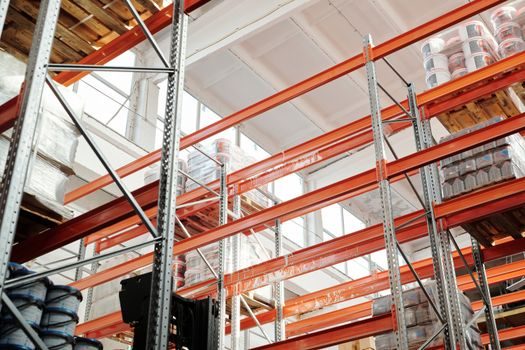
On load capacity per tier, light-duty consumer shelving is unspecified/dimension-rated, medium-duty boltless is 200-300 kg/tier [S4], and heavy-duty selective pallet rack is 1,000-4,500 kg/bay pair depending on beam count. On price per tier or bay, light-duty sits at $20-$260 [S2][S5], medium-duty at $40-$150 per tier (MOQ-tier FOB China [S6]), and heavy-duty at $150-$1,200+ per beam/upright pair including anchors. On typical application fit, light-duty serves residential and back-of-house retail, medium-duty fits small-warehouse and supermarket back stock, and heavy-duty serves 3PL, manufacturing, and cold-storage distribution.
On installation method, light-duty ships as a flat-pack with homeowner assembly (no tools or a single hex key), medium-duty boltless uses a tap-and-lock tab interface or a 2-bolt beam-to-upright connection that two workers can complete in under five minutes per bay [S4], and heavy-duty requires a certified installation crew, anchor drilling, and a rack-inspection sign-off before first load. The buyer who picks light-duty for a 2,000-pallet warehouse will burn the saving inside six months on collapsed beams and OSHA citations; the buyer who over-specs heavy-duty in a 200-SKU parts cage is paying roughly four times the right number for steel they will never load.
Trailer and Loading-Dock Rack as a Separate Cost Class
A category that escapes most warehouse-rack price guides is the trailer-mounted and dock-wall equipment rack: load-bar holders, shoring-beam brackets, and strap racks engineered for in-cab, in-trailer, and loading-dock mounting. YellowRack's published catalog prices these at $69.99 for a 3-bay 12" centers load-bar rack, $74.99 for a 4-bay 16" centers unit, and $84.99 for the 6-bay 24" centers track-mount version, with wall-mount equivalents at $74.99 for a 4-bay dock-wall unit [S3]. These are not storage cages and not shelving — they are point-of-use equipment holders tied to OSHA load-bar-fall and shoring-beam-storage rules.
The cost-per-slot math on this category is the inverse of warehouse rack: where a warehouse selective bay costs $150-$1,200 to hold roughly 4-6 pallet positions, a YellowRack-style load-bar holder at $69.99-$84.99 holds 3-6 load bars or shoring beams on a dock wall or trailer track, and the OSHA-compliance value (preventing dropped load bars and mid-route equipment migration) is the actual procurement driver, not the slot count [S3]. For trucking, 3PL, and dock-operations buyers, this class belongs in a separate quote line, not bundled into a pallet rack budget.
Standards, Inspection, and the Hidden Cost of Non-Compliance
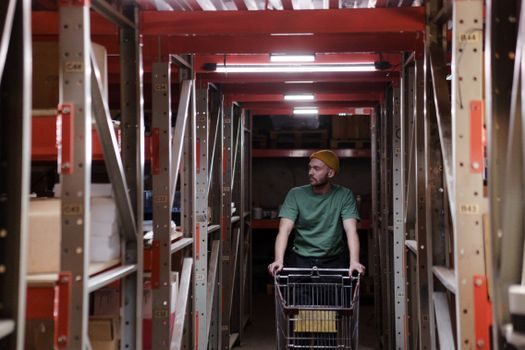
In the United States, the governing reference for industrial steel pallet rack is the Rack Manufacturers Institute (RMI) ANSI MH16.1 specification, which sets design, fabrication, and installation tolerances. The 2024 edition is the current published version, and any quote that does not reference MH16.1 or a RMI-listed capacity sticker is a quote to push back on. [S1]
European and Asian quotes tend to reference EN 15635 (the operational inspection standard) and FEM 10.2.07 (the design limit-state basis) instead of MH16.1, and a Chinese-OEM pallet-rack line item is typically FEM-compliant by default [S6]. For export buyers, the practical rule is: confirm which design code the manufacturer stamps on the load plate, then confirm the inspection code the buyer's site team will use. A rack designed to FEM and inspected to EN 15635 is the cleanest cross-region pairing; mismatched design and inspection codes is one of the top three sources of post-installation rework.
Sourcing Path: OEM China, Regional Distributor, or Systems Integrator
Three sourcing paths exist and the price spread between them is 40-100% on the same physical rack. Path one is direct OEM from a Chinese manufacturer — Sinorack and its Guangdong peers — where a 40' HQ container of boltless medium-duty rack runs roughly $8,000-$15,000 FOB for 200-300 bays at 200-300 kg/tier [S4][S6]. Lead time is 30-45 days plus 25-35 days ocean transit to North America, which is the deal-breaker for any project with a 60-day go-live.
Path two is a regional distributor or dealer carrying roll-formed selective rack from a domestic roll-former (Hannibal, Steel King, Interlake Mecalux, Unarco, Advance Storage Products among the US names). For sub-200-bay projects, the distributor path is almost always the lower total-cost option once ocean freight, customs broker fees, and on-site installation are added back to the OEM quote.
Path three is a full systems integrator who designs the rack layout against a slotting model, supplies the rack, and commissions the install. Price per bay runs 2-3× the distributor path, but for ASRS-integrated or high-seismic projects, the integrator's stamped engineering package (RMI-stamped drawings, seismic calcs, and an end-of-install sign-off) is what carries the warranty and the insurance binder. A buyer who treats a rack quote as a commodity is the same buyer who re-tenders the install six months later.
For specifiers working a 2026 budget, the cleanest sequencing is: lock load capacity and design code first, request matching quotes from one OEM, one distributor, and one integrator on the same bay count, then apply the 2026 hot-rolled-coil steel index (which has trended sideways through the first half of the year per public mill data) to the FOB line.
For related coverage, see Mini Excavator Selection Guide: Weight, Undercarriage, Engine Tier and Dig Specs.