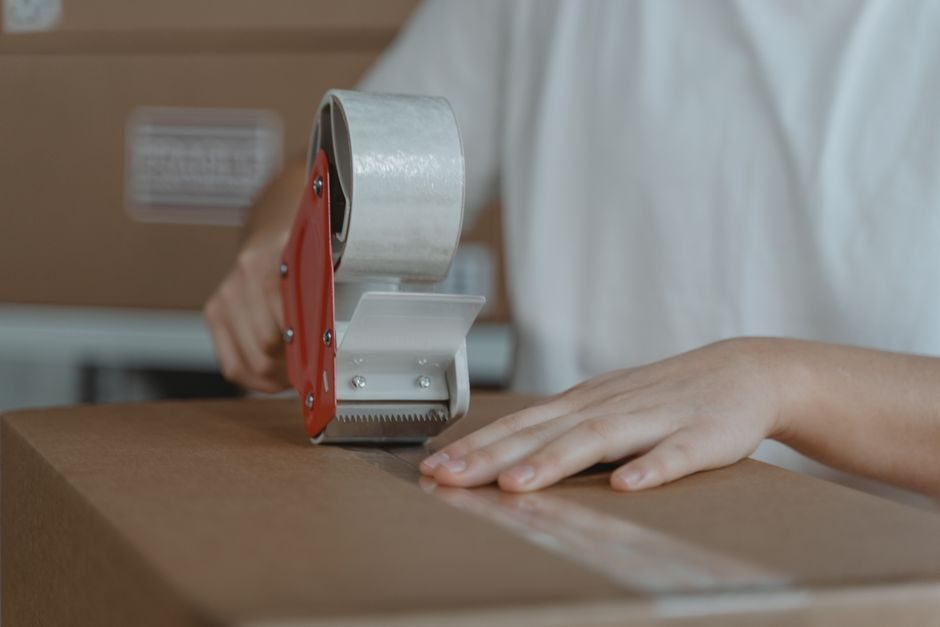
A strapping machine dispenses a strapping band — PP, PET, or steel — under controlled tension, heat-seals or friction-welds the joint, and cuts the strip in a single cycle, replacing manual hand-tying on packaging lines [S1].
Volume tiers separate the market into three bands: semi-automatic low-volume tabletop units for small shippers, semi-automatic moderate-volume units for steady contract packers, and fully automatic high-volume systems used by postal hubs, newspaper printers, and bale-packers [S1]. On a YUPACK LX-series corrugated line the upper tier is quantified: servo-driven, HMI-controlled, up to 26 packages per minute single-pass and 16 per minute double-pass [S2].
Where the Advantages Actually Land on a Packing Line
Strap consistency is the first quantified win. A dual-head pallet strapper runs the two heads alternately or synchronously, lifting cycle availability for large-volume, high-tensile packaging of bricks, metals, and chemicals where a single mid-cycle jam would stall the line [S3]. The PET mobile unit MH-105D applies friction bonding — a high-tension join without a metal seal — on loads that cannot tolerate heat-affected zones, and the strapping band path rides on an electric guide rail that returns automatically after each cycle [S3].
Throughput numbers are concrete. The YS-LX305 bale strapper delivers 26 single-pass or 16 double-pass packages per minute, with the actual rate a function of bundle dimensions [S2]. The horizontal MH-105A handles bulky pallet loads by moving the strap frame, not the goods, eliminating load-handling dwell time [S3]. For corrugated converters, the LX305B adds an in-line straightening system, correcting skewed blanks before banding so reject rates on crooked stacks drop without an upstream operator. Footprint and labour savings dominate the ROI calculation: a single operator supervises several cycles in parallel where a hand-tying station would need one worker per bundle.
The Real Failure Modes and Operating Costs
Capital and consumable cost is the headline drawback. PET and PP strapping band rolls are consumables sized to the core diameter the head accepts; specifying the wrong reel spec forces a change of strap path or re-wind geometry. Misfeed on the strap path — a common stop cause on friction-weld PET heads — wastes the entire unspooled length between the last good seal and the misfeed, which is where per-cycle consumable cost rises on lower-quality band [S3].
Bundle-geometry dependence is a structural limitation. Automatic strappers need a consistent footprint; random-sized parcels require a random-size carton sealer with strap-combined head, not a fixed-rail pallet strapper. Heat-seal heads consume energy and need cool-down cycles; friction-weld heads generate particulate at the joint that must be cleared during preventive maintenance. The horizontal MH-105A and vertical MH-105B are specified to work as a pair on pallet lines, so a single-machine quote under-specifies a true pallet cell [S3]. On small-batch lines the per-cycle economics are worse than hand-tying, which is why semi-automatic tabletop units persist in low-volume shipping rooms [S1].
Strap Material, Head Type, and Tension: How the Three Combine
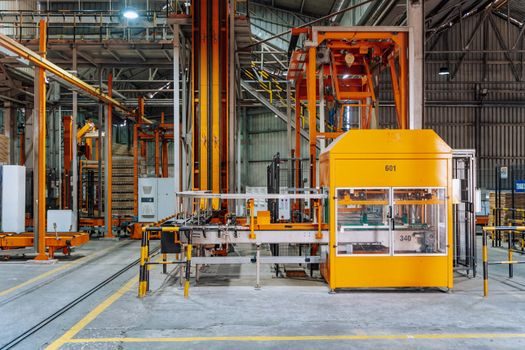
Strap material sets the join method. PP band typically uses a heat-seal head, PET band uses friction welding (large tightening force, no metal seal), and steel band uses a notched crimp seal [S1][S3].
Three decision criteria separate the head types: tension class, join energy, and maintenance access. A friction-weld PET head delivers higher retained tension than heat-seal PP and is preferred for load-bearing pallet work, at the cost of higher joint-particulate and a more demanding PM schedule. A heat-seal PP head is lower cost, lower tension, and adequate for carton closure where the carton sealing function is the primary spec, not load retention. A steel-crimp head retains the highest tension and tolerates rough handling, but requires a heavier frame, special disposal of metal scrap, and is increasingly specified only where PP/PET cannot meet a customer's tensile spec. The removable-head modular strapper (YUPACK MH-105 detachable series) lets a single frame swap heads to run different strapping band materials on shift change, which trims capex for mixed-product packers [S3].
Who a Strapper Is For — and Who Should Skip It
A strapper pays back on lines that run a stable bundle profile at moderate to high volume: postal hubs, magazine and newspaper printers, contract packers, corrugated converters, brick and metal-bundle producers, and pallet cells at the end of a filling machine or coding machine line [S1][S3]. A PET mobile unit is the right pick when the load cannot be moved to a fixed arch and the operator needs the head to travel to the pallet, common in building-materials yards [S3].
Skip automatic strapping when volume is below the break-even versus hand-tying (typically very-low-volume shippers), when bundle size varies beyond the head's envelope, or when the load's tensile spec is below what a properly tensioned hand tie can hold. A small business with limited shipping needs is the textbook case for staying on a semi-automatic low-volume tabletop unit rather than a fully-automatic pallet cell [S1]. For lines that also need to cut, fill, or core other inputs, integrating a cutting machine or core machine upstream keeps the bottleneck off the strapper.
Selection Workflow That Maps Spec to Machine Class
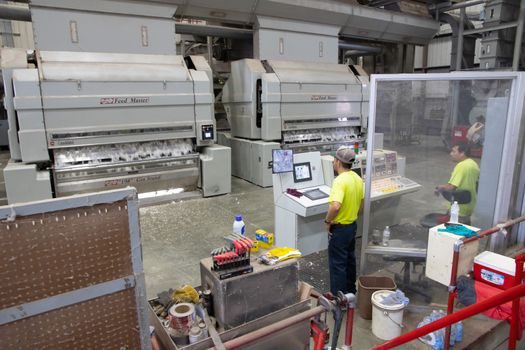
Start with three numbers: bundle footprint range, cycles per minute required, and strap material dictated by the load. Match the cycle figure to the head — 26 single-pass packages per minute is the current YS-LX305 ceiling, 16 double-pass on the same frame [S2]. If the load needs a top press to keep the stack square under tension, the MH-105C turntable pallet strapper is the matching fixed cell, and the mobile MH-105C-Y gantry version adds winding integration for an all-in-one wrap-and-band line [S3].
Lock the strap spec before locking the head: a heat-seal head on PP cannot be field-converted to friction-weld PET without changing the sealing module. Specify the strapping band width, thickness, and core size against the head's accepted range, and confirm joint tensile strength against the load's published shipping spec. For mixed-product packers running both pallet and corrugated formats, a detachable-head modular strapper or a combi taping-and-strapping unit consolidates two cells into one, with the trade-off being a higher per-cycle maintenance interval [S3]. In broader packaging-line context, the same map of upstream and downstream equipment choices is laid out in the Advanced Packaging Upstream and Downstream: 2026 Equipment, Resin, and Substrate Map reference, useful when sizing a strapper as one cell inside a full packaging cell rather than a stand-alone purchase.
Operating Discipline That Determines Real-World Uptime
Operator training on strap-path threading is the single highest-ROI maintenance action, because misfeed is the dominant stop cause on friction-weld PET heads. The MH-101A's three-mode (manual, automatic, continual) HMI is a deliberate training aid: manual mode lets a new operator verify each sub-step before going to auto [S3]. Daily checks should cover guide-rail return on the MH-105B vertical unit, top-press alignment on the MH-105C turntable, and the strap-frame tracking on the horizontal MH-105A, which moves up and down to the programmed pack position on bulk goods [S3].
Spare-parts stocking for a friction-weld PET head should include the weld plate, blade set, and tensioner wear parts, because joint quality drifts long before the head fails outright. For corrugated lines running an LX305B with a straightening system, blade replacement and straightener-roller calibration define the changeover interval more than the strap cycle count [S2]. A documented PM log tied to cycle count, not calendar time, surfaces wear patterns specific to the bundle mix on that line.
Trackable signals over the next two quarters: 2026 release notes from YUPACK and comparable OEMs on higher-cycle servo-driven heads above the current 26 single-pass per minute benchmark, and any new detachable-head strapper variants that broaden the strap-material envelope without a frame swap. A second signal is the appearance of integrated wrap-and-strap cells built around the MH-105C-Y gantry platform in published project cases, which would confirm the gantry-integrated all-in-one approach is moving from option to standard on mid-volume pallet lines [S3].