
A wrapping machine automates the application of stretch film, shrink film, or paper-based webs onto a load, replacing manual hand-wrapping that typically delivers inconsistent tension and unreliable load containment.
The category splits into four working geometries — turntable pallet wrappers, rotating-arm pallet wrappers, orbital wrappers for long cylindrical or reel loads, and small-footprint carton wrappers like the N600F series with reduced bottom support and integrated top press [S1][S2]. Shrink-wrap and stretch-wrap machines are routinely compared head-to-head on energy use, film yield, and unit cost per wrapped pallet, and the shrink-wrapping-machine class relies on a heated tunnel rather than film tension to form the pack. For a full taxonomy of stretch-film and stretch-band equipment, the wrapping-machine entry covers pallet, reel, orbital, and carton sub-types under one definition.
Core Advantages vs Manual Wrapping
Production throughput is the first concrete win: a turntable pallet wrapper can complete 30–60 loads per hour versus 6–10 loads for a manual wrapper, because film carriage traverse, turntable rotation, and top-sheet clamp cycles run on a single PLC [S1][S2].
The Reel wrapping machine, for example, is purpose-built for circular or cylindrical product, split into radial and axial sub-types, which is why mills, paper converters, and cable plants specify it instead of forcing a pallet wrapper onto a roll [S1].
Labour redeployment is the third win: one operator can supervise 2–4 wrapping cells, freeing manual wrappers for upstream palletising or downstream case-packer duties — the kind of duty split that the filling-machine and case-packing lines upstream of a wrapper depend on for balanced cycle time.
Disadvantages and Operating Limits
Capital cost is the dominant drawback: an entry-level turntable pallet wrapper lands in the low-tens-of-thousands USD band, while a rotating-arm or robot wrapper for unstable or heavy loads lands in the high-tens-of-thousands to six-figure band, with lead times of 8–16 weeks on Chinese OEM supply [S1][S2].
Film waste and energy are the next drawback: a pallet wrapper itself draws modest power, but a shrink-wrapping-machine tunnel running 6–10 kW of heater capacity adds a steady electrical load that has to be budgeted against the throughput gain. Mis-set pre-stretch ratios, mismatched film width, or poor corner-board placement will tank containment and burn through film — so a wrapper does not eliminate operator skill, it just relocates it to set-up and changeover [S2].
Footprint and load-shape limits close the list: a turntable cell needs clear floor space equal to roughly 1.5× the largest pallet diagonal plus operator aisle, and the N600F carton wrapper's small bottom support means it is engineered for small products rather than full pallet loads [S2]. Reel wrappers address the long-load problem that turntable cells cannot, but a radial reel wrapper cannot wrap a square bin, so geometry dictates the machine choice, not the other way around [S1].
Type-by-Type Comparison on Decision Criteria

On four decision criteria — load geometry, throughput, footprint, and unit capex — the four common wrapper classes line up as follows. Turntable pallet wrappers fit square pallet loads up to roughly 2.4 m perimeter, deliver 30–60 loads/h, claim a 3 m × 3 m floor cell, and sit at the lowest capex tier [S1]. Rotating-arm wrappers handle taller or heavier loads (often above 2 t) that would unbalance a turntable, drop to 20–40 loads/h, and trade the larger rotating envelope for a fixed central mast footprint [S1]. Robot pallet wrappers run on a rail-guided or free-navigation chassis, suit low-volume or multi-bay sites, and run 15–30 loads/h at the highest per-unit capex.
Orbital and reel wrappers, including the radial and axial reel-wrapping variants, take over once the load is long, cylindrical, or coil-shaped — paper rolls, tires, wire coils, fabric reels — with throughput tied to ring rotation speed rather than turntable RPM, and footprint that scales with the longest axis of the part [S1]. The same logic that pushes a paper mill to a reel wrapper also pushes a small-format shipper to a carton-class machine like the N600F, where the bottom support is reduced and an automatic top press holds the load during film application [S2]. For a broader view of adjacent end-of-line kit, the coding-machine and cutting-machine categories define the print-and-trim stations that bracket a wrapper on a finished line.
Use-Case Fit: Who It Is For, Who It Is Not
Wrapping machines are a clear fit for sites running 8+ pallet loads per shift through a fixed dock, for paper and film converters shipping reel-format product, and for contract packers that need repeatable film tension across mixed SKUs [S1]. A reel wrapper, in particular, suits fabric, paper, and steel-coil lines because the orbital ring accepts diameters and lengths that no turntable cell can index [S1].
They are a poor fit for very low-volume shippers (under 10 loads/day), for irregularly shaped export crating that needs timber and banding rather than film, and for clean-room or food-contact lines that demand stainless frames and IP-rated wash-down — a class of build that pushes the spec from a general pallet wrapper to a wet-area or hygienic wrapper, which is a different procurement track [S2]. Retail weigh-wrap-label systems such as the DIGI automatic wrapping system target a different scope entirely — fresh-food counter packing, label applicators, and reverse-vending — and are not interchangeable with industrial pallet or reel wrappers [S3].
Selection Criteria and Sourcing Signals
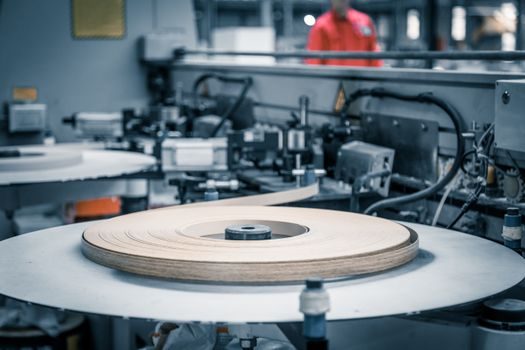
Four spec inputs drive a defensible spec: load weight and dimensions, required loads-per-hour, film width and core size, and the available cell footprint plus ceiling height for rotating-arm masts. Match those four to the wrapper class — turntable, rotating-arm, robot, orbital, reel, or carton — before shortlisting models, because the geometry, not the brand list, decides what will actually run on the floor [S1][S2].
Trackable procurement signals worth monitoring on the sourcing side include: published lead times on rotating-arm and robot cells, pre-stretch carriage replacement-part availability for legacy 200–300% ratio units, and OEM line-card changes between 2025 and 2026 (Qingdao Ausense Packing Equipment's 2026 catalogue still lists pallet, reel, orbital, tire, luggage, and carton wrappers as a single product family, which is the kind of line-card stability procurement teams should anchor quotes against) [S1][S2]. For readers cross-checking adjacent categories, the fire-extinguisher class selection logic and the fired-clay-brick spec map follow the same selection-criteria-first format and offer a useful template for writing internal wrapper RFQs.