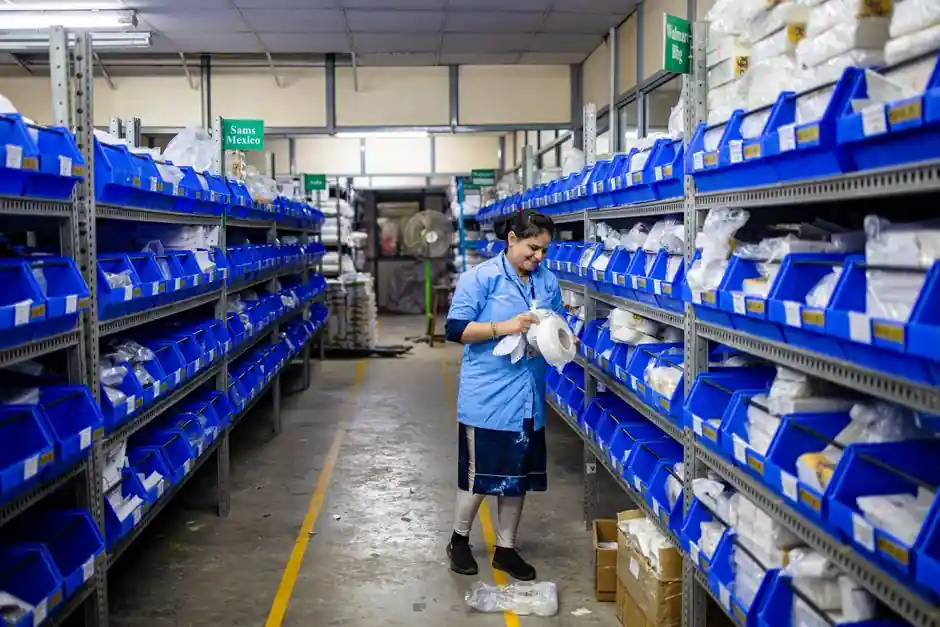
Retail distribution centers wrapping mixed-SKU pallets for grocery, drug, pet-supply, and automotive stores fall into Paragon Films' Type C load category, where every pallet differs in size, shape, and puncture profile, making film choice the dominant variable in damage cost [S1].
Linear low-density polyethylene (LLDPE) remains the base resin, with machine-grade pre-stretched film at typical 200-300% stretch ratios now the default for high-throughput retail DCs, while hand film is restricted to low-volume backroom operations [S2].
Load Type Drives Gauge, Resin, and Cling Specification
Type A loads (uniform, pallet-matched, few puncture points) are the easiest wraps and tolerate economy-gauge hand film at 60-80 gauge (0.60-0.80 mil) with conventional equipment [S1]. Type B loads (irregular stacking pattern, partial pallet coverage) demand mid-range film at 80-120 gauge (0.80-1.20 mil) because multiple puncture points coincide with higher stretch and tension levels [S1]. Type C loads assembled at retail DCs (each pallet may contain dozens of SKUs) require premium-grade blown or coextruded film at 1.20 mil and above when paired with high pre-stretch equipment, per Paragon's published selection guidance [S1].
Long-distance LTL shipments (a typical retail DC-to-store run of 200-800 miles) should be specified with high-performance film with elevated load retention, regardless of pallet uniformity, because road vibration and multi-stop handling amplify weak-film failures [S1].
Cast vs Blown: How the Two Manufacturing Paths Trade Off
Cast stretch film (extruded through a chilled roll) gives high clarity, quiet unwind, and consistent thickness, and is the workhorse of automated retail-DC wrappers running 30-60 pallets per hour [S2][S9]. Blown stretch film (air-quenched bubble process) delivers higher puncture and tear resistance, stronger load retention, and better performance on irregular Type C loads, at the cost of haze and a louder unwind [S2][S9].
Selection rule used by retail buyers: specify cast for high-speed, high-clarity distribution lines (grocery, consumer goods) where barcode scanning and presentation matter, and specify blown or metallocene-blend blown for heavy, sharp-edged, or mixed-SKU retail auto-parts and pet-supply pallets [S2][S4].
Hand, Machine, Pre-Stretch: Match the Film to the Wrapper
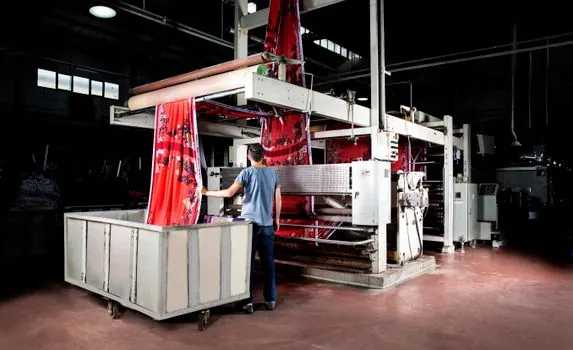
Hand stretch film is manually applied, ideal for small warehouses and low-volume operations, and suffers from inconsistent film usage and uneven tension [S2]. Machine stretch film is engineered for automated or semi-automatic wrappers and offers consistent application, higher stretch capacity, reduced waste, and faster packaging, the configuration used in essentially every retail DC above 200 pallets per day [S2].
Fully automatic high-speed stretch wrappers equipped with pre-stretch carriages usually require a premium-grade machine film; economy films are acceptable only on conventional low-stretch equipment; mid-range films are needed on pre-stretch equipment at moderate levels [S1]. Pre-stretch ratios on modern retail-DC equipment typically run 200-300%, with a 1 m of film at 250% pre-stretch covering roughly 2.5 m of pallet wrap, the single biggest material-cost lever in retail packaging [S2]. For an overview of film fundamentals, see the stretch film encyclopedia entry.
Specialty Films: UVI, VCI, One-Sided Slip, Colored Tints
Retailers storing pallets outside staging areas, common in garden-center and seasonal merchandise, should specify UVI (Ultra-Violet Inhibitor) film to prevent LLDPE brittleness during sun exposure [S1]. Hardware and metal-component retail DCs shipping finished or semi-finished steel parts should specify VCI (volatile corrosion inhibitor) stretch film, a recognized sub-category of stretch film that releases corrosion-inhibiting vapor inside the wrap [S4].
One-sided slip film (low-cling on one face, high-cling on the other) is used for pallet loads expected to shift in transit, since the slip layer allows controlled movement without breaking the wrap, and for unitizing two or three products destined for a single retail destination, a typical Type B scenario [S1]. Colored and tinted stretch films (black for security, blue and white for SKU coding) are standard offerings across major U.S. suppliers and support retail inventory segregation on the DC floor [S5][S6].
U.S. Supplier Landscape and Sourcing Checklist for 2026
The U.S. stretch film market is served by a mix of integrated resin-to-film producers and converters; the names most often compared by procurement teams in 2026 include Intertape Polymer Group (IPG), Berry Global (now part of Amcor), Sigma Stretch Film, Paragon Films, AEP Industries, Mima Films, Amcor, Dow, Bemis, JUHONG Packing Materials, West Coast Supplies Corp, and Megaplast [S5]. IPG runs a broad portfolio across cast and blown machine film plus hand and retail specialty products [S6].
Procurement evaluation points for retail-DC buyers: film type (hand, machine, jumbo roll, colored, mini, coreless), load stability (puncture, tear, cling, retention), machine compatibility (pre-stretch ratio, roll width, core size), specification consistency (thickness, width, elongation, winding), supplier capability (samples, customization), local supply support, and total landed cost inclusive of freight, duties, and tariffs [S5]. Distributors such as Crown Packaging stock stretch film in bulk alongside strapping, edge protection, and stretch wrappers, which simplifies single-vendor sourcing for retail DCs consolidating SKUs [S3]. Distributors with installation and audit support, such as Atlantic Packaging's stretch wrapping line, also match wrapper and film to optimize a specific retail application [S8].
Comparison Table: Film Type vs Retail DC Decision Criteria
The four film types most retail-DC buyers compare (hand cast, machine cast, machine blown, pre-stretched) trade off differently across four decision criteria. Hand cast is lowest cost and lowest capital requirement, but inconsistent tension and the highest damage rate on Type C loads. Machine cast gives the best clarity for barcode scanning and quietest operation, with mid-tier puncture resistance suitable for most grocery and drug retail loads. Machine blown leads on puncture and load retention for irregular hardware and pet-supply pallets, with the trade-off of higher unit cost and lower clarity. Pre-stretched film (cast or blown) reduces film consumption and worker fatigue, at a slightly higher per-roll unit cost, and is the default for high-turnover retail backroom operations [S1][S2][S7].
Shrink film remains a competing option for retail bundles and tamper-evident packs, but stretch film is the default for pallet unitization in retail distribution because of lower cost per pallet and faster line speed [S7]. For related packaging-line decisions, see this turnover box selection guide for e-commerce fulfillment, which covers a complementary retail unit-handling topic. The Freedonia US Stretch and Shrink Film study tracks the segment by product, market, and resin type and is the standard reference for sizing and resin-mix data through 2024 [S4].
Specification Defaults and Failure Modes to Avoid

Specifying on gauge alone is the most common retail-DC error: a 0.80 mil hand film at 250% pre-stretch performs worse than a 1.20 mil machine film at 200% on the same Type C pallet [S1][S2]. Under-wrapping (fewer than 4-6 wraps at the pallet base for a 1,500 lb retail load) and over-stretching beyond the film's rated elongation both drive film snap and load shift, and should be controlled at the wrapper's HMI rather than by film substitution [S1].
Trackable signals worth monitoring through the rest of 2026: continued Amcor integration of Berry Global's film business (which reshapes the top tier of the U.S. stretch film supply base), resin-line announcements in metallocene LLDPE that lift blown-film performance for retail irregular loads, and the next Freedonia Group update on U.S. stretch and shrink film demand by application [S4][S5].
The underlying component specifications are covered under distribution cabinet, and power distribution.