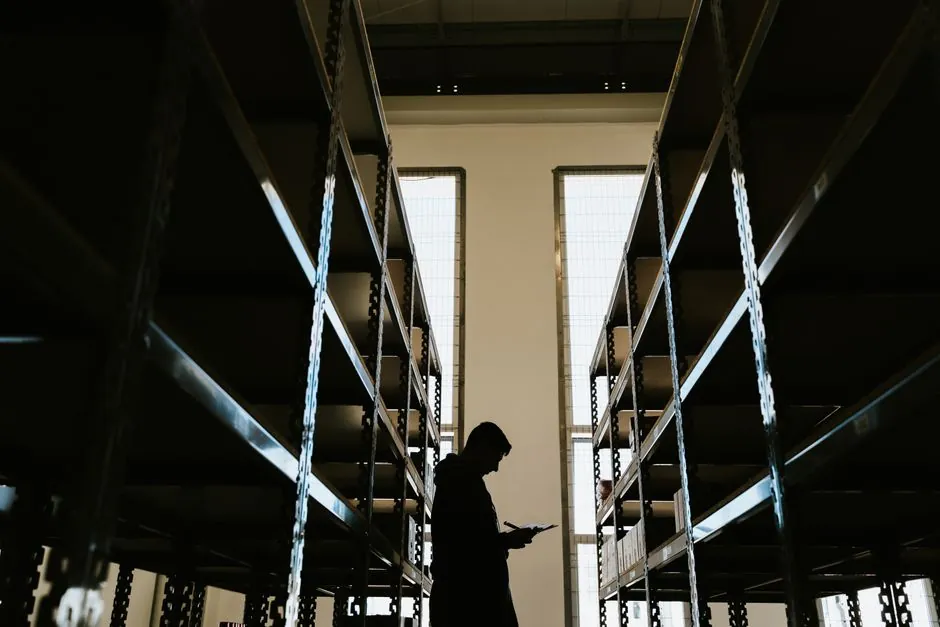
Structural pallet rack runs a meaningful premium over roll-formed, but it is not a generic "buy the better rack" decision. The cost gap tracks heavier hot-rolled steel, bolted connections at every beam, and longer engineered lead times; the performance gap shows up in specific environments (freezers, wash-down, high-impact aisles, heavy point loads) where roll-formed teardrop starts failing sooner [S1][S4].
For most selective pallet racking in a normal ambient dry warehouse, roll-formed teardrop is still the rational default, per a process-engineer-style breakdown published 2026-09-16 [S1]. Specifying structural everywhere is a common over-spec; specifying roll-formed in a freezer or a fast-moving grocery aisle is a common under-spec. The job is to match the rack to the aisle, not to the budget line.
What the Two Systems Actually Are
Roll-formed rack is cold-formed from flat sheet steel, with uprights punched in a teardrop slot pattern and beams that drop in as closed tubular sections (step beam or box beam), locked by a safety clip and no bolts at the joint [S1]. Structural rack is fabricated from hot-rolled structural channel sections (commonly C3 or C4, meaning 3-inch or 4-inch channel), bolted through pre-punched holes in the upright [S1][S3]. The two connect differently, drain moisture differently, and reconfigure differently, and those differences drive the cost gap more than the steel grade alone [S1][S7].
For a quick frame of reference on what a pallet rack bay looks like under each system, see the structural channel versus closed-tube beam comparison in the table below.
Cost Drivers: Where the Premium Actually Lives
The structural-rack premium is not a single number. It is the sum of four cost drivers that compound: heavier hot-rolled steel sections, bolted beam-to-column hardware at every level instead of a tab-in-slot clip, engineered-to-order fabrication with 5 to 10 week lead times, and skilled-labour install [S4][S2]. Roll-formed ships faster, installs faster, and is the North American default for selective rack precisely because it standardises on teardrop, a common punched slot pattern shared across manufacturers, so add-on bays and replacement parts stay interchangeable [S1][S3].
A useful proxy for the steel-mass difference: structural beams and uprights use thicker, lower-gauge (lower gauge number means thicker steel) hot-rolled sections, while roll-formed is built from higher-gauge sheet bent into shape. The same bay footprint carries more material in the structural version, and that material is what you pay for up front, alongside the bolted connection that resists forklift impact but slows re-pitching [S2][S4].
When evaluating total cost, the roll-formed price advantage is partly a maintenance trade. A dented roll-formed column changes the effective cross-section, so the column no longer carries what the load chart says it carries; in a high-impact aisle, those columns get replaced, and replacement cost plus downtime narrows the lifecycle gap [S1]. Comparing storage rack quotes on unit price alone misses this.
Capacity, Spans, and the Load-Chart Reality
Industry capacity charts show structural beams carrying roughly 1,700 lbs at longer spans up to 15,000+ lbs at shorter spans, and roll-formed teardrop beams running from under 1,000 lbs to as much as 18,000 lbs per pair depending on span and gauge [S2]. RackUSA's standard selective line is generally rated 2,000 to 6,000 lbs per level, while heavy structural systems exceed 6,000 lbs per level [S2]. Real numbers still require system-specific engineering, but the qualitative shape is consistent: roll-formed can be specced to high capacities at short spans, structural holds the heavy end more comfortably.
For unusual point loads or deep drive-in configurations, structural is the safer call. The Rack Manufacturers Institute (RMI) flags forklift impact as one of the most common causes of rack damage and notes that structural steel generally resists impact better because it is heavier and thicker [S2].
Where Structural Earns the Premium
Four environments justify the structural upcharge, and they line up across the recent installer literature. First, freezers and cold storage, where the open C-channel profile drains and dries instead of trapping moisture in a closed tube [S1][S4]. Second, wash-down and food-and-beverage facilities, for the same moisture and hygiene reason, plus high forklift throughput. Third, high-impact aisles, especially grocery distribution where low margins push speed over precision and racks take repeated hits; here the structural section absorbs a strike with less permanent deformation, and the boltless roll-formed teardrop connector is the weaker failure mode [S1][S2]. Fourth, heavy point loads above roughly 6,000 lbs per level, or any application specified with drive-in / drive-through / push-back frames, where structural channel is the conventional choice [S2][S4].
Accessories compound the structural advantage in these zones. Welded bullnose / angle deflectors act as column protectors, and reinforced columns can be upgraded up to 60 inches to multiply bay reinforcement, both of which are practical on a structural frame and awkward on a roll-formed teardrop [S4]. For a pallet stacker operation pushing into deep lanes, the rigidity matters.
Where Roll-Formed Is the Correct Buy
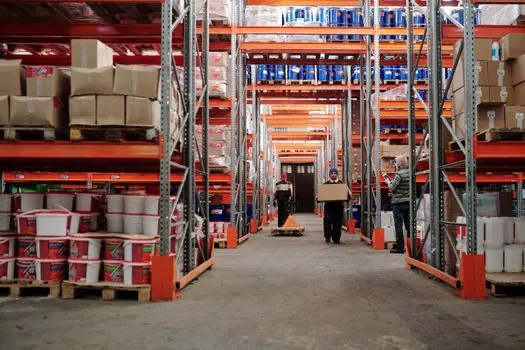
Ambient dry warehouses with moderate forklift traffic and changing SKU profiles are roll-formed's home turf. The teardrop connector lets a crew re-pitch a beam level with a mallet and a fresh safety clip, no unbolting, which is the killer feature for any operation that expects to add or move levels quarterly [S1][S3]. Replacement parts are widely manufactured, so a damaged brace or beam swaps in without an engineered-to-order wait, and a plastic pallet fleet in light rotation will not stress the system beyond its design envelope.
For a small fleet of manual pallet jack stations feeding into a selective rack, roll-formed teardrop is the right call, and a electric pallet truck aisle with disciplined operators and column protectors is a reasonable roll-formed application too, per the same installer guidance that frames the whole comparison [S1]. The key signal: if you do not need welded accessories, freezers, or impact-rated columns, you probably do not need structural.
Decision Matrix: Quick Reference
Use the table below to shortlist before asking for a quote. [S3]
Beam-to-column connection: roll-formed is boltless teardrop with safety clip, faster to install and reconfigure; structural is bolted at every joint, slower but stronger at the connection [S1][S2]. Profile: roll-formed is closed tube (step or box beam); structural is open C-channel, commonly C3 or C4 [S1]. Capacity in the same footprint: roll-formed is lower per level; structural carries heavier point loads and exceeds 6,000 lbs per level on heavy systems [S2]. Impact tolerance: roll-formed bends under repeated contact, and a dented column changes the effective cross-section; structural absorbs hits with less permanent deformation [S1][S2]. Install speed: roll-formed is faster, no hardware at every joint; structural is slower with bolted assembly [S1]. Re-pitching: roll-formed is mallet and safety clip; structural is unbolt, move, re-bolt [S1]. Wet / freezer / wash-down: roll-formed closed tube can trap moisture; structural open profile drains and dries [S1][S4]. Cost per pallet position: roll-formed is lower; structural is higher, with a 5 to 10 week engineered lead time and a roughly 5 to 10 year longer service life in matching duty cycles [S4].
Standards, Compliance, and What to Put in Writing

Both rack types are engineered to the same RMI / ANSI MH16.1 family of standards and anchored the same way on a stamped drawing; the difference is in the connection detail and section, not in the code path [S1]. What changes between systems is what the inspector should be looking at: on roll-formed, watch for bent column flanges and missing safety clips, which is the most common failure signature after impact; on structural, watch for loose or missing bolts at the beam-to-column interface, especially after any forklift contact [S1][S2]. FM Global approval paths differ by component gauge and manufacturer, so confirm the specific part numbers carry the approval you need rather than assuming the system class covers it [S2].
For a sense of how the welded-versus-bolted trade plays out in adjacent equipment, the stud weld vs. drilled and tapped hole comparison covers similar cycle-time and joint-strength trade-offs, useful framing when you are weighing bolted structural connections against the snap-in teardrop.
Total Cost of Ownership Over a 15-Year Horizon
Lifecycle cost is where the premium usually justifies itself, or does not. A structural rack in a matching duty cycle is reported to last 5 to 10 years longer than a comparable roll-formed system, on top of lower damage-related replacement frequency in the right environment [S4]. In a mismatch (structural in a low-impact ambient aisle), the premium buys nothing, since the roll-formed system would have lasted the full term anyway, and the longer lead time plus bolted install ate the budget. In the other mismatch (roll-formed in a high-impact grocery aisle), the cheaper rack gets replaced multiple times over the same horizon, eroding the upfront savings.
For a quantitative lifecycle model, the four variables that move the answer are: (1) impact frequency, hits per aisle per month; (2) beam and column replacement cost, including downtime; (3) reconfiguration frequency, where each event on structural racks costs more labour hours; (4) environment, since moisture and freeze-thaw cycles shorten roll-formed service life. The literature gives a qualitative verdict (structural wins on TCO in the heavy-duty environments above, roll-formed wins everywhere else) but the specific dollars depend on those four inputs, which is why the recommendation is to match the rack to the aisle rather than apply a single rule across the warehouse [S1][S4]. Many sites run a hybrid by zone, structural in freezer and grocery aisles, roll-formed everywhere else, which is the most common cost-optimised layout in the recent write-ups [S2].
Trackable signals to watch over the next two quarters: RMI / ANSI MH16.1 committee activity on impact-rated column specifications, FM Global approval updates for hybrid rack assemblies, and any distributor lead-time shifts for hot-rolled C-channel versus cold-formed teardrop, since the gap between those two lead times is the most reliable leading indicator of the structural-rack premium moving in either direction.