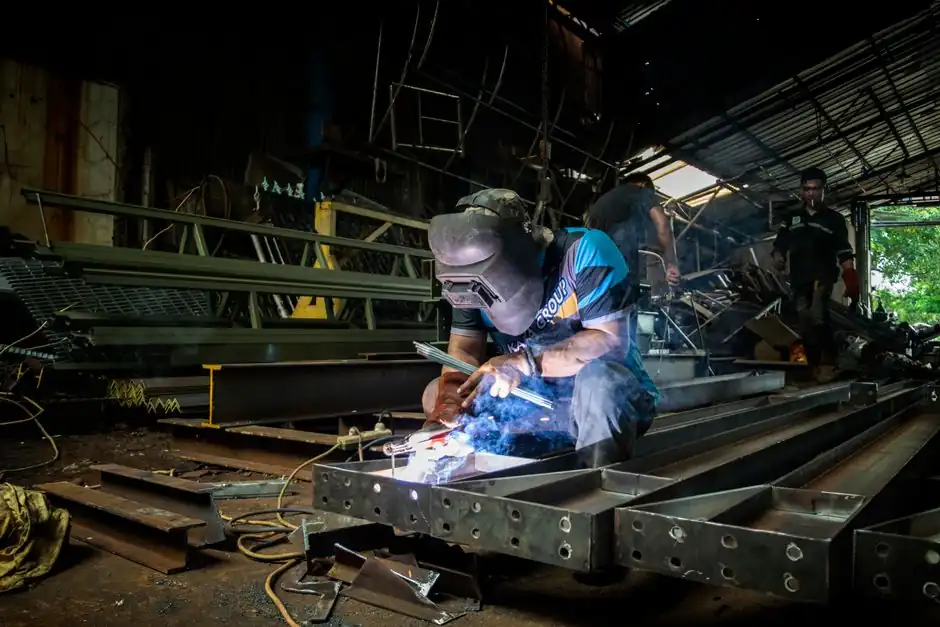
A correctly executed stud weld forms a full cross-sectional metallurgical fusion between fastener and base metal, and multiple OEM sources state the resulting joint is stronger than either the stud or the parent material [S2][S3][S4]. A drilled and tapped hole, by contrast, removes base-metal material to cut threads and is only as strong as the engaged thread area and the parent material's remaining cross-section.
This matters for engineers who must pick between one-sided welded studs and tapped holes for sheet metal, structural brackets, or production assemblies where threads see repeated loading. The stud weld can be carried out in 6 ms to 1.25 s depending on stud size, with no through-hole and no thread-cutting step [S2]. A tapped joint, in turn, is field-replaceable but adds drill, tap, and cleanup steps and weakens the base material by removing material [S1][S4].
Strength Mechanism: Fusion Bond vs. Thread Engagement
Stud welding's reported strength advantage comes from the weld zone being a true fusion joint: the stud end and the base metal melt together into a single re-solidified nugget, so load is carried by the full stud cross-section instead of by a few engaged threads [S2][S4]. Drawn-arc stud welding uses a ceramic ferrule and an aluminum flux ball embedded in the stud tip to shield the molten pool from atmospheric contamination; once cooled, the ferrule chips away [S2]. The result, per industry literature, is a joint that fails in the stud or the base metal before it fails at the weld interface [S2][S3][S5].
A drilled and tapped hole has no such fusion zone. The drill removes a cylindrical slug of material, the tap cuts a helix of threads, and load is transferred through the shear area of those engaged threads. This is why the stud welder is the go-to for high-throughput, repeatable structural joints, while tapping is reserved for applications that need a removable fastener or where welding access is impossible.
Weld Time vs. Drill-Tap Cycle Time
Stud weld cycle times cluster between 6 ms and 1.25 s for typical fastener sizes, with capacitor discharge (CD) welds completing in milliseconds and arc welds in roughly a second or less [S2][S5]. A drilled and tapped hole is a four-step sequence: drill, tap, clean, install, with consumable wear on drill bits, taps, and cutting fluid on every hole [S1][S4].
For a single M6 tapped hole, drill-plus-tap on a manual or CNC machine is typically several seconds of spindle time plus tool changes. Multiply that across a sheet-metal panel with 20-50 fastener points and the throughput gap between a stud welder and a drill/tap cell becomes a real production-line decision, not a marketing claim [S4].
Base-Material Impact: No Removal vs. Material Loss
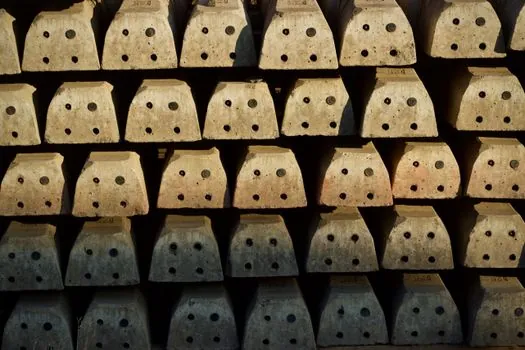
Drilling and tapping physically removes base-metal material, which reduces the load-bearing cross-section of the parent part and creates a stress-concentration site around the hole [S1][S4]. Stud welding adds material, doesn't remove any, and does not require a through-hole, so the reverse side of the workpiece stays unmarked and leak-tight [S1][S2].
For thin-gauge applications, CD stud welding is rated for base metal as thin as 0.015 in (about 0.38 mm) and stud diameters from 14 gauge up to 3/8 in, with no reverse-side marking, distortion, or burn-through [S5]. Standard stud diameters run 1-25 mm on base metal as thin as 1.2 mm, and the stud and base do not need to be the same material, so mild steel studs can be welded to stainless or aluminum substrates with the right process setup [S3].
Process Comparison: Arc vs. CD Stud Welding vs. Drill-Tap
Drawn-arc stud welding uses a DC power source (welding rectifier or generator), lifts the stud to draw the arc, and plunges it into the molten pool inside a ceramic ferrule, and it is the workhorse for shear connectors, anchor plates, and heavy structural brackets [S2][S5]. Capacitor discharge stud welding uses stored energy from a 110-115 V AC-charged capacitor bank, vaporizes a small ignition tip on the stud to strike the arc, and completes the weld in milliseconds with no ceramic ferrule and no flux, which is why it dominates thin-gauge, cosmetic, and electronics work [S5].
Drilling and tapping occupies a different niche: it is the right pick when the joint must be field-disassembled, when the back side of the part is physically inaccessible to a weld gun, when the base material is cast iron or hardened tool steel that resists stud welding, or when the production volume is too low to justify dedicated stud-welding fixturing [S1][S4]. For high-volume OEM runs on steel, stainless, or aluminum sheet, the spec-based decision between inverter vs transformer-rectifier stud welding power units then drives the rest of the line design.
Standards, Codes, and the Stud-Welding Process Window
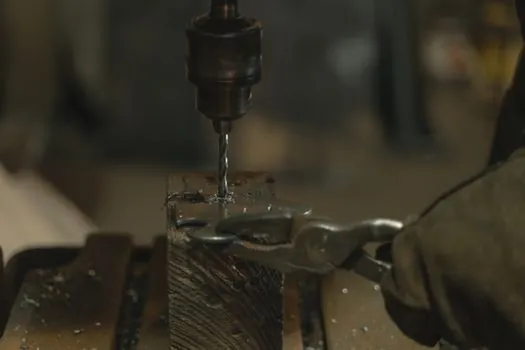
Stud welding is governed by AWS D1.1 structural welding clauses and by AWS C5.4 for the recommended practices of stud welding; qualification of operators and procedure qualification records (PQRs) follow the same WPS logic as other arc welding processes. For drilled and tapped holes, the relevant standards are ASME B1.1 (Unified Inch Screw Threads) for thread geometry and ASME B18.3 for socket-head and cap-screw thread engagement, with hole-depth and thread-engagement length (typically 1.5-2× the nominal diameter for steel) driving pull-out strength. [S4]
Surface preparation rules differ sharply: drawn-arc stud welding requires clean, unpainted, rust-free base metal, and welding through galvanized coatings is not considered repeatable, so paint and zinc must be ground off the weld zone first [S3]. A tapped hole is more forgiving of surface coatings, since the drill and tap cut through them, and a thread-locking compound or patch can take up any minor cleanliness gap.
Failure Modes and Limitations to Watch
Stud welds fail by stud fracture, base-metal pullout around the weld nugget, or, in dirty conditions, by a porous weld with insufficient fusion, and the first two are typically rated higher than the parent material's ultimate tensile strength in published data [S2][S3]. The real-world failure mode engineers see most often is operator-side: misalignment, insufficient plunge, or contamination of the weld zone, all of which are mitigated by fixturing and surface prep [S3].
Tapped holes fail by thread strip-out (especially in aluminum and soft stainless), by tap breakage inside the hole, or by thread galling on repeated assembly cycles. Once a tapped thread is stripped, the part is often scrap, while a damaged stud weld can usually be cut off, the surface re-ground, and a new stud welded in the same spot, which is a meaningful field-repair advantage on heavy structural work [S1][S4].
Selection Criteria: When to Spec Each
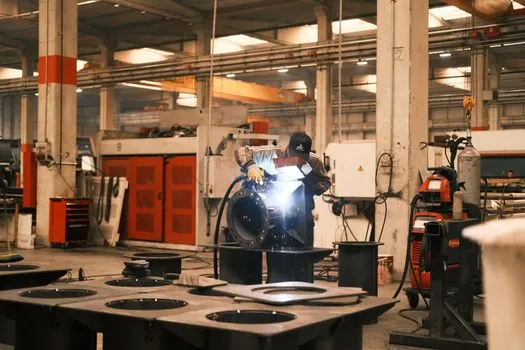
Spec a stud weld when the joint is permanent, one-sided access is the only option, the production volume is high enough to justify the gun and power supply, the base metal is clean mild steel, stainless, or aluminum, and cosmetic finish on the reverse side matters. Spec a drilled and tapped hole when the fastener must be removed for service, the back side is accessible only to a drill, the base material cannot be welded (cast iron, certain tool steels), the part is a one-off or low-volume build, or torque verification on the fastener is required by the design code [S1][S4].
For shops that already run a drill and impact-driver lineup for assembly, adding a stud-welding cell is a bigger capital decision than swapping drill bits, and the ROI math depends entirely on hole count per shift and the labor saved per weld.
For component-level specifications, see construction machinery and equipment.