Industrial structured light scanner (SLS) procurement in 2026 spans four price bands, from open-source lab builds under $750 to metrology-grade systems above $50,000, and the order-of-magnitude jump between bands is driven by working volume, projector pattern encoding, calibration panels, and bundled software rather than the camera alone [S1][S2][S3].
A 2024-vintage fixed-price listing for a 3D structured light scanner sat at $1,400 with best offer accepted, which is a useful reference floor for turnkey mid-range systems with calibration panels included [S3]. On the engineering side, a freelance hybrid-methods development contract for SLS Gray code plus phase shifting was posted in the $250-750 USD band, mapping the labour cost of a single custom scanner integration [S5].
What a Structured Light Scanner Actually Costs in 2026
The 3DUNDERWORLD-SLS open-source high-accuracy scanner project, currently at 299 stars and 123 forks on the master branch, demonstrates the low-cost reference design: a projector-camera pair plus calibration routines that can be replicated for under $1,000 in components, which is why it remains a benchmark build in academic labs [S1]. A second reference implementation, maximm8/structured-light-scanner, exposes the basic structured light pipeline as code only, where the cost is engineering time rather than hardware [S4].
Commercial calibration panels listed for David SLS structured light 3D scanners show a 5.0/5 description accuracy score and 4.8/5 shipping-cost rating over the trailing 12 months, indicating a steady secondary market for accessories that sit in the low-hundreds of dollars and ship globally [S2]. For a structured light scanner comparison against laser line and photogrammetry options, see the structured light vs laser 3D scanner spec-driven map.
Price Band Comparison by Use Case
Four practical tiers dominate 2026 procurement. DIY / academic: $250-1,000, an open-source SLS build using a commercial DLP projector, an industrial camera, and a printed calibration target; the only recurring cost is engineering labour, which a hybrid Gray-code plus phase-shift integration would price at $250-750 of contractor time [S1][S4][S5]. Entry-level commercial: $1,400-5,000, fixed-price units on secondary markets with calibration panels included, suitable for small-part inspection, education, and reverse engineering of objects under ~300 mm [S3].
Mid-range metrology: $5,000-25,000, factory-calibrated units with multi-frequency fringe projection, automated turntables, and bundled software SDKs; typical working volumes run 100-500 mm with stated accuracy in the 0.03-0.10 mm range. High-end industrial: $25,000-75,000+, blue-light LED projection, multi-megapixel cameras, robot-mounted or inline configurations, with accuracy under 0.02 mm over working volumes to 1 m+ and full ISO 10360-style calibration certificates. A structured light scanner's working volume, baseline, and pattern encoding determine which of these tiers a buyer should target.
Cost Drivers That Move the Price
Projector resolution is the single largest hardware driver, because moving from a 1280x800 DLP to a 1920x1080 DLP or, in metrology units, a 2560x1600 LED pattern generator, can double the bill of materials before software is considered. Camera sensor grade and pixel count are the second driver; scientific-grade CMOS cameras with global shutter and hardware triggering typically add $1,500-8,000 over consumer cameras with equivalent resolution. [S1]
Software licensing separates tiers more sharply than hardware: a 3DUNDERWORLD-style open-source pipeline has zero licence cost but demands Python/MATLAB expertise [S1], while commercial SDKs run $2,000-15,000 per seat. Pattern encoding choice (binary, Gray code, sinusoidal fringe, multi-frequency hybrid) does not change hardware cost but does drive the engineering hours billed in freelance work, which the 2026 market still prices in the $250-750 band for a single-method delivery [S5].
Who SLS Is For, and Where It Is the Wrong Tool
Structured light scanning is the right tool for medium-to-high resolution capture of static, opaque objects in a controlled lighting environment, including quality inspection of plastic and metal parts, dental and orthotic workflows, reverse engineering of mechanical assemblies, and cultural-heritage digitisation. It is the wrong tool for shiny, transparent, or highly reflective surfaces without anti-reflection spray, for moving targets that exceed the camera-projector exposure budget, and for outdoor capture where ambient light overpowers the projected pattern. [S1]
Buyers who only need point-cloud density on a one-off basis should rent or use a service bureau rather than capitalise a $25,000+ system, because the total cost of ownership, including annual calibration ($500-3,000), software subscription ($1,000-5,000), and a controlled-environment enclosure ($2,000-10,000), can exceed the purchase price within three years. For a spec-level decision map that places SLS alongside laser triangulation and photogrammetry alternatives, the working-volume, baseline, and pattern-encoding axes are the right gate.
Standards, Calibration, and Sourcing Discipline
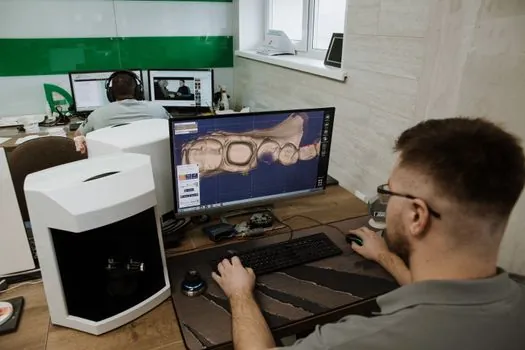
Metrology-grade SLS units are typically delivered with a calibration certificate that maps measured length error against a traceable artefact, and the buyer should ask for the specific procedure (ball-plate, gauge block, or step-height) used. Buyers should reject any vendor that quotes accuracy without naming a working volume, a temperature range, and a calibration interval, because the same sensor can be specified as 0.05 mm or 0.20 mm depending on the test conditions. [S2]
Open-source builds inherit no certification, and a 3DUNDERWORLD-style rig is therefore a research tool, not a metrology deliverable, until the user has run a validated ball-plate or step-height procedure themselves [S1]. On the secondary market, the $1,400 fixed-price listing shows the price floor for a working turnkey unit with calibration panels included [S3], and a structured light scanner's selection gate on working volume, baseline, and pattern encoding is the cleanest way to drop unsuitable listings before negotiations begin.
Trackable signals for the next buying cycle: any new sub-$1,000 turnkey unit with a published ISO 10360-style certificate, any projector resolution move above 4K native at the $5,000 price point, and any open-source calibration toolkit that targets industrial accuracy rather than laboratory accuracy. The MPashaei/Structured-Light-Scanner repository, with its active label set, is one of the community-maintained codebases to watch for upstream changes that affect the DIY cost basis [S6].
Spec-level background on the components involved: structured light scanner, linear guide, and crossed roller guide.