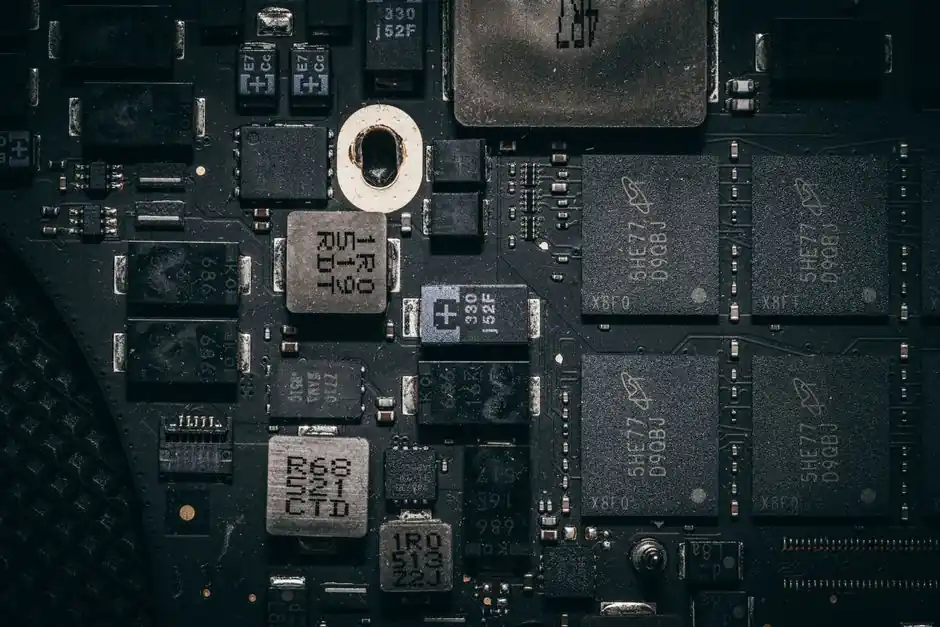
On 2026-08-07 Sunic System announced acceptance into the Korean Government's Super B Enterprise national R&D initiative, a 7-year support program to develop an AI-based OLED deposition platform that integrates edge AI, sensors, and an integrated operating system for process-anomaly detection and recipe optimization [S3].
The same week, OLED microdisplay developer Lumicore held a ceremony marking the start of main-building construction for its 12-inch OLED microdisplay fab in the Nanjing Jiangning Development Zone, with completion targeted before the end of 2026 [S3]. Taiwan-based OLED driver IC supplier Raydium Semiconductor reported Q2 2026 revenue of $211.8 million, up 25.4% quarter-on-quarter, as small and medium-sized AMOLED driver demand absorbed customer inventory build [S3].
AI-integrated deposition: the new control plane for OLED evaporation
Sunic System's Super B program scope is explicit: the platform will fuse AI analytics, in-line sensors, edge AI compute, and a unified operating layer on top of an OLED deposition (evaporation) tool, with the stated goal of detecting process anomalies and tuning deposition recipes in near real time [S3]. In the broader Industry 4.0 reference frame, this maps directly onto AI/ML-driven metamodel architectures that wrap historical production data plus design-of-experiment augmentation around a process to quantify uncertainty and prescribe corrective action, as documented in a 2024 ductile-iron sand-casting case study that used predictive and prescriptive metamodels for near-real-time process control [S1].
For OLED specifically, the deposition stage is the throughput bottleneck, so the value of an Industry 4.0 control loop sits in yield and material-utilization gains rather than cycle-time compression; sensor density at the chamber, edge-AI inference latency, and the data backbone (typically SECS/GEM over Ethernet) are the three engineering variables that decide whether the platform hits its anomaly-detection targets.
From R&D to fab: Lumicore's 12-inch OLED microdisplay line
Lumicore's 12-inch microdisplay fab is a Greenfield build, with planning, design, government approvals, and preparation all closed before the 2026-08-08 ground-breaking ceremony, and the main building scheduled to finish before end-2026 [S3]. A 12-inch (Gen-3.5-class) substrate is the current industry sweet spot for high-end OLED microdisplays used in AR/VR optics, where silicon-backplane fine metal masks and white-OLED with color-filter stacks dominate, so the fab's Industry 4.0 backbone will need to support both high-resolution FMM alignment and tightly controlled evaporation uniformity at small pixel pitches.
For display procurement teams, this line is one to watch for 2027 sampling: the combination of larger substrate area and AI-enabled process control should, in principle, reduce per-die cost and lift usable microdisplay yield for near-eye applications. Sourcing guidance on OEM versus ODM panel engagement is laid out in this OEM vs ODM spec-driven sourcing map, which is directly relevant when qualifying a new fab that is still pre-mass-production.
Driver-IC demand: the upstream signal for AMOLED volume
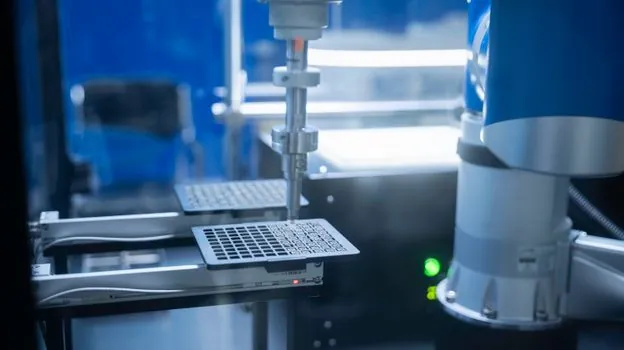
Raydium's Q2 2026 numbers give the cleanest read on AMOLED pull-through: revenue $211.8M, +25.4% QoQ, net profit $10.7M, with growth attributed to small and medium-sized AMOLED driver ICs as customers build inventory [S3]. Margin compression came from wafer foundry and packaging/test cost increases, which is consistent with the 7-nm-to-12-nm display driver process nodes tightening capacity. For an Industry 4.0 program manager this is the upstream confirmation that AMOLED panel capacity is being fed: more driver ICs shipped in Q2 means more display output is on the line for Q3-Q4 2026.
Two operating caveats: the company itself flagged softer demand ahead, so inventory build may not translate to flat sequential growth, and the cost-side squeeze on margins is a reminder that Industry 4.0 yield gains need to clear a moving gross-margin bar driven by foundry pricing.
LG Display's FLiPP maskless process: the structural Industry 4.0 play
LG Display's FLiPP (Fine-mask Laser-patterning Pixel-free, paraphrased from industry usage of the FMM-alternative concept) is the structural answer to FMM waste and pattern-resolution limits. The dedicated FLiPP production process logo was published on OLED-Info on 2026-08-06, signaling that the technology is being treated as a brand-defining process rather than a one-off engineering demo [S3]. From an Industry 4.0 standpoint, FLiPP-style maskless patterning converts a hard-tool changeover into a software recipe, which collapses a class of changeover downtime and opens the door to per-product run sizes that traditional FMM evaporation cannot serve economically.
Comparison: three Industry 4.0 vectors competing for OLED capex
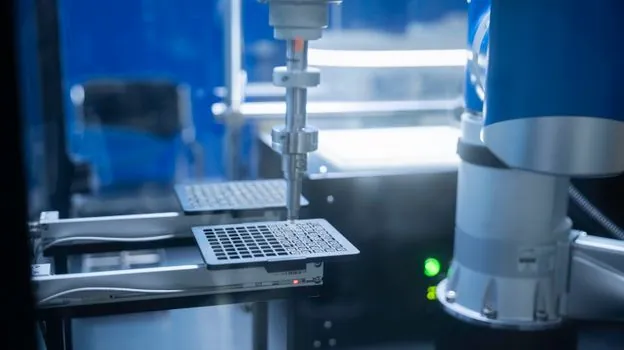
Three Industry 4.0 vectors are now visible in parallel, and they compete for the same engineering and capex budget. (1) AI-integrated deposition control (Sunic Super B): strongest on yield and recipe optimization inside the existing evaporation tool, weakest on enabling new panel formats. (2) New fabs with greenfield Industry 4.0 backbones (Lumicore Nanjing 12-inch): strongest on future capacity and substrate-format flexibility, weakest on near-term ROI because the line is still being built. (3) Maskless patterning (LG Display FLiPP): strongest on changeover economics and pattern resolution, weakest as a near-term volume contributor because installed capacity is still concentrated in FMM-based lines. For a panel buyer the decision is timing: AI-deposition gains arrive in existing lines inside 12-24 months, greenfield fab output in 18-30 months, and maskless process capacity on a longer curve. [S3]
Standards, sourcing, and the procurement checklist
Procurement teams evaluating OLED modules against this Industry 4.0 backdrop should anchor on three data points: confirmed driver-IC supply (the Raydium Q2 2026 readout is the cleanest upstream signal), fab status (Lumicore's 12-inch Nanjing line moves from announcement to main-building construction in 2026 [S3]), and the deposition/process control story (Sunic's AI-based platform, 7-year Super B budget [S3]). For equipment-side selection criteria, the flow-meter and pressure-sensor instrument classes are the usual chokepoints where OLED cluster-tool vendors still differ on sensor density and edge-AI integration.
Trackable signals over the next quarter: Lumicore Nanjing main-building shell completion and equipment move-in milestones, Sunic's first public demo of the AI deposition platform's anomaly-detection sensitivity, LG Display's FLiPP capacity disclosure, and Raydium's Q3 2026 driver-IC shipment guidance as a proxy for AMOLED panel pull-through.
Spec-level background on the components involved: pressure transmitter.