Suspended working platform total cost of ownership typically lands at 1.8-2.5x the initial purchase price across a full 10-year service life, with the equipment ticket representing only 35-45% of the cumulative spend; the remainder absorbs into mandatory recertification, consumables, energy, and operator labour [S1][S6].
Buyers comparing a suspended platform against mast-climbing work platforms or traditional scaffolding usually look at unit price first, but the lifecycle ledger is dominated by recurring compliance and rope-replacement line items, not the steel and hoist hardware on the invoice.
Initial Acquisition Cost: What the Quote Actually Covers
Acquisition cost for a typical twin-cage electric suspended platform spans 15,000-45,000 USD depending on platform length (4-8 m common), hoist rated working load (RWL 500-1000 kg per cage), and whether the supplier ships European CE-marked units under EN 1808 or Chinese GB/T 5972 stock [S1][S5].
Direct acquisition line items, those that show up on the purchase order, fall into: platform structure (hot-dip galvanized steel, aluminium options add 12-18% to the ticket), two traction hoists (220 V or 380 V, 1.5-2.2 kW each), wire rope (8-12 mm, 6x19 or 6x36 construction), safety lock devices, control panel with overload sensor, and suspension rig (parapet clamps, counterweighted outriggers, or roof beam saddles) [S1].
On top of the unit, first-year one-off costs include operator training to a recognized scheme (3-5 days), site-specific rigging engineering, and the first statutory commissioning inspection before the platform is allowed to carry people. For an aerial work platform fleet manager mapping multiple sites, capitalising these correctly keeps the first-year balance sheet honest.
Recertification and Inspection: EN 1808 Mandatory Cycle
Per EN 1808, suspended platforms used in the EU/UK must undergo thorough examination by a competent person at least every 6 months for equipment carrying persons, with a full load test and rope-end replacement schedule recorded in the platform logbook; non-conformant platforms can be shut down by the enforcing authority on the spot [S1].
In markets that reference GB/T 5972 and JGJ 80 instead, the formal inspection interval is annual, but pre-shift functional checks by the operator remain daily, and a 1,000-hour hoist service interval is industry-typical. The 6-month cadence effectively doubles the inspection line item versus a year-based cycle, and that delta alone shifts TCO by 8-12% over the asset's life [S8].
One line worth pinning down: a routine thorough examination including rope inspection, brake test under 1.25x RWL, and limit-switch verification commonly runs 600-1,200 USD per visit depending on region and platform size. Over 10 years that is 18,000-36,000 USD in inspection fees alone for a single platform running both intervals [S8].
Consumables and Wear Parts: Wire Rope Is the Single Biggest Recurring Spend
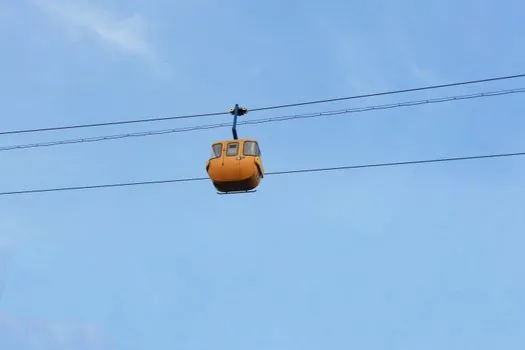
Wire rope is the dominant consumable on a suspended platform: 8-12 mm galvanised steel rope, 6x19 or 6x36 construction, with replacement intervals of 6-24 months depending on cycle frequency, environment, and load profile. Most platforms run two primary work ropes plus two independent safety ropes, and all four are replaced together to keep wear history aligned [S6][S8].
Replacement rope per metre sits around 2-4 USD for 10 mm galvanised 6x19, with a typical 50 m installation needing 200-400 USD in material; what drives the spend up is rope-end swaging and the labour to reeve the system, which together push a single rope-swap event to 800-1,800 USD per platform [S6].
Hoist brushes, motor contactors, safety lock pawls, suspension cable sheaves, and overload sensor recalibration are smaller but recurring.
Operator Labour, Energy, and Productivity Loss
Operator labour is the largest TCO line on a platform that is actually working: two trained operators per shift, typically 25-45 USD/h fully loaded, with at least one standby operator on a multi-platform site to keep the platform moving through shift breaks. Even on a single platform running 1,500 productive hours per year, operator wages alone exceed the equipment's purchase price within 6-7 years [S6].
Energy is a smaller line than people expect. Two 1.5-2.2 kW hoists running intermittently under typical duty (around 30% on, 70% off) draw 800-1,500 kWh per platform per year; at industrial tariffs of 0.10-0.18 USD/kWh, the energy cost is 80-270 USD annually, which is rounding error against rope and labour [S5].
What hurts the ledger more than energy is productivity loss from downtime. A suspended ceiling cleaning or façade re-cladding contract with a 4-week critical-path platform is exposed to 8,000-25,000 USD/day in late penalties; one rope failure that strands the platform mid-tower can erase the entire annual TCO buffer for that unit.
TCO Comparison: Suspended Platform vs Mast-Climbing vs Scaffolding
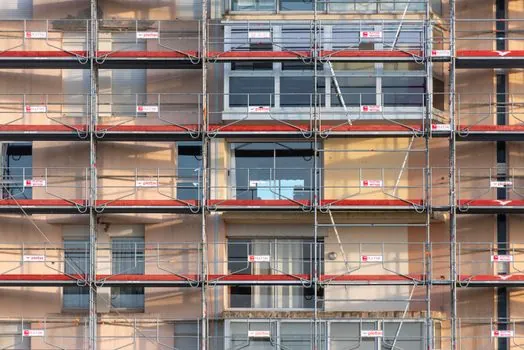
On a 12-month façade re-cladding project with 4,000 m² of working face, three options line up against clear criteria. A suspended platform (electric, 6 m twin-cage) carries the lowest acquisition cost (typical 25,000-35,000 USD) but the highest recurring rope and inspection spend. A mast-climbing work platform (MCWP) doubles the acquisition ticket to 55,000-80,000 USD with lower rope cost because it runs a rack-and-pinion drive instead of wire rope. Tube-and-fitting scaffolding has near-zero equipment cost (rental only) but the highest labour line and the longest erection/dismantle cycle [S6][S8].
On a 12-month project horizon, suspended platforms usually win on unit cost and cycle time, but at 24+ months the rope-replacement cadence starts to erode that lead. Construction fleet owners running this calculation should re-cost the comparison at every contract renewal rather than treating the first bid as a one-off decision.
Residual Value, Disposal, and End-of-Life
Residual value is a real credit in the TCO ledger.
Disposal cost is line-item small but real. Steel and aluminium scrap value partially offsets decommissioning labour, and the platform's electrical panel must be decommissioned per WEEE-style local rules if applicable. The end-of-life figure is usually 500-1,500 USD net of scrap credit, with the bigger consideration being the regulator's documentation that the unit never carried a defect that would transfer to a new owner.
Standards and Sourcing Reference
The governing standards for suspended platform TCO work in 2026 are EN 1808 (EU/UK safety requirements, 6-monthly thorough examination), ANSI/ASSE A10.28-2018 (US), and GB/T 5972 plus JGJ 80 (China); buyers should also confirm the wire rope certificate per ISO 2408 and the hoist brake test per the OEM's declared service interval [S1][S8].
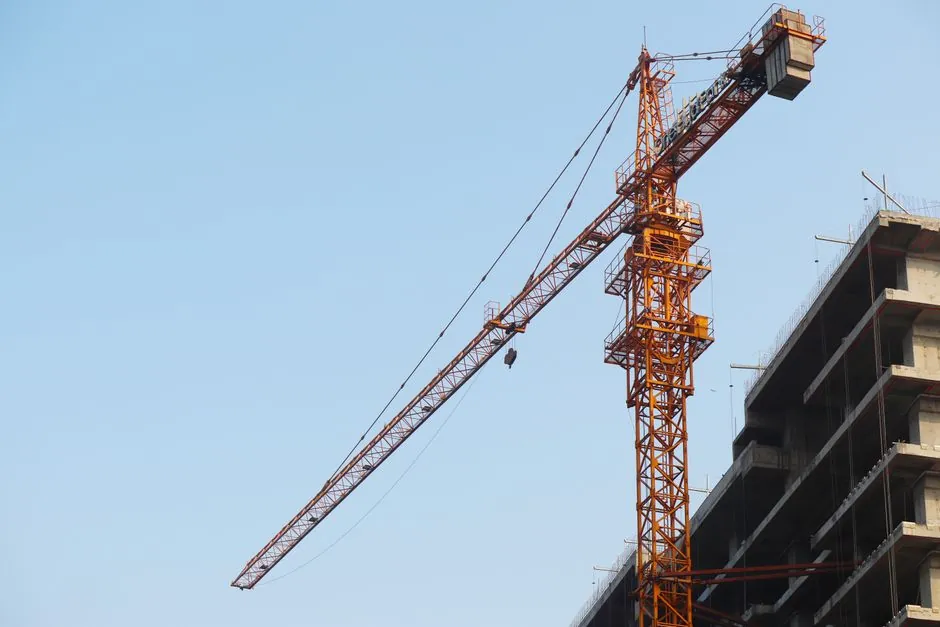
For an HVAC crew specifying a suspended platform against a tower-crane alternative, the next data point worth tracking is the OEM-published mean time between failure (MTBF) for the hoist motor, currently 8,000-12,000 operating hours for mainstream European units; lifting that figure to 15,000+ hours changes the consumable share of TCO by 5-8 percentage points over the asset life. Procurement teams should request the OEM's MTBF statement in writing and tie it to the warranty extension offer before signing.
See also our earlier report, Arc Welding Machine Picks for Steel Construction Sites.