
Rebar straightener total cost of ownership in 2026 lands between roughly $1,750 for a 4-8 mm manual unit delivered and $16,500+ for a heavy 8-32 mm servo line, once freight, duty, foundation, energy, rollers and cutter consumables are added to the EXW catalog number [S4].
The sticker price only covers the steel frame, gearmotor and roller set; the realistic 5-year landed cost is dominated by electricity per ton, HRC 60+ tool-steel roller replacement, shear-blade change-out, and the labor floor space the machine occupies, not by the FOB line on the invoice [S4][S5].
What "Total Cost of Ownership" Actually Includes on a Rebar Straightener
TCO on a rebar straightener is the sum of acquisition, freight, duty, install, energy, consumables, maintenance labor and downtime, evaluated over a defined annual tonnage, not the EXW price alone [S2][S5]. The most common procurement error is comparing two bids on FOB Shanghai and ignoring that one machine draws 7.5 kW while the other draws 15 kW at the same throughput, which compounds into a 5-figure energy delta over the asset life [S5]. A second error is omitting the upstream rebar coil-payoff and downstream rebar cutter interface, because a straightener that cannot hand off cleanly to the shear forces a stop-go cycle that wastes 15-20% of nameplate throughput [S4].
For spec-grade work the build certificate (CE / ISO 9001) and the input rebar grade (ASTM A615 Grade 60 / 420 MPa or Grade 75 / 520 MPa) belong on the TCO worksheet, because higher yield input shortens roller life and degrades the ≤ 2 mm per 300 mm straightness tolerance that ACI 318 and Eurocode 2 projects demand [S4].
Price Bands and Where the Spend Lands
2026 catalog pricing for a single rebar straightener spans $850 to $12,000+ EXW, with the operating diameter range, drive type and roller count controlling where a buyer's total sits on the scale [S4]. Entry manual straighteners rated 4-8 mm list at $850-$1,800 with throughput around 8-12 m/min and no automatic cut-off, aimed at residential slab cages and small demolition yards [S4]. Mid-range mechanical straighteners cover 6-16 mm at $2,200-$5,500, with 4-7 hardened rollers, 1.5-3 kW gear-motor drive and straightening speeds of 15-30 m/min; this is the workhorse tier for rebar fabrication shops serving mid-rise concrete frames [S4].
Heavy-duty 8-32 mm and 6-40 mm hydraulic or servo lines command $6,500-$12,000+ before options, with 9-13 rollers, 7.5-22 kW servo drives, PLC length-stop integration and throughput up to 60 m/min on the 6-16 mm range [S4]. For context, the YG YGT 5-16 sits in this mid-to-heavy band at 50 m/min wire-pulling speed, 15 kW modulation motor, 1500 kg machine weight, ±2 mm/m straightening accuracy, and 800-9000 mm cut length [S5].
The Four Cost Levers, Ranked by Dollar Impact
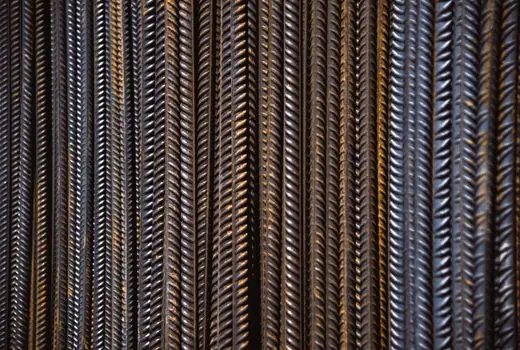
Four specification levers move a rebar straightener's price more than any other, and a buyer who can hold the line on three of them will land within 10% of forecast cost. The dominant lever is maximum bar diameter: stepping from 16 mm to 32 mm capacity roughly doubles the EXW price because the frame, gearmotor and roller geometry all scale with section size [S4]. The second lever is drive type: servo or hydraulic drive adds $2,000-$4,500 over a mechanical gear-motor base, and is worth paying for only when cut-to-length accuracy better than ±2 mm over 12 m bars is a contractual requirement [S4]. The third lever is roller material and count: HRC 60+ tool-steel rollers run $200-$450 each, and a 4-to-13 roller jump adds $1,500-$3,800 to the build, but pays back in surface finish and longer service intervals on Grade 75 stock [S4]. The fourth lever is control integration: a PLC length-stop with encoder and automatic shear interface adds $1,200-$2,800 over a hand-wheel stop, and is the cheapest accuracy upgrade on the menu [S4].
The same lever ranking holds on the operating side: motor kW is the largest single line item on the energy bill, roller count sets the consumables budget, and PLC integration sets the labor head-count needed to keep the line fed.
Drive Types Compared Against TCO Criteria
Manual, mechanical, hydraulic and servo straighteners solve different problems, and a TCO model that ignores drive type will mis-rank them. Manual straighteners make sense only for job-site work and low-volume rebar cages, with the lowest acquisition cost but the highest labor per ton and the worst straightness consistency above 8 mm bar [S4]. Mechanical gear-motor units are the value choice for 6-16 mm volume production, with the best throughput-per-dollar ratio and the simplest maintenance footprint [S4]. Hydraulic straighteners are specified when the input stock is coiled rebar rather than straight-length stock, because the hydraulic feed handles the decoiler back-tension that a gearmotor cannot [S4].
Servo-driven PLC straighteners are the spec for cut-to-length lines integrated with a rebar bender, where length accuracy better than ±2 mm over 12 m bars is contractual and where the servo axis pays for itself in reduced scrap on Grade 75 / 520 MPa input [S4]. For demolition and structural-alteration work, the handheld-versus-bench-rotor split is laid out in Rebar Straightener Picks for Demolition: Handheld vs Bench Rotor, which complements the drive-type decision above with a site-mobility layer. The crossover rule of thumb: a servo line breaks even against a mechanical line at roughly 800-1,200 tons of annual throughput, depending on local energy tariffs and scrap rebar value.
Energy, Labor and Consumables: The Hidden TCO Stack
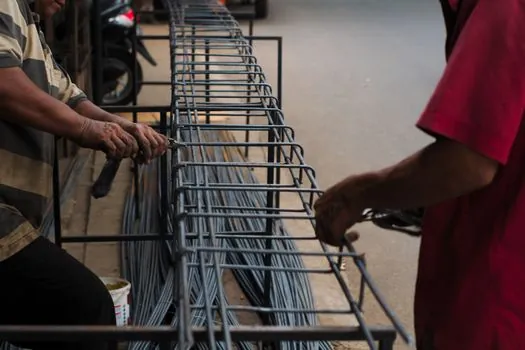
Energy per ton is the most under-modeled line on a rebar straightener TCO. The YG YGT 4-14 draws a combined 9.7 kW (2.2 kW traction plus 7.5 kW modulation) and processes over 6 tons per shift at 50 m/min, which gives an indicative 1.6 kWh per ton at nameplate throughput before cutting and decoiler loads [S5].
Labor is the second hidden line: a single operator runs the automated line, which cuts labor cost by up to 90% versus manual or simplified methods, but the saving is only realised if cut length, bundle and tag-out are also automated rather than performed by a second worker downstream [S5]. Consumables are the third line, and include HRC 60+ tool-steel rollers at $200-$450 each, shear blades on the integrated cut-off, and the wire guides that wear with surface rust and abrasive scale [S4]. Material waste on a precision roller-type system is held to within 5% of input, against noticeably higher loss on rotary systems that depend on friction and can scratch the rebar surface [S5].
Landed Cost and a Worked 5-Year Example
EXW pricing is what most online catalogs show, but the realistic landed cost for a 6-16 mm mid-range mechanical unit at $3,500 EXW sits closer to $5,200-$6,000 at a typical inland destination once ocean freight, marine insurance, port handling, import duty, last-mile trucking and a small commissioning line are added [S1][S4]. For the same unit the working TCO over 5 years at 1,200 tons per year throughput is approximately: $5,500 landed acquisition, $7,000-$9,000 in energy at 1.6 kWh per ton and a $0.10/kWh tariff, $2,500 in roller and blade consumables, $1,200 in spares and maintenance labor, and $90,000 in single-operator labor at 1 FTE, giving an all-in TCO in the $105,000-$110,000 range, or roughly $17-$18 per ton [S4][S5].
The same calculation on a heavy 8-32 mm servo line at $10,000 EXW lands closer to $14,000-$16,500 delivered, but the per-ton energy figure rises with motor kW and is only justified when the line runs above its crossover tonnage against a mechanical unit on the same 6-16 mm work [S4]. For buyers integrating a straightener into a broader cut-and-bend cell, the HVAC and motor sizing map in HVAC Rebar Straightener Selection: Motor, Diameter, Site-Logistics Map layers the electrical and site-logistics assumptions used in this TCO build.
Failure Modes and Constraints That Erode TCO
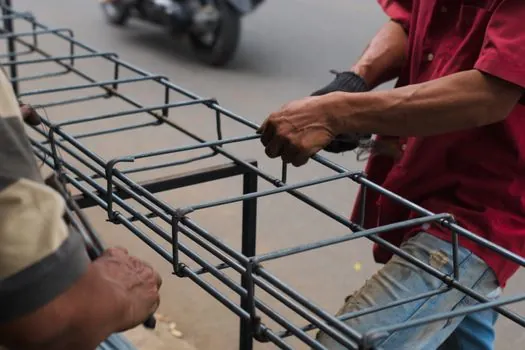
The three operating constraints that most often blow a TCO model are roller wear on Grade 75 input, decoiler back-tension on coiled stock, and straightness tolerance drift above 14 mm bar. Higher yield input shortens roller life and degrades the ≤ 2 mm per 300 mm straightness tolerance that ACI 318 and Eurocode 2 projects demand, so the cure is to spec HRC 60+ tool-steel rollers and request a straightness-test report on a 6 m sample of the hardest grade the line will see [S4]. Coiled rebar input cannot be fed cleanly by a gear-motor unit, which is why hydraulic or servo drives are mandatory on coil-fed cells and why a manual rebar straightener is the wrong tool above 8 mm [S4].
Straightness tolerance also degrades with bar length, so buyers running 12 m stock should not pay for a 6 m-rated PLC and should verify the encoder resolution and shear-trigger latency before signing. A rebar straightener is not a pressure-bearing or explosive-atmosphere device, so ATEX and IECEx do not apply; the relevant data-plate specs are the input rebar grade, diameter range, motor kW, roller hardness and the CE / ISO 9001 build certificate [S4].