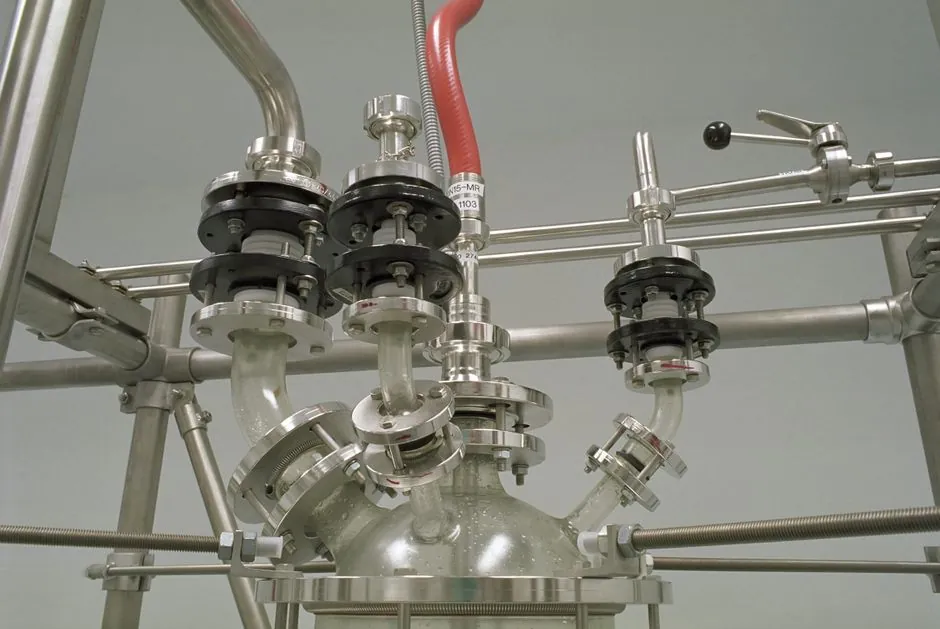
Swing check valves suit low-pressure-drop liquid service when a hinged disc, compatible wetted materials, and controlled reverse-flow closure meet the process requirements [S1][S3].
For chemical processing, selection must cover fluid compatibility, valve size, pressure class, cracking behavior, installation orientation, sealing performance, and water-hammer risk rather than relying on the generic “swing check” label [S2][S4].
Where Swing Check Valves Fit
Swing check valves are used in water distribution, wastewater, chemical processing, oil and gas, power generation, and fire-protection piping because their hinged disc opens with forward flow and closes as forward flow decays or reverses [S1][S3]. The disc moves nearly out of the flow path, producing a relatively unobstructed passage and low pressure loss when opened [S3].
Traditional swing checks are generally identified by a full laying length, face-to-face construction, with the traditional process-piping choice commonly described for sizes larger than 2 inches [S7][S8]. A gravity-operated design normally requires horizontal installation with the hinge above the flow path, although specific manufacturer drawings control orientation [S3][S7].
They are not the natural choice where zero reverse flow, rapid closure, compact installation, or severe fouling tolerance governs. Because closure depends on gravity, disc weight, hinge resistance, and reverse flow, some backflow can occur before the disc seats, and the final impact can produce slam, vibration, noise, or a pressure surge [S1][S3].
Compare the Main Check Valve Options
A conventional swing check, spring-assisted lift check, dual-plate check, and ball check have materially different closure and installation characteristics [S1][S4].
The comparison is conditional, not universal. A gravity-operated ball check must be installed vertically for upward flow because gravity and the fluid column return the ball to the seat; a spring-assisted ball check has greater mounting flexibility [S1][S2].
Materials and Chemical Compatibility

Chemical compatibility starts with the wetted body, disc, seat, hinge or stem, gasket, spring, and external stem components, not with the valve body alone [S3][S4]. Match every wetted material to the fluid composition, concentration, temperature, and contamination level, including degradation products that may form in service [S2][S4].
PTFE is a common polymer option for high-purity service because it provides corrosion resistance, temperature resilience, and inert behavior during fluid transfer [S2]. PTFE check valves are offered in a wide range of sizes and options, and selecting one for a high-purity chemical application requires consideration of valve size, materials, and cracking pressure [S2].
Where higher cracking pressure requires a metal spring, documented choices include Teflon-coated stainless steel, Carpenter 20, Inconel, and Hastelloy, selected according to the medium and application parameters [S2]. These are documented examples, not a universal material matrix.
Size, Pressure, and Cracking Criteria
Size the valve from the required design flow, velocity, line size, and acceptable pressure loss rather than matching the pipe nominal diameter by default [S4][S5]. An undersized valve can create excess head loss and operating energy cost, while an oversized valve may operate with a small opening angle, unstable disc behavior, elevated head loss, and higher maintenance cost [S4][S5].
Confirm the valve pressure class against design pressure and temperature, including the effects of service medium and body materials [S4]. The cracking pressure is the differential pressure required to begin opening; conventional swing checks normally have low cracking pressure because the disc rotates freely about its hinge [S3].
Set low cracking pressure only when reliable opening at minimum forward flow is required. Consider the competing demands: a high cracking pressure can help seat the valve against reverse pressure, but an excessive setting can prevent full opening or increase differential-pressure loss [S2][S3]. For spring-assisted PTFE valves, documented configurations cover a nominal 3 to 5 psi low-cracking-pressure spring and higher-cracking-pressure metal-spring constructions [S2].
Sealing, Orientation, and Installation Constraints

Selecting a PTFE check valve for a high-purity chemical application requires consideration of valve size, materials, and cracking pressure, and PTFE's resistance to corrosion, temperature resilience, and inert behavior support its use in many high-purity applications [S2].
A conventional gravity swing check needs a correctly oriented hinge and sufficient space for the disc to swing completely. Horizontal installation with the hinge at the top is the usual arrangement, but the manufacturer's installation drawing governs the permitted position [S3][S7]. Do not install a gravity-operated ball check valve on horizontal suction piping without a spring or another assured closing action, because its seating depends on gravity and fluid-column effect [S1][S2].
Pipeline support and access also matter. The swing check valve is bulkier than a wafer design, while its dual-plate check valve alternative is compact but uses two spring-loaded doors and requires specific seat and spring material verification [S1]. Insulation, removable covers, stem extension, and maintenance clearance should be established before the line number is frozen.
Hydraulic and Failure-Mode Review
The main swing-check failure mode is not leakage through the seat alone; it is delayed closure and the pressure transient generated when reverse flow is stopped suddenly [S1][S3]. A pump-stop study must evaluate minimum forward flow, pump speed, line length, fluid properties, allowable surge, and the resulting reverse-flow rate before selecting a conventional design [S5].
Traditional swing checks are identified as the category most likely to slam among traditional swing, spring-loaded lift, and dashpot-assisted designs [S5]. The sudden stoppage of reverse flow can create a pressure surge, while slower disc travel permits more reverse flow before closure [S3][S5]. If surge control is critical, compare the standard swing valve with a fast-closing lift check or a dashpot-assisted design rather than assuming the generic swing design satisfies the transient requirement [S5].
For broader chemical-service comparison, Check Valve Selection for Chemical Processing provides the decision context for fluid compatibility, sealing, sizing, and installation. A candidate should proceed to detailed sizing only after confirming that the selected architecture addresses the fluid, pressure, flow, orientation, and closure criteria defined for the line.
Final Selection Checklist

A standard swing check is the defensible choice for a clean or moderately solids-bearing liquid line when low forward-flow pressure loss is important, full-bore opening is achievable, gravity closure is adequate, and reverse-flow transients are tolerable [S1][S3]. The valve remains externally power-free and automatic, with no handwheel, actuator, operator, or external control signal required [S3].
Do not choose a conventional swing check when the duty requires near-zero backflow, rapid shutoff, a compact wafer envelope, severe slurry handling, or controlled closure over a defined surge interval [S1][S4][S5]. In those cases, specify a spring-assisted lift, dual-plate, ball, or dashpot-assisted design after a hydraulic transient study [S1][S5].
Final approval should record the medium composition and concentration, design and operating temperature, design pressure, normal and minimum flow, line size, allowable pressure loss, allowable leakage, installation orientation, material list, cracking pressure, and closure strategy. Verify those 10 items against the manufacturer’s drawings, approved material data, and applicable project specifications before purchase; confirm availability of trim, seat, gasket, and spring material certificates for the selected chemical service [S2][S4].