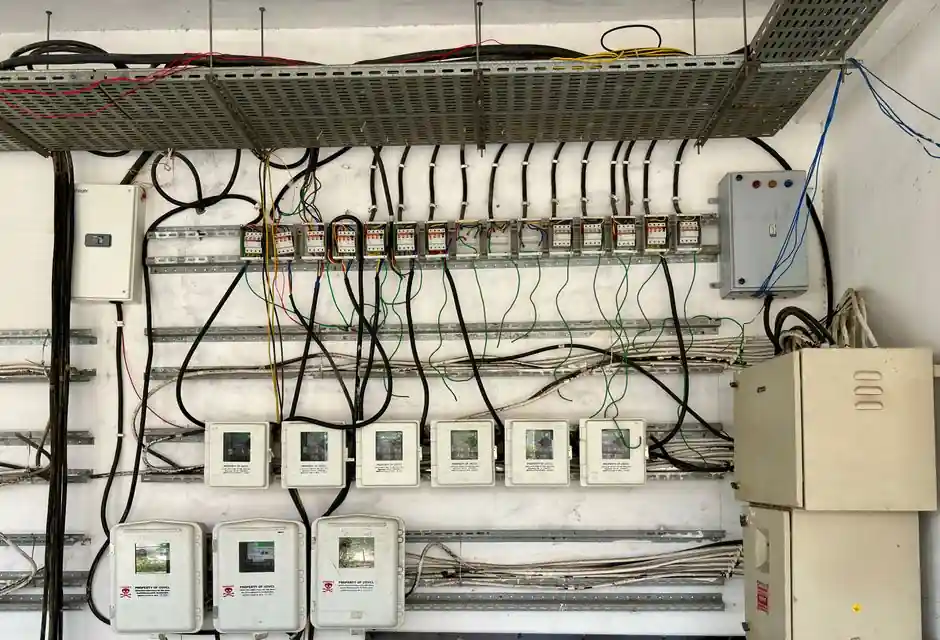
A switch-disconnector performs 2 assigned functions: it switches a circuit under normal conditions and creates a visible isolation gap before maintenance.
These devices fit factories, switchboards, motor control centres, photovoltaic installations and distribution systems, but they do not replace circuit breakers or fuses [S1][S4].
Core Function and Isolation Principle
A switch-disconnector, also called an isolator switch, combines the functions of a disconnector and a load switch. In the open position, its separated contacts provide a visible break that confirms the intended isolation state [S1][S2].
A switch-disconnector can switch an electrical circuit on or off and disconnect it from the main power source by creating a visible gap in the electrical path [S2]. Its primary duty is to isolate equipment for inspection, repair and maintenance, not to protect conductors or machinery from overload and short-circuit faults [S2].
That distinction matters for procurement: a switch-disconnector is a switching and isolation device, while a circuit breaker provides automatic fault interruption and overload protection [S2][S4].
Advantages for Maintenance and Control
The principal advantage is positive isolation: the open contact separation supplies a visible indication that the circuit has been disconnected, reducing dependence on an enclosure indicator alone [S2][S5].
Switch-disconnectors are used for breaking circuits, manual switching and isolating power supplies in factories and commercial and industrial setups [S4].
Switch-disconnectors help disconnect electrical equipment for repair and maintenance and can help separate different parts of an electrical system [S4]. The visible gap created by a switch-disconnector provides safe isolation for workers [S2].
Disadvantages and Failure Modes

The main limitation is absent automatic fault protection. A switch-disconnector does not detect overload or short circuit, so a circuit breaker or fuse must provide the required protective function [S2][S4].
Manual operation is another limitation for many products because it requires a person to reach the device and physically change the contact position [S2]. An incorrectly positioned mechanism, damaged interlock, failed mechanism or unsuitable enclosure can therefore compromise the assumed isolation state.
Load-break versions can interrupt load current, but their rated load-breaking duty must not be confused with the short-circuit withstand or interruption rating of a protective breaker [S3][S5]. A main disadvantage appears when operators treat the switch as a protective device or omit lockout, tagging and verification procedures before work begins.
Comparison of Principal Options
Switch-disconnectors are circuit accessories that isolate electrical circuits by separating their contacts and provide a visible break in the circuit [S5]. Selection should compare 4 criteria: visible isolation, load-breaking duty, protection coordination and environmental enclosure.
Selecting for Voltage, Current and Environment
The electrical rating must cover the installation conditions, including system voltage, load current and the required breaking function. For a plain switch-disconnector, the short-circuit protection function must remain with the upstream or downstream device [S2][S4].
Motor-operated designs add remote control, remote position indication and electrical interlocking, but they also introduce a powered mechanism that requires correct supply, control logic and testing [S1].
Enclosure selection depends on the installation site: dusty, moist or temperature-variable locations require an enclosure designed for those conditions [S5].
Installation, Maintenance and Safe Use
Installation must preserve the visibility of the isolation gap, maintain access for operators and provide dependable interlocking. The equipment should be identifiable and accessible because it may serve as an emergency-off device or a maintenance isolation point [S4].
Before maintenance, the operator should open the protective device, isolate with the switch-disconnector, secure the arrangement against re-energisation and verify the absence of voltage [S1][S2].
Operational discipline is the main control that addresses the device’s limitations. Remote indication is useful, but it is not a substitute for physical isolation; automatic switching is also not a substitute for overload and short-circuit protection [S1][S2].
Applications and Appropriate Use
Switch-disconnectors are used in factories and commercial and industrial setups for breaking circuits, manual switching and isolating power supplies [S4]. Fuse switch-disconnectors are a type of switch-disconnector discussed alongside the device's types, applications and benefits [S5].
They are less suitable as the sole device where automatic overload response, short-circuit interruption, selective coordination or nuisance-free restoration is required. In those installations, the switch-disconnector should be coordinated with a circuit breaker, fuse or other protective means rather than treated as a complete protection package [S2][S4].
The correct procurement decision is straightforward: specify a switch-disconnector when the duty is switching plus dependable isolation; add a circuit breaker or fuse when the installation also requires automatic fault interruption. Review the selected ratings, enclosure, actuator, interlock and isolation procedure before accepting the equipment.